Volleyballs Compared: Indoor Court vs Beach Play
The Mikasa V200W is our top pick and the ball used at the highest levels of indoor play. The Mikasa VLS300 Beach Champ is the choice for sand, and the Tachikara SV5WSC Sensi-Tec is the value option schools and recreation leagues keep buying.
The Mikasa V200W leads this roundup because its dimpled microfibre cover is what top level indoor volleyball is played with, and the aerodynamic behaviour on serve is measurably different from a standard eighteen panel ball. The Mikasa VLS300 Beach Champ is the answer for sand, with a soft cover that stays playable when wet, and the Tachikara SV5WSC Sensi-Tec is the composite ball recreation leagues and school programmes buy in bulk for good reason.
Volleyballs are easy to buy wrong because the differences that matter are not visible in a product photo. Indoor balls use leather or microfibre composite covers that absorb moisture and turn heavy on sand, while outdoor balls use water resistant covers and softer panels that feel dead on a hardwood court. Panel count and seam depth change how a float serve moves, and cover softness decides whether an afternoon of passing leaves your forearms bruised. We compared cover materials and construction, panel layout and seam type, softness for beginners, water resistance and what owners report about air retention over a season.
The best picks, ranked

Mikasa V200W Indoor Volleyball
This is the ball used at the highest levels of indoor competition, and the dimpled microfibre cover is the reason. The surface texture changes how the ball moves in flight, which is why float serves behave differently than they do with a standard smooth panel ball. It is expensive, and it belongs on a clean indoor court rather than a driveway.
Pros
- The reference ball for serious indoor play
- Dimpled cover gives consistent float serve behaviour
- Soft enough for long passing sessions
Cons
- Expensive for recreational use
- Cover degrades quickly on rough outdoor surfaces
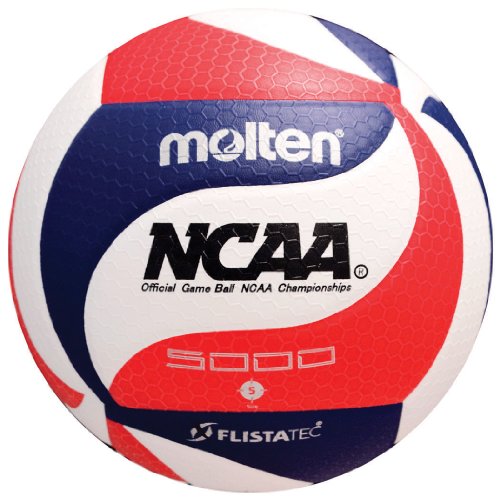
Molten Super Touch V5M5000 Volleyball
Molten builds this with a soft microfibre cover and a panel layout designed to give clear visual feedback on rotation, which helps players learning to read serves. Touch is the selling point, and it is genuinely gentler on the forearms than a firmer competition ball. Many clubs run it as their primary training ball for exactly that reason.
Pros
- Soft cover reduces forearm soreness in long sessions
- Panel colours make rotation easy to read
- Consistent flight across a full practice
Cons
- Softer feel is less popular with power hitters
- Indoor only, degrades quickly outdoors

Mikasa VLS300 Beach Champ Volleyball
The VLS300 is the official ball of international beach competition and it is built for the conditions, with a soft, water resistant cover and a slightly larger circumference than an indoor ball. It stays playable when the sand is damp and it does not gain weight through a long session. On hardwood it feels dead, which is the trade off.
Pros
- Stays light and playable in damp sand
- Soft cover suits barefoot beach play
- The reference ball for competitive beach volleyball
Cons
- Feels dead and slow on an indoor court
- Light colours show sand staining

Tachikara SV5WSC Sensi-Tec Composite Volleyball
School programmes and recreation leagues buy Tachikara by the case because the Sensi-Tec cover survives a season of daily use and the ball holds air far better than budget alternatives. Feel is firm without being punishing. It is the sensible choice when the ball needs to work for thirty different players rather than one.
Pros
- Holds air over a full season with minimal topping up
- Cover survives heavy shared use
- Good balance of durability and feel for the money
Cons
- Firmer than premium club training balls
- Not designed for regular sand play
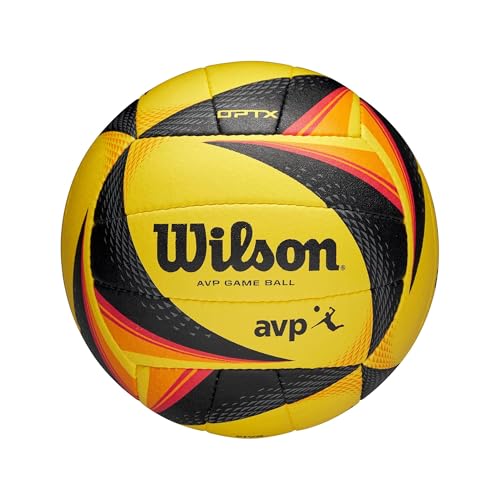
Wilson AVP Official Beach Volleyball
Wilson’s AVP line covers outdoor play at a much friendlier price than a competition beach ball, with a durable composite cover that tolerates concrete edges and grass better than premium alternatives. It plays a little firmer than the Mikasa beach ball, which some recreational players actually prefer. Good pick for a set that lives in the car boot.
Pros
- Tolerates grass, sand and rough surfaces
- Costs far less than competition beach balls
- Firmer feel suits casual power hitting
Cons
- Harder on the forearms than premium beach balls
- Panel seams wear on abrasive surfaces

Baden Perfection Elite Composite Volleyball
Baden aims this at teams that need a stack of practice balls that feel similar to their game ball without the game ball price. The microfibre composite cover is soft enough for repetition passing drills and holds up through them. Consistency between balls in a set is the thing coaches care about here, and owners report it as reliable.
Pros
- Affordable enough to buy several for drills
- Soft cover suits high volume passing work
- Consistent feel across a purchased set
Cons
- Flight is less refined than premium eight panel balls
- Cover scuffs faster than competition composites

Wilson Soft Play Outdoor Volleyball
For a family beach trip or a garden net, a soft play ball is the right tool, because the whole point is that nobody stops playing after the first hard serve stings. The cover is deliberately forgiving and the ball is inflated softer than a competition model. Serious players will find it too light and slow, which is fine.
Pros
- Comfortable for beginners and children
- Inexpensive enough to treat as disposable
- Handles grass, sand and pool decks
Cons
- Too light and slow for competitive play
- Loses air faster than premium bladders
Compared at a glance
| # | Model | Use | Best for | Score | Price |
|---|---|---|---|---|---|
| 1 | Mikasa V200W Indoor Volleyball | Indoor competition | Best overall | 9.4 | Check price |
| 2 | Molten Super Touch V5M5000 Volleyball | Indoor club and training | Best for club play | 9.2 | Check price |
| 3 | Mikasa VLS300 Beach Champ Volleyball | Beach and outdoor | Best for beach | 9.0 | Check price |
| 4 | Tachikara SV5WSC Sensi-Tec Composite Volleyball | Indoor recreation, school and league | Best for schools and leagues | 8.8 | Check price |
| 5 | Wilson AVP Official Beach Volleyball | Beach, grass and backyard | Best value outdoor | 8.6 | Check price |
| 6 | Baden Perfection Elite Composite Volleyball | Indoor practice and recreation | Best for practice | 8.3 | Check price |
| 7 | Wilson Soft Play Outdoor Volleyball | Casual outdoor and family play | Best budget | 8.0 | Check price |
What matters most
Indoor and outdoor balls are not interchangeable Indoor volleyballs use leather or microfibre composite covers built for a clean court, and they absorb moisture, which means a damp beach session leaves you passing a heavy, slow ball. Outdoor and beach balls use water resistant covers, are slightly larger in circumference and are inflated to a lower pressure so they behave predictably in wind. Playing an indoor ball on sand ruins the cover in a season; playing a beach ball indoors just feels sluggish. If you genuinely play both, buy both.
Panel count and why serves move differently Traditional volleyballs use eighteen panels in six groups of three. Newer competition designs use eight larger panels with pronounced seams and surface dimpling, which changes the airflow over the ball and gives a float serve more unpredictable movement. That behaviour is a feature at club level and above, and largely irrelevant in recreational play. If your team plays with an eight panel ball in matches, practise with one, because the serve reads differently.
Cover softness and your forearms New players quit passing drills because their forearms hurt, and cover hardness is a large part of why. Softer microfibre composites spread the impact and are worth prioritising for beginners, juniors and anyone running long repetition sessions. Firmer covers give a crisper feel that experienced hitters prefer. Inflation pressure matters as much as the cover, and a ball pumped to the top of its range feels considerably harder than one at the bottom.
Inflation, storage and getting a full season out of a ball Check pressure before every session with a proper gauge rather than by squeezing, and inflate to the range printed near the valve, typically around four and a quarter to four and a half pounds per square inch for indoor balls and slightly lower for beach. Always moisten the needle before inserting it, since a dry needle tears the valve, which is the most common way a good ball dies. Store balls out of direct sun and away from heat, brush sand off after beach play and never leave a ball in a hot car, which softens the cover adhesive.
Questions worth asking
What is the difference between an indoor and outdoor volleyball?
Indoor balls have leather or microfibre covers, are slightly smaller and are inflated harder for a fast court game. Outdoor balls are marginally larger, softer, inflated to a lower pressure and use water resistant covers so they cope with sand, damp and wind. Using either on the wrong surface works badly.
What pressure should a volleyball be inflated to?
Indoor volleyballs are generally inflated to about four and a quarter to four and a half pounds per square inch, and beach volleyballs slightly lower, commonly around two and a half to three. The range is printed near the valve. Use a gauge rather than judging by feel, since a hard ball hurts to pass.
Which volleyball is best for beginners?
A soft cover composite ball, either an indoor training ball like the Molten Super Touch or a soft play outdoor ball for casual games. The priority for a beginner is a cover that does not sting on a mistimed pass, because sore forearms end practice sessions faster than anything else.
Can I use an indoor volleyball on the beach?
You can, but the cover absorbs moisture and sand abrades it, so the ball gains weight during play and wears out quickly. It is a reasonable way to use up an old ball and a poor way to treat a new one. Water resistant outdoor balls exist precisely for this.
How long does a volleyball last?
A competition indoor ball used on a clean court can last several seasons. The same ball used outdoors on concrete may last weeks. School programme balls under daily shared use typically last a season or two. Air retention usually outlasts the cover, so surface wear is the thing to watch.
What size volleyball do youth players use?
Standard adult volleyballs run about sixty five to sixty seven centimetres in circumference. Youth and lightweight balls are the same size but noticeably lighter, which lets younger players serve over the net with correct technique instead of compensating. Age groups under about twelve commonly use the lighter ball.
Why does my new volleyball keep losing air?
Usually the valve was damaged by a dry needle. Always wet the needle before inserting it. Slow loss can also be normal break in on a new bladder, so top up before the first few sessions. A ball that goes flat within a day has a puncture or a failed valve and should be returned.
Are expensive volleyballs actually worth it?
For competitive indoor play, yes, because flight consistency and float serve behaviour differ measurably and you want to practise with what you compete with. For backyard, beach and casual games, the difference in enjoyment between a mid priced ball and a premium one is small, and the durability difference often favours the cheaper one.
Our take
For serious indoor play the Mikasa V200W is the ball to own, because it is what competitive volleyball is played with and practising on anything else means adjusting on match day. Sand players should go straight to the Mikasa VLS300 Beach Champ, which stays light and controllable when everything is damp. Schools, clubs and anyone buying several balls at once will get the best return from the Tachikara SV5WSC, which holds air and survives shared use.


