Matching Speaker Wire Gauge and Jacket to Your Home Theater
Monoprice’s 12AWG CL2 wire suits most in-wall home theater runs thanks to its fire rating and thick gauge. KabelDirekt’s pre-terminated banana plug kit installs fastest into spring clips or binding posts. Sewell Silverback brings audiophile grade oxygen free copper to two channel systems without a steep cost.
Speaker wire looks simple until a run through drywall or a receiver with tight binding posts exposes the wrong gauge or jacket rating.
We compared specifications, connector types and owner feedback across seven current Amazon listings spanning bare wire spools, banana plug kits and in-wall rated bundles.
What matters most
How Do You Choose Speaker Wire Gauge? Gauge determines how much resistance builds up over distance. Shorter runs under 50 feet work fine with 16 AWG. Runs past 50 feet, or setups powering low impedance speakers, benefit from 12 or 14 AWG. Gauge numbers work backwards, too, since 12 AWG wire is thicker and heavier than 16 AWG despite the smaller number.
In-Wall Rated or Standard Jacket: Which Do You Need? Building codes in many areas require CL2 or CL3 rated jacket for wire run inside walls or ceilings. Standard PVC jacketed wire works for exposed runs behind furniture but should not go inside wall cavities. CL3 typically adds a slightly higher fire resistance threshold than CL2.
Bare Wire or Terminated Connectors: Which Installs Faster? Bare ended wire costs less and fits any binding post or spring clip after stripping. Pre terminated banana plugs or spade connectors save setup time and keep loose strands from shorting against each other. Receivers with recessed spring clips often favor bare wire for a tighter fit.
Which Speaker Wire Fits Which Room? Indoor home theater rooms rarely need weatherproofing, so standard OFC or copper clad aluminum wire suffices. Patio, deck or landscape speakers need a direct burial or UV resistant jacket to survive sun and moisture. Subwoofer and center channel runs carry less current, so a lighter gauge like 18 AWG can work over short distances.
Our top picks

Monoprice 12AWG CL2 Rated 2-Conductor Speaker Wire (100ft)
Bare copper conductors in this 12 AWG wire carry a CL2 fire rating for in-wall and in-ceiling runs. Polarity ridges molded into the jacket make positive and negative conductors easy to tell apart during installation. Owners cite the thick gauge as enough for long runs to rear or ceiling speakers without noticeable signal loss.
Pros
- Thick 12 AWG gauge handles long speaker runs
- CL2 rating allows code compliant in-wall installation
- Polarity ridges on the jacket speed up installation
Cons
- Copper clad aluminum, not pure OFC copper
- Bare ends need stripping and terminating before use
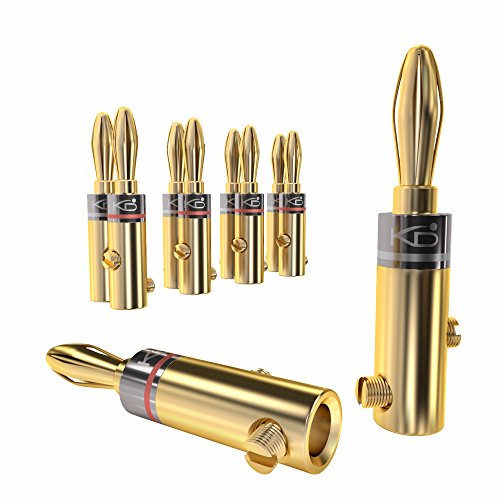
KabelDirekt 16 AWG Speaker Wire with Gold Banana Plugs (50ft)
Gold plated banana plugs arrive pre attached at both ends, removing any need for stripping or crimping. 16 AWG oxygen free copper conductors suit bookshelf speakers and soundbar systems at moderate distances. Owners report a snug fit into spring clips and binding posts alike.
Pros
- Pre terminated ends need no tools to install
- Gold plating resists corrosion over time
- Fits spring clips and binding posts equally well
Cons
- 16 AWG gauge limits use on very long runs
- Fixed plug length adds bulk behind tight cabinets
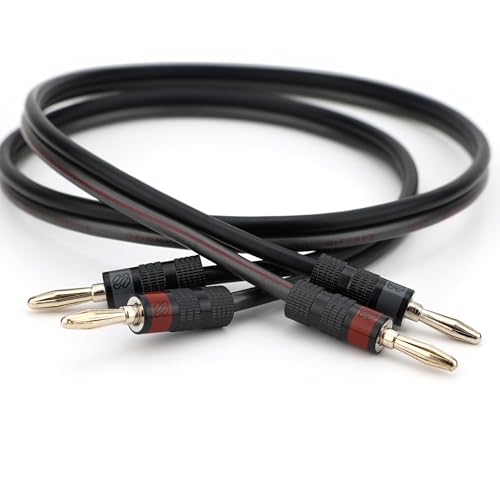
Sewell Silverback 12 AWG Oxygen-Free Copper Speaker Wire (50ft)
99.9 percent oxygen free copper conductors run through this wire, a spec audiophiles chase for lower resistance on stereo and two channel systems. A clear PVC jacket lets buyers check strand count before installation. Indoor use behind entertainment centers suits it best, since the listing does not rate it for in-wall runs.
Pros
- High purity OFC copper reduces resistance
- Clear jacket lets buyers verify strand quality
- Stays flexible for tight cabinet routing
Cons
- Not CL2/CL3 rated for in-wall use
- Bare wire ends require separate connectors

GearIT 14AWG In-Wall Speaker Wire CL3 Rated (100ft)
CL3 certification means this wire meets fire safety codes for in-wall and in-ceiling installation alike. 14 AWG copper clad aluminum conductors balance flexibility with a gauge suited to mid length runs. Etched footage markers on the jacket help track how much wire remains during a pull.
Pros
- CL3 rating covers ceiling installs too
- Footage markers simplify measuring runs
- Sold in a durable pull box for storage
Cons
- 14 AWG runs thinner than dedicated 12 AWG options
- No connectors included in the box

Amazon Basics 16-Gauge Speaker Wire (100ft)
Casual home audio setups, rather than dedicated theater rooms, are the target for this 16 gauge copper clad aluminum wire. A flat, paintable jacket runs along baseboards with minimal visibility. Reviewers commonly use it for short to mid range bookshelf speaker or surround channel connections.
Pros
- Low cost covers a full 100 ft spool
- Flat profile hides along trim and baseboards
- Paintable jacket blends with wall color
Cons
- Not rated for in-wall code compliance
- Thinner gauge limits long high power runs

InstallGear 14AWG Outdoor Speaker Wire (100ft)
A UV resistant, direct burial rated jacket separates this wire from typical indoor kits. 14 AWG copper clad aluminum conductors handle patio and deck speaker runs without degrading in sun or moisture. Owners report it staying flexible after months of exterior exposure.
Pros
- Direct burial rating suits underground runs
- UV resistant jacket withstands sun exposure
- Stays flexible in cold weather
Cons
- Thicker jacket makes indoor routing bulkier
- Copper clad aluminum, not solid copper

BNTECHGO 18 AWG Silicone Speaker Wire (100ft)
Stranded copper conductors sit inside a heat resistant silicone jacket rated for a wide temperature range. Low power subwoofer or center channel hookups suit the lighter 18 AWG gauge better than long high current runs. Color coded red and black conductors simplify polarity checks during a home theater install.
Pros
- Silicone jacket resists heat near AV equipment
- Red and black coding speeds up polarity checks
- Highly flexible for tight routing
Cons
- 18 AWG runs too thin for long main speaker runs
- Not intended for in-wall fire code installs
How they compare
| # | Model | Gauge | Best for | Score | Price |
|---|---|---|---|---|---|
| 1 | Monoprice 12AWG CL2 Rated 2-Conductor Speaker Wire (100ft) | 12 AWG | Best overall | 9.4 | Check price |
| 2 | KabelDirekt 16 AWG Speaker Wire with Gold Banana Plugs (50ft) | 16 AWG | Best for easy setup | 9.1 | Check price |
| 3 | Sewell Silverback 12 AWG Oxygen-Free Copper Speaker Wire (50ft) | 12 AWG | Best for audiophile setups | 8.9 | Check price |
| 4 | GearIT 14AWG In-Wall Speaker Wire CL3 Rated (100ft) | 14 AWG | Best for in-wall installation | 8.7 | Check price |
| 5 | Amazon Basics 16-Gauge Speaker Wire (100ft) | 16 AWG | Best budget pick | 8.4 | Check price |
| 6 | InstallGear 14AWG Outdoor Speaker Wire (100ft) | 14 AWG | Best for outdoor use | 8.2 | Check price |
| 7 | BNTECHGO 18 AWG Silicone Speaker Wire (100ft) | 18 AWG | Best for home theater subwoofer runs | 8.0 | Check price |
Frequently asked questions
What gauge speaker wire do I need for a home theater?
Most home theater setups use 14 or 16 AWG for standard speaker runs under 50 feet, and 12 AWG for longer runs or subwoofer channels drawing more current.
Is thicker speaker wire always better?
Not necessarily. Thicker gauge lowers resistance on long runs, but for short distances under 25 feet, 16 AWG performs similarly to 12 AWG for most listening setups.
Can regular speaker wire run through walls?
Standard PVC jacketed wire is not rated for in-wall installation in most jurisdictions. Look for a CL2 or CL3 rating on the packaging before running wire inside a wall or ceiling cavity.
Do banana plugs sound better than bare wire?
Banana plugs do not change audio quality on their own. They provide a more secure, repeatable connection and reduce the chance of stray strands touching and causing a short.
What is the difference between OFC copper and copper clad aluminum wire?
Oxygen free copper has lower resistance and higher conductivity than copper clad aluminum. Copper clad aluminum costs less and works fine for typical home listening, while OFC suits longer runs or higher fidelity setups.
Can speaker wire be used outdoors?
Only wire specifically rated for outdoor or direct burial use should run outside. Standard indoor jacket wire degrades faster from UV exposure and moisture.
How much speaker wire do I need per speaker?
Measure the distance from the receiver or amplifier to each speaker location and add a few extra feet for slack around corners and connections. A 100 foot spool typically covers a full 5.1 or 7.1 surround setup in an average room.
Does speaker wire length affect sound quality?
Longer runs increase resistance, which can slightly reduce power delivery, especially with thinner gauge wire. A thicker gauge for runs over 50 feet minimizes this effect.
Which speaker wire kit installs fastest?
KabelDirekt’s pre terminated banana plug kit needs no stripping or crimping, so it connects to spring clips or binding posts in minutes. Bare wire spools cost less but need tools and a few extra steps first.
Our pick
Monoprice’s CL2 rated 12 AWG wire covers the widest range of home theater installs, including in-wall runs. Buyers wanting a faster setup should look at KabelDirekt’s pre terminated banana plug kit. Outdoor systems call for InstallGear’s weatherproof option instead.


