Which Wireless Mouse Fits Your Grip and Desk Setup?
The Logitech MX Master 3S is the top pick for office and creative work thanks to its sculpted shape and silent clicks. The Logitech M720 Triathlon is the value choice, and the Razer DeathAdder V3 Pro is the one to buy for competitive gaming.
The Logitech MX Master 3S is the wireless mouse most people should buy because the sculpted body supports the whole hand, the silent clicks suit shared rooms and the electromagnetic scroll wheel spins through long documents in one flick. The Logitech M720 Triathlon covers the same ground for less, and the Razer DeathAdder V3 Pro is the pick if response time outranks everything else.
Choosing a wireless mouse is awkward because the specification sheet says almost nothing about whether it will suit your hand. A high sensor count is meaningless if the shell forces a claw grip you dislike, and a long battery rating means little if the mouse cannot be used while charging. We compared shell shape and size against common grip styles, sensor behaviour on different surfaces, connection options, charging design, and button and scroll layout, then weighed those against what owners report about click durability and hand fatigue after months of use.
The best picks, ranked

Logitech MX Master 3S Wireless Mouse
Logitech shaped this for a full palm grip with a thumb rest, which is why long editing sessions feel less tiring on it than on a symmetrical mouse. The MagSpeed wheel switches between ratcheted and free spinning automatically, so a long spreadsheet takes one flick rather than twenty scrolls. Quiet click switches make it usable in a shared office or a recorded call.
Pros
- Sculpted shell supports the whole hand
- MagSpeed wheel handles very long documents
- Tracks on glass and gloss surfaces
Cons
- Too large for small hands or a claw grip
- Right handed shape only
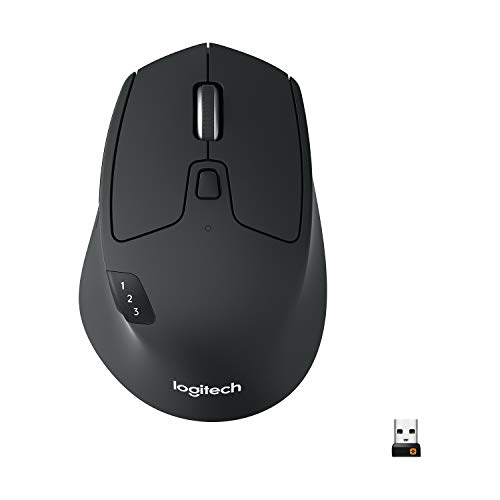
Logitech M720 Triathlon Wireless Mouse
The M720 offers most of what makes the flagship good, namely a contoured right handed shell, a hyper fast scroll wheel and switching between three paired machines, for a fraction of the outlay. It runs on a single AA cell that lasts a very long time, which removes charging entirely. Build materials feel plainer than the premium models and the thumb buttons are less refined.
Pros
- Very long runtime on a replaceable cell
- Switches between three paired devices
- Free spinning wheel for long pages
Cons
- Plainer materials than the flagship models
- Lower sensor resolution for high refresh displays

Razer DeathAdder V3 Pro Wireless Gaming Mouse
Razer stripped weight out of a shape that has been a competitive staple for years, and the result glides with almost no inertia while the HyperSpeed receiver keeps latency at wired levels. Optical switches remove the double click failure that eventually affects mechanical ones. There is no Bluetooth on this model, so the receiver must travel with it.
Pros
- Wired level latency over the bundled receiver
- Very light for fast aim adjustments
- Optical switches avoid double click faults
Cons
- No Bluetooth for laptops and tablets
- Sparse button count for productivity macros
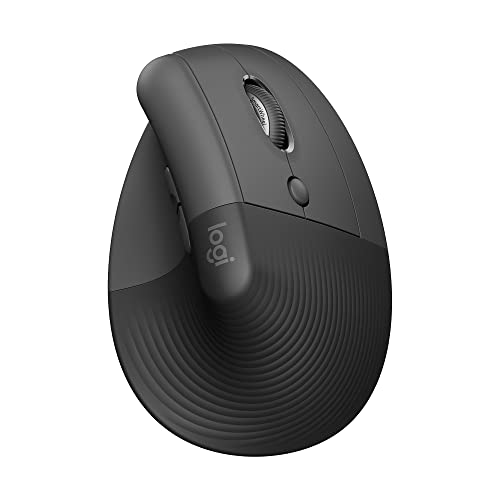
Logitech Lift Vertical Ergonomic Mouse
The Lift rotates the hand into a handshake position, which takes forearm rotation out of the equation and is the usual recommendation for anyone feeling wrist strain. It is sized for small and medium hands, unlike the larger MX Vertical, and the silent switches keep it office friendly. Adjusting to a vertical shape takes a few days of slightly slower pointing.
Pros
- Neutral wrist angle reduces forearm rotation
- Sized for small and medium hands
- Quiet clicks and long battery life
Cons
- Precision drops for a few days while adapting
- Too small for large hands, which need the MX Vertical

Apple Magic Mouse
The whole top surface is a touch panel, so swiping between macOS desktops and scrolling in any direction happens without a wheel. Pairing is automatic with a Mac and the low slung shape matches Apple desks. The charging port position means it cannot be used while plugged in, which owners have complained about for years.
Pros
- Full macOS gesture support without a trackpad
- Pairs with a Mac automatically
- Slim shape suits tight desk setups
Cons
- Cannot be used while charging
- Flat profile gives little palm support

Microsoft Bluetooth Ergonomic Mouse
Microsoft gives this a gently contoured shell with a thumb scoop that supports the hand better than most travel mice, while staying small enough for a laptop sleeve. It runs on two AAA cells and connects over Bluetooth with no receiver to lose. Tracking is fine for documents and browsing but not intended for gaming.
Pros
- Contoured shape unusual at this size
- No receiver to lose in a bag
- Replaceable cells last months
Cons
- Not suited to fast gaming movement
- Single Bluetooth pairing slot

Logitech M185 Wireless Mouse
The M185 does exactly one thing, which is work reliably the moment its nano receiver goes into a USB port. A single AA cell runs it for around a year and the ambidextrous shape suits either hand. It is small, plain and has no extra buttons, so treat it as a spare or a laptop companion rather than a main mouse.
Pros
- Works instantly with no software
- About a year of use per cell
- Suits left or right handed users
Cons
- No side buttons or free spin wheel
- Small shell offers little palm support
The lineup, side by side
| # | Model | Sensor | Best for | Score | Price |
|---|---|---|---|---|---|
| 1 | Logitech MX Master 3S Wireless Mouse | 8000 DPI Darkfield, works on glass | Best overall | 9.4 | Check price |
| 2 | Logitech M720 Triathlon Wireless Mouse | 1000 DPI optical | Best value | 9.2 | Check price |
| 3 | Razer DeathAdder V3 Pro Wireless Gaming Mouse | Focus Pro 30K optical | Best for gaming | 9.0 | Check price |
| 4 | Logitech Lift Vertical Ergonomic Mouse | 4000 DPI optical | Best ergonomic | 8.8 | Check price |
| 5 | Apple Magic Mouse | Optical | Best for Mac gestures | 8.6 | Check price |
| 6 | Microsoft Bluetooth Ergonomic Mouse | Optical | Best for travel | 8.3 | Check price |
| 7 | Logitech M185 Wireless Mouse | 1000 DPI optical | Best budget | 8.0 | Check price |
Before you buy
Match the shell to your grip, not the spec sheet Palm grip users rest the whole hand on the mouse and want a tall, filled out back like the MX Master shape. Claw grip users arch the fingers and prefer a shorter shell with a defined hump. Fingertip users move the mouse with the tips alone and want something small and light. Measure your hand from wrist crease to middle fingertip and compare it against the mouse length before ordering, because no sensor specification compensates for a shell that fights your hand.
Receiver, Bluetooth or both A 2.4 GHz receiver is the most reliable option and works before an operating system loads, which matters in a BIOS or recovery screen. Bluetooth frees the USB port and suits tablets and thin laptops, at the cost of a slower wake and occasional pairing quirks. Mice that support both give you a fallback when a receiver goes missing, and that flexibility is worth more day to day than a higher sensor number.
Battery design matters more than battery rating Rechargeable mice avoid buying cells but need a cable every week or two if they are gaming models with lighting. Mice on AA or AAA cells commonly run six months to a year because the sensor is the only real load. The detail worth checking is whether the mouse can be used while charging, since a model that becomes unusable on the cable is a problem during a work day.
Switches, wheels and long term reliability The most common failure in a mouse is a click switch that starts registering twice per press. Optical switches sidestep the mechanism that causes this and are worth seeking out on a mouse you expect to keep for years. On the wheel side, a ratcheted wheel gives precise line by line control while a free spinning wheel covers long documents quickly, and the better models switch between the two automatically or with a button.
Questions worth asking
Does a wireless mouse add noticeable lag?
Not with a modern 2.4 GHz receiver, which reports fast enough that competitive players now use wireless mice. Bluetooth adds a few milliseconds more, which is irrelevant for documents and browsing but perceptible to some players in fast shooters.
How many DPI do I actually need?
Most office work sits comfortably between 800 and 1600 DPI. Very high figures matter mainly on 4K displays or where a player wants tiny movements to cross a large screen. Treat headline DPI numbers as marketing rather than a quality indicator, since tracking consistency matters far more.
Is a vertical mouse better for wrist pain?
Many people find it helps because it removes forearm rotation and puts the hand in a handshake position. It is not a medical fix, and it works best alongside desk height and posture changes. Expect a few days of reduced precision while your hand adapts.
Can I use one mouse across several computers?
Yes, with a multi device model that stores two or three pairings and switches with a button. Some Logitech mice go further and let the cursor cross from one machine to another automatically, which also carries copied text and files between them.
Why does my mouse cursor stutter or jump?
Usually the surface or the radio. Glossy and glass surfaces defeat most sensors unless the mouse specifically supports them, and a receiver in a crowded USB hub next to a wireless charger picks up interference. Try a fabric mat and move the receiver to a front port or a short extension cable.
Are silent mice actually silent?
They are much quieter rather than truly silent, cutting the sharp click down to a soft thud. That is enough to matter on recorded calls and in shared rooms. The tradeoff is a slightly mushier feel, which some players dislike.
How long do wireless mice last?
The shell and sensor usually outlive the switches. Mechanical click switches are the common failure point after a few years of heavy use, showing up as unintended double clicks. Mice with optical switches or user replaceable switches last considerably longer.
Do I need software to use a wireless mouse?
Basic movement and clicking work without any. Software is needed to remap buttons, set DPI stages, adjust scroll behaviour or manage multi device switching. If you want a mouse that works fully without an install, choose a simple model rather than a feature heavy one.
Our pick
For everyday desk work the Logitech MX Master 3S is the strongest all round wireless mouse because the shape supports the hand, the clicks stay quiet and the scroll wheel handles long documents in one motion. The Logitech M720 Triathlon covers most of that ground for far less if you can accept plainer materials. Gamers should skip both and take the Razer DeathAdder V3 Pro for its low latency receiver and light shell.


