Tent Heaters Ranked for Warmth and Safe Venting
The Mr. Heater MH9BX Buddy is our top pick because it pairs useful output with an oxygen depletion sensor and a tip over cutout. The Mr. Heater Big Buddy MH18B covers larger tents, and the Lasko MyHeat is the safest choice at a powered site.
The Mr. Heater MH9BX Buddy is the camping heater most people should look at first, with the Big Buddy MH18B for larger tents and the Lasko MyHeat when mains power is available.
Heating a tent is the one area of camping gear where getting it wrong is genuinely dangerous, because any fuel burning appliance produces carbon monoxide and a sealed tent gives it nowhere to go. We compared these seven on rated output, which safety features they carry including oxygen depletion sensors and tip over switches, fuel type and availability, and whether the manufacturer states the unit is suitable for enclosed spaces at all, using published specifications and manufacturer safety documentation.
What to look for
Carbon monoxide is the risk that matters most Any heater that burns propane, butane, wood or liquid fuel produces carbon monoxide, a gas with no smell that becomes dangerous in an enclosed tent. This is not a theoretical concern, and camping fatalities happen every winter. Carry a battery powered carbon monoxide alarm, place it at roughly head height where you sleep, keep vents open at both low and high points, and never run a fuel burning heater while everyone is asleep. Follow the manufacturer’s ventilation requirements exactly.
Look for an oxygen depletion sensor and a tip over switch An oxygen depletion sensor shuts off the fuel supply when the oxygen level in the space falls, and a tip over switch does the same if the heater is knocked over. Together they are the difference between a heater designed for enclosed spaces and one that is not. Unbranded burners and camp stove attachments frequently lack both. Check the manufacturer’s own documentation rather than trusting a listing description.
Match output to tent size, then size down A 9,000 BTU heater covers a mid size tent comfortably and a 4,000 BTU setting is often enough once the tent is closed up. Oversizing a heater means running it on high, burning through cylinders and creating more moisture and combustion products than necessary. Bear in mind that tent fabric is a poor insulator, so no heater will hold a large tent at room temperature in freezing weather, and a good sleeping bag does more than extra BTU.
Consider electric first if you have a hookup At a serviced campsite, an electric heater sidesteps carbon monoxide entirely and only asks that you respect the site’s amperage limit. A 1,500 watt heater draws a lot, and many pitches allow less, so a lower wattage unit is often the practical choice. Portable power stations can run small electric heaters but drain quickly, since heating is one of the most energy hungry things you can ask a battery to do.
The shortlist, ranked
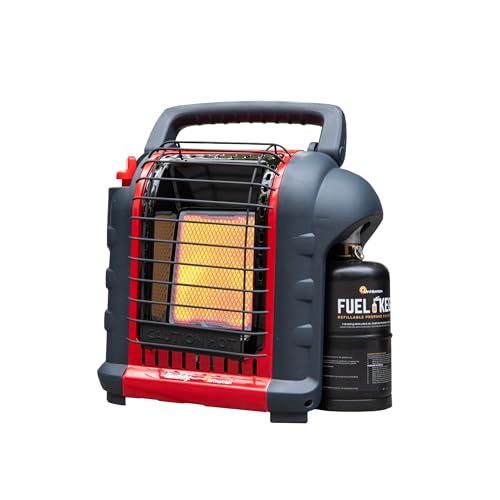
Mr. Heater MH9BX Buddy Portable Propane Heater
The Buddy is the default recommendation for camping because it carries the safety features that matter, an oxygen depletion sensor that shuts the heater down as oxygen falls and a tip over switch that cuts fuel if it is knocked. Output covers a mid size tent on two settings. It still requires ventilation and a carbon monoxide alarm, and Mr. Heater says so clearly in the manual.
Pros
- Oxygen depletion sensor and tip over cutout fitted
- Two output settings for mild and cold nights
- Runs from small cylinders or a hose to a larger tank
Cons
- Still needs ventilation and a carbon monoxide alarm
- Cylinders empty quickly on the high setting

Mr. Heater MH18B Big Buddy Portable Propane Heater
The Big Buddy runs two cylinders and adds a third output level, giving it the range to warm a large family tent or a canvas wall tent that the smaller Buddy cannot keep up with. A battery powered fan circulates the heat rather than radiating it in one direction. It is heavier and taller, so it is a car camping item only, and it carries the same ventilation requirements.
Pros
- Enough output for large tents and awnings
- Fan spreads heat rather than radiating one way
- Runs longer on two cylinders
Cons
- Bulky and heavy to transport
- Fan needs batteries to work

Mr. Heater MH4B Little Buddy Portable Propane Heater
The Little Buddy is a single setting heater that screws directly onto a one pound cylinder, making it the simplest and smallest of the propane options. Output suits a small backpacking style tent or a two person dome rather than a family shelter. It keeps the oxygen depletion sensor and tip over shut off, which is why it stays on this list ahead of cheaper unregulated burners.
Pros
- Smallest propane option with real safety cutouts
- Simple single knob operation
- Runs several hours on one cylinder
Cons
- One output level with no adjustment
- Sits high on the cylinder so it is easy to knock

Camco Olympian Wave-3 Catalytic Heater
Catalytic heaters produce heat through a flameless reaction, which makes them quiet and efficient and popular with overlanders and canvas tent campers. The Wave-3 hangs on a wall or sits on an optional stand and runs from a propane supply. Manufacturer guidance on ventilation is strict, so treat the required fresh air opening as a hard requirement rather than a suggestion.
Pros
- Silent operation with no fan or flame noise
- Adjustable output across a useful range
- Efficient use of propane
Cons
- Requires a specified fresh air opening at all times
- Needs a hose and larger tank rather than screw on cylinders

Campy Gear Chubby 2 in 1 Portable Propane Heater and Stove
Combining a heater and a stove burner in one unit saves space and fuel types on a trip where every item earns its place. The Chubby runs from standard one pound cylinders and includes a tip over shut off. Output is modest, so treat it as a takes the edge off heater for a small tent rather than something that will warm a large shelter.
Pros
- Doubles as a cooking burner
- Compact for the output it produces
- Uses widely available propane cylinders
Cons
- Less proven safety pedigree than Mr. Heater
- Modest output for larger tents
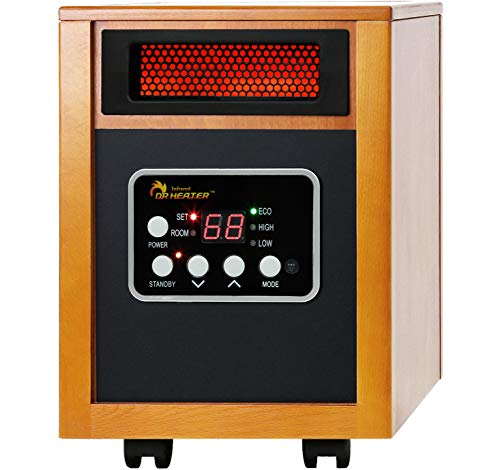
Dr. Infrared Heater DR-968 Portable Space Heater
At a campground with an electrical hookup, an electric heater removes carbon monoxide from the equation entirely, which is a substantial safety advantage. The DR-968 uses infrared elements with a thermostat and a tip over shut off, and it puts out enough heat for a large tent. Check the site’s amperage limit first, because 1,500 watt heaters trip weak hookups.
Pros
- No combustion so no carbon monoxide risk
- Thermostat holds a set temperature
- Overheat and tip over protection fitted
Cons
- Needs a mains hookup with adequate amperage
- Large and heavy for a tent

Lasko MyHeat Personal Ceramic Heater
Drawing only 200 watts, the MyHeat is the heater that will not trip a marginal campsite hookup or drain a large power station in an hour. It warms the space immediately around it rather than a whole tent, which is often all you need beside a camp chair or at the foot of a sleeping area. The ceramic element and cool touch housing make it the least hazardous option here.
Pros
- Very low power draw suits weak hookups
- No combustion and minimal burn risk
- Small enough to pack anywhere
Cons
- Personal warmth only, not tent heating
- Still requires mains or a substantial power station
The lineup, side by side
| # | Model | Output | Best for | Score | Price |
|---|---|---|---|---|---|
| 1 | Mr. Heater MH9BX Buddy Portable Propane Heater | 4,000 and 9,000 BTU settings | Best overall | 9.4 | Check price |
| 2 | Mr. Heater MH18B Big Buddy Portable Propane Heater | 4,000, 9,000 and 18,000 BTU settings | Best for large tents | 9.2 | Check price |
| 3 | Mr. Heater MH4B Little Buddy Portable Propane Heater | 3,800 BTU single setting | Best compact | 9.0 | Check price |
| 4 | Camco Olympian Wave-3 Catalytic Heater | 1,600 to 3,000 BTU adjustable | Best for quiet running | 8.8 | Check price |
| 5 | Campy Gear Chubby 2 in 1 Portable Propane Heater and Stove | Around 9,000 BTU | Best dual purpose | 8.6 | Check price |
| 6 | Dr. Infrared Heater DR-968 Portable Space Heater | 1,500 watts | Best for powered sites | 8.3 | Check price |
| 7 | Lasko MyHeat Personal Ceramic Heater | 200 watts | Best low power option | 8.0 | Check price |
Common questions
Is it safe to use a heater inside a tent?
Only with the right equipment and precautions. Use a heater the manufacturer states is suitable for enclosed spaces, keep ventilation open at both low and high points, run a battery powered carbon monoxide alarm, and never sleep with a fuel burning heater running. Electric heaters at a powered site avoid carbon monoxide entirely.
What is an oxygen depletion sensor?
It is a safety device that shuts off the fuel supply when the oxygen concentration in the surrounding air falls below a safe level, which is an early indicator that ventilation is inadequate. It is a minimum feature to look for on any propane heater intended for enclosed use, and it does not replace a carbon monoxide alarm.
How many BTU do I need for my tent?
Roughly 4,000 BTU suits a small two person tent, around 9,000 covers a mid size family tent, and larger canvas or wall tents need 18,000 or more. Insulation, wind and outside temperature all shift this, and a tent loses heat far faster than a building of the same volume.
Can I run a propane heater overnight?
Manufacturers and safety bodies advise against sleeping with a fuel burning heater running. The common approach is to warm the tent before bed, turn the heater off, and rely on a properly rated sleeping bag and an insulating sleeping pad through the night.
Do tent heaters cause condensation?
Burning propane produces water vapour as well as heat, so yes, and a closed tent then rains it back on you. Ventilation reduces this, as does turning the heater off before sleeping. Electric heaters do not add moisture to the air.
Are catalytic heaters safer than radiant ones?
They burn flamelessly and efficiently, which reduces some risks, but they still consume oxygen and produce combustion products. The ventilation requirements are just as important, and manufacturers specify a minimum fresh air opening that must be maintained the whole time the unit runs.
Can I use an electric heater on a portable power station?
Technically yes if the inverter can supply the wattage, but heating drains batteries extremely quickly. A 1,500 watt heater will empty most portable stations within an hour. A low wattage unit like a 200 watt personal heater is far more realistic on battery power.
What is the safest way to heat a tent?
Reduce the need for heating first with a sleeping bag rated for the conditions, an insulated sleeping pad and warm layers. If you do use a heater, an electric one on a powered site is the lowest risk, followed by a propane heater with an oxygen depletion sensor, adequate ventilation and a carbon monoxide alarm.
The verdict
The Mr. Heater MH9BX Buddy remains the camping heater we would choose, because it combines useful output with the oxygen depletion sensor and tip over cutout that any tent heater should have. Step up to the Big Buddy MH18B for large tents, and if your site has power, an electric heater removes the carbon monoxide risk altogether, which is worth more than any amount of extra output.


