Tile Levelling Systems Compared: Clips vs Wedges
The Raimondi RLS system leads for professional work thanks to consistent clip breaks and a reusable pliers action. Spin Doctor offers the best balance of price and reusable caps for weekend jobs, and the QEP LASH kit is the easiest budget entry into wedge style levelling.
If you lay tile for a living, the Raimondi RLS system gives the most predictable results because its clips break cleanly at the joint every time. For a bathroom or kitchen you are doing yourself, Spin Doctor delivers most of that control with reusable caps, and the QEP LASH kit is the cheapest way to stop lippage on a small floor.
Levelling systems look interchangeable in listings, but the differences show up on the second day of a job. Clip base thickness decides whether the clip snaps below the tile or leaves a stub in the grout line, wedge systems load faster but need a firm pull, and cap systems reuse the expensive part so the running cost falls sharply on large areas. We compared published tile thickness ranges, joint width options, reusability, whether a tensioning tool is required, and the failure patterns owners report on porcelain and large format tile.
Before you buy
Clips, wedges and caps solve the same problem differently Clip and wedge systems place a plastic clip under two tile edges and drive a wedge through the head to pull them flush, which is fast on large floors. Threaded systems replace the wedge with a cap you tighten, giving finer control at the cost of speed. Strap systems suit vertical work because they hold tension while the adhesive grabs. None of them fix a bad substrate, they only remove the small differences between neighbouring tiles.
Match the clip to your tile thickness and joint width Every system quotes a tile thickness range, usually somewhere between 3 mm and 12 mm, with heavy duty variants going further for stone. Choose a clip too thin for your tile and it will not grip the top face properly, too thick and you lose the pull you need. Joint width is a separate choice: buy the clip width that matches the grout line you plan to use, because the clip stem sets that gap.
Work out the real cost per tile before you buy Clips are consumed, wedges and caps are not. On a small bathroom that difference is trivial, but across a large floor the reusable component decides your total spend. Count roughly four clips per standard tile and more for large format work, then compare kits on the price of the consumable part alone rather than the headline kit price.
Removal timing matters more than most people expect Break the clips too early and you undo the levelling, too late and the plastic becomes brittle and awkward to snap flush. Most manufacturers suggest removal once the adhesive has set firm, commonly the day after laying, and always by striking along the grout line rather than across it. Clean any stubs out of the joint before grouting or you will see them through the finished line.
The best picks, ranked

Raimondi RLS Tile Levelling System
Raimondi effectively defined the modern clip and wedge category, and the RLS clips are engineered to fracture at the base rather than tear through the grout joint. The matching pliers apply even tension so you are not guessing at how hard to pull. Owners report the clip break rate on porcelain is noticeably more consistent than with generic clips.
Pros
- Clips break cleanly at the base with few stubs
- Wedges are fully reusable across many jobs
- Widest range of clip sizes for odd tile thicknesses
Cons
- Higher cost per clip than generic systems
- Pliers are effectively required for good results

Spin Doctor Tile Levelling System
Spin Doctor uses a threaded stem with a reusable cap that you tighten by hand or with a driver, so only the cheap stem is consumed on each tile. That threading gives fine control, which helps on thicker natural stone where wedges can overshoot. Owners report it is the friendliest system for anyone new to levelling because you can feel the tension build.
Pros
- Fine tension control suits thick stone and porcelain
- Caps reuse well so running cost stays low
- No specialist pliers needed to get started
Cons
- Slower to place than wedge systems on big floors
- Stems occasionally shear above the tile on hard set mortar

QEP LASH Tile Levelling System
The LASH kit is the most widely stocked wedge system and gets a first time user levelling tile with very little learning. Straps and wedges are colour coded by joint width, and the wedges are reusable after the mortar cures. Owners report it is more than adequate for standard format ceramic on flat substrates.
Pros
- Cheapest way to start levelling on a small job
- Widely available in home centres for restocking
- Wedges reusable many times
Cons
- Straps sometimes tear above the base on dense porcelain
- Less control than threaded systems on thick stone

Rubi Delta Tile Levelling System
Rubi designed Delta around large format and thin panel tile, where a small amount of lippage across a long edge is very visible. The clip footprint spreads load along the joint rather than concentrating it at a point. Owners working with slabs report fewer chipped edges compared with narrow clip designs.
Pros
- Load spread designed for long tile edges
- Strong pull without cracking thin panels
- Well made pliers with adjustable tension
Cons
- Overkill and costly for small standard tiles
- Fewer stockists than QEP or Spin Doctor

Peygran Tile Levelling System
Peygran sells complete kits with clips, reusable wedges and the pliers in one box, which removes the guesswork about what you actually need to buy. The wedge profile grips well and releases without fighting you. Owners report the included pliers are better than the low cost pliers bundled with cheaper kits.
Pros
- Everything needed arrives in one kit
- Pliers quality above the usual bundled tool
- Wedges survive repeated reuse
Cons
- Clip refills are less common in local stores
- Two joint widths only in most kits
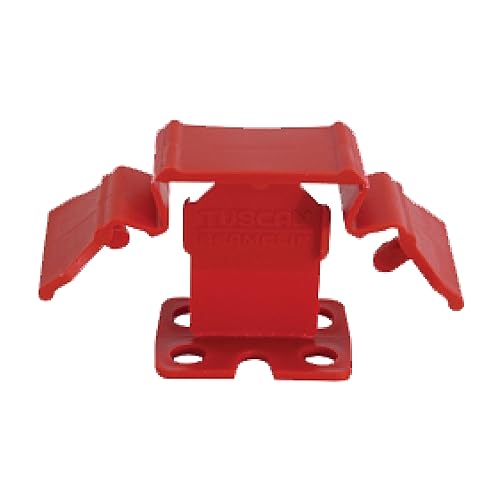
Tuscan Leveling System
Tuscan built its reputation on strap systems that hold tile flat while thinset cures, including versions aimed at vertical work where gravity fights you. The seam clip variants also help keep long runs aligned. Owners tiling shower walls report noticeably less slump on heavy tile.
Pros
- Holds vertical tile against slump while curing
- Seam clip options for long alignment runs
- Well established system with good support
Cons
- The tensioning gun adds noticeable upfront cost
- More parts to keep track of on a job

Perfect Level Master Tile Levelling System
Perfect Level Master focuses on very thin joint clips, which matters when a rectified porcelain layout calls for a minimal grout line. The clips are moulded to snap flush so nothing telegraphs through the grout. Owners report they work best on flat substrates where only small corrections are needed.
Pros
- Genuinely thin joint options for rectified tile
- Clips snap flush without leaving stubs
- Compatible with common levelling pliers
Cons
- Thin clips are more fragile during placement
- Less correction range on uneven substrates
How they stack up
| # | Model | Type | Best for | Score | Price |
|---|---|---|---|---|---|
| 1 | Raimondi RLS Tile Levelling System | Clip and wedge | Best overall | 9.4 | Check price |
| 2 | Spin Doctor Tile Levelling System | Threaded stem and reusable cap | Best value | 9.2 | Check price |
| 3 | QEP LASH Tile Levelling System | Strap and wedge | Best budget | 9.0 | Check price |
| 4 | Rubi Delta Tile Levelling System | Clip and wedge | Best for large format tile | 8.8 | Check price |
| 5 | Peygran Tile Levelling System | Clip and wedge | Best kit for a first floor | 8.6 | Check price |
| 6 | Tuscan Leveling System | Strap with cap or seam clip | Best for wall tile | 8.3 | Check price |
| 7 | Perfect Level Master Tile Levelling System | Clip and wedge | Best for tight grout lines | 8.0 | Check price |
Frequently asked questions
Do tile levelling systems really prevent lippage?
They remove the small height differences between adjacent tiles, which is what most people mean by lippage. They cannot correct a substrate that is out of flat over a longer span, so screeding or self levelling compound still comes first on a wavy floor.
How many clips do I need per tile?
A common rule is one clip per edge intersection, which works out at roughly four per standard tile in a grid layout. Large format tile needs more along each long edge, often one every 250 to 300 mm, so buy generously rather than running short mid job.
Are wedges and caps reusable?
Yes, wedges and threaded caps are designed to be reused across many jobs as long as you clean the mortar off before it hardens. The clips or stems are the sacrificial part and get discarded once broken.
When should I remove the clips after tiling?
Most manufacturers advise waiting until the adhesive has set firmly, which in typical conditions means the following day. Strike the wedge or cap sideways along the grout line with a rubber mallet or your boot so the clip snaps below the tile surface.
Can I use a levelling system on wall tile?
Yes, and it helps with heavy tile that tends to slump before the adhesive grabs. Strap based systems and wall specific pliers are designed for this, and clip systems also work provided you support the bottom row properly.
Do I need the matching pliers?
For wedge systems, the pliers make a real difference because they apply repeatable tension and save your hands over hundreds of tiles. Threaded cap systems can be hand tightened, which is why they are often the easier starting point for a one off job.
Will levelling clips leave marks in the grout?
Only if the clip fails to break below the tile surface. Choose a clip rated for your tile thickness, break at the right time, and clear any plastic stubs from the joint before grouting.
Are cheap generic clips worth it?
Generic clips are fine on standard ceramic where the pull required is modest. On dense porcelain or thick stone, cheap clips tear at the head or break above the tile more often, which costs more time than the saving is worth.
The bottom line
For steady professional use the Raimondi RLS system justifies its cost through consistent clip breaks and dependable pliers. Spin Doctor is the pick for a homeowner tackling a bathroom or kitchen because the reusable caps keep the running cost low and the threaded action is forgiving. If you simply need to stop lippage on a small ceramic floor, the QEP LASH kit does the job without complicating the purchase.


