Best Trekking Poles for Hiking, Backpacking and Rough Trails
The Black Diamond Trail Ergo Cork leads for all-around hiking thanks to cork grips and reliable FlickLock levers. The Cascade Mountain Tech Carbon Fiber pair offers the best value, while the TrailBuddy set is the smart budget pick for casual weekend walkers.
For most hikers the Black Diamond Trail Ergo Cork poles are the pair worth reaching for first, with cork grips that shed sweat and dependable lever locks. If you want carbon shafts without a steep price, the Cascade Mountain Tech Carbon Fiber pair is the standout value, and the TrailBuddy poles cover casual walkers on a tight budget.
Trekking poles are trickier to shop for than they look because a low sticker price often hides flimsy twist locks, heavy aluminum, and foam that packs down after a season. To sort the field we compared shaft material, locking style, grip construction, adjustable range and folded length using manufacturer specifications and patterns owners report over long-term use.
Our top picks

Black Diamond Trail Ergo Cork
These aluminum poles pair natural cork grips with an angled ergonomic design that keeps wrists neutral on long climbs. The dual FlickLock levers adjust fast even with gloves on, and the grip extension lets you choke down on steep pitches without stopping to resize.
Pros
- Cork grips stay comfortable when sweaty
- Lever locks adjust quickly with gloves
- Angled grip eases wrist strain on climbs
Cons
- Heavier than carbon alternatives
- Fixed length limits ultralight packing
Cascade Mountain Tech Carbon Fiber
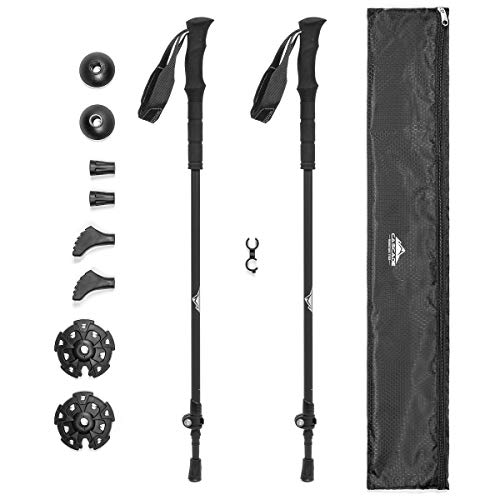
This carbon pair delivers a light swing weight at a price that undercuts most name brands. Cork grips, quick-flip locks and a full set of interchangeable tips make it a versatile kit for hikers who want carbon feel without overspending.
Pros
- Light carbon shafts reduce arm fatigue
- Comes with several swappable tip baskets
- Priced well below premium rivals
Cons
- Carbon is less forgiving under side impact
- Lock tension may need periodic tightening

TrailBuddy Trekking Poles
The TrailBuddy pair keeps things simple with aluminum shafts, EVA foam grips and flip locks that hold their setting on moderate trails. It is a sensible entry point for occasional hikers who want a sturdy pole without a big outlay.
Pros
- Affordable for a first pair
- Foam grips feel soft in bare hands
- Aluminum resists snapping on rocks
Cons
- Foam grips wear faster than cork
- Heavier swing weight than carbon

LEKI Cressida FX Carbon
Built on a folding carbon frame sized for smaller hands, the Cressida FX packs down short for travel and stows easily in a daypack. The Aergon Air grip and secure push-button folding system suit backpackers who value a compact, low-weight setup.
Pros
- Folds very short for stowing
- Grip sized for smaller hands
- Low overall weight
Cons
- Premium price point
- Folding joints need occasional care

Montem Ultra Strong Trekking Poles
Montem leans on thick aluminum shafts and quick-adjust locks for hikers who want a rugged, forgiving pole. The wide cork grip and generous adjustment range make it easy to dial in a comfortable height as you learn what works.
Pros
- Tough aluminum shrugs off abuse
- Wide height range fits many users
- Cork grip handles long days well
Cons
- Heavier than carbon options
- Bulkier packed length

Foxelli Carbon Fiber Trekking Poles
These carbon poles focus on shaving grams, with a light shaft and natural cork grip that owners praise for long-distance comfort. Flip locks and a full tip kit round out a kit aimed at hikers counting every ounce.
Pros
- Very light for reduced fatigue
- Cork grip suited to long miles
- Complete accessory tip set
Cons
- Carbon can crack under a hard fall
- Less ideal for very heavy loads
Hiker Hunger Carbon Fiber Trekking Poles
Hiker Hunger builds a light carbon pole with quick locks and a cork grip aimed at multi-day trips. Owners report the tungsten tips bite well on mixed terrain, and the included baskets adapt the poles across seasons.
Pros
- Light enough for long trips
- Tungsten tips grip mixed ground
- Season-swappable baskets included
Cons
- Locks can loosen under heavy load
- Carbon less durable than aluminum
How to choose
Aluminum versus carbon shafts Aluminum shafts bend rather than snap and shrug off rocky abuse, which makes them the safer bet for heavy loads and rugged scrambles. Carbon shafts weigh less and dampen trail buzz for a smoother swing, but they can crack under a sharp side impact. If you prioritize durability and value, lean aluminum; if you count ounces on long routes, carbon earns its keep.
Locking mechanisms explained Most poles use either external lever locks or internal twist locks. Lever style clamps such as FlickLock and flip locks are quicker to adjust, hold better under load and are easier to service in the field. Twist locks are slimmer but more prone to slipping once worn. For reliability, lever locks are the choice owners return to most.
Grip materials and comfort Cork grips mold to your hand over time and wick moisture, keeping a firm hold on sweaty climbs. EVA foam feels soft and warm but wears faster, while rubber suits cold-weather use but can chafe bare palms. A grip extension below the main handle lets you choke down on steep sections without stopping to resize the pole.
Folding versus telescoping designs Telescoping poles slide down into two or three nested sections and offer a wide height range, ideal for sharing or dialing in the perfect fit. Folding Z-poles break into segments joined by an internal cord and pack much shorter, which travelers and fastpackers prefer. Folding designs trade a little adjustability for a compact stow that clips onto a daypack.
Compared at a glance
| # | Model | Shaft material | Best for | Score | Price |
|---|---|---|---|---|---|
| 1 | Black Diamond Trail Ergo Cork | Aluminum | Best overall | 9.4 | Check price |
| 2 | Cascade Mountain Tech Carbon Fiber | Carbon fiber | Best value | 9.1 | Check price |
| 3 | TrailBuddy Trekking Poles | Aircraft-grade aluminum | Best budget | 8.6 | Check price |
| 4 | LEKI Cressida FX Carbon | Carbon fiber | Best for women | 9.0 | Check price |
| 5 | Montem Ultra Strong Trekking Poles | Aluminum 7075 | Best for beginners | 8.8 | Check price |
| 6 | Foxelli Carbon Fiber Trekking Poles | 100 percent carbon fiber | Best lightweight | 8.9 | Check price |
| 7 | Hiker Hunger Carbon Fiber Trekking Poles | Carbon fiber | Best for backpacking | 8.7 | Check price |
Common questions
How tall should my trekking poles be?
As a starting point, set the pole so your elbow bends at about ninety degrees when the tip rests on flat ground. Shorten the poles slightly on climbs and lengthen them on descents to keep that neutral wrist angle.
Are carbon poles worth the extra cost?
Carbon poles reduce swing weight and arm fatigue over long distances, which matters most to thru-hikers and fastpackers. For casual weekend outings or rocky terrain, sturdy aluminum poles deliver most of the benefit at a lower price.
Do I really need two poles?
A pair distributes load evenly across both arms and improves balance on uneven ground and stream crossings. A single pole can help on gentle trails, but two poles offer noticeably better stability on steep or loaded hikes.
What are the tip baskets for?
Baskets stop the pole tip from sinking too deep into soft ground. Small trekking baskets suit mud and dirt, while wide snow baskets keep the pole from plunging through powder in winter conditions.
Can trekking poles help my knees?
By transferring part of your body weight to your arms, poles can ease the load on knees during long descents. Owners with joint concerns often report the most benefit on steep downhill sections.
Are cork or foam grips better?
Cork grips resist sweat, mold to your hand and last longer, making them the preferred choice for hot, long days. Foam grips feel softer and cost less but tend to wear out sooner.
Will trekking poles fit in a carry-on?
Folding Z-poles collapse short enough to fit inside many packs, but airline rules often classify poles as items that must be checked. Confirm your carrier policy before packing them in a carry-on bag.
How do I keep the locks from slipping?
Wipe down the shafts to remove grit, then adjust the tension screw on lever locks until the clamp holds firmly without forcing. Periodic cleaning and a small tension tweak solve most slipping issues.
Our pick
For the widest range of hikers the Black Diamond Trail Ergo Cork is the pair to beat, blending cork comfort with dependable lever locks. If your budget is the priority, the Cascade Mountain Tech Carbon Fiber pair delivers carbon performance for less, and the TrailBuddy set covers casual walkers without overspending. Match the shaft material and lock style to your terrain and you will land on the right pair.