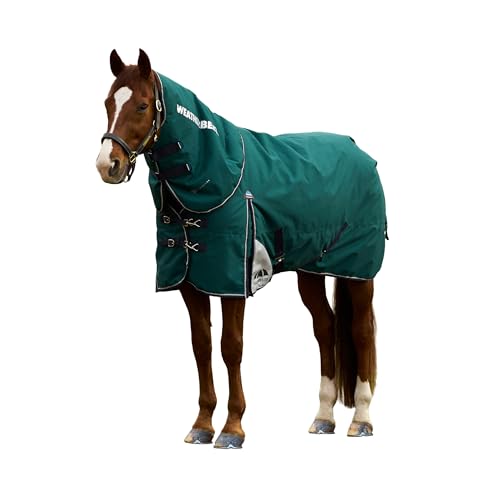
How Denier and Fill Weight Decide a Washable Horse Blanket
Based on specifications and owner feedback, the WeatherBeeta Comfitec Classic Standard Neck Turnout Blanket holds up best to daily mud and machine washing. Harrison Howard’s Cross Trainer Turnout Blanket delivers similar durability for less. Horses wintering outdoors do better in the heavier fill on the Derby Originals Nordic Horse Wug Blanket.
WeatherBeeta’s Comfitec Classic Standard Neck holds up best for owners who turn horses out daily in mud and rain. A 1200D ripstop shell and 220g fill survive repeated hosing and machine washing, though the standard neck cut leaves the poll exposed in sideways weather.
Denier, fill weight and closure hardware all affect how a blanket survives a wash cycle, which makes picking one tricky. We compared shell fabrics, fill weights, hardware and owner feedback on wash-and-wear durability across turnout, stable and fly sheet styles to rank these seven.
How to pick the right one
What to look for in a washable horse blanket Shell fabric denier decides how well a blanket survives fence rubbing and repeated washing. Ballistic nylon rated 1200D to 1680D resists tears better than lighter 600D polyester. Fill weight ranges from none in fly sheets up to 300g in heavyweight turnouts. Closure hardware matters too, since dual buckles and cross surcingles hold up to washing machines better than single-strap designs.
Turnout blankets vs stable blankets Turnout blankets carry a waterproof, breathable coating built for pasture use in rain and snow. Stable blankets and coolers skip that coating, favoring lighter fabric that wicks sweat indoors. Weaver Leather’s Poly Cooler, for instance, has no waterproofing and stays in the barn during storms. Daily turnout calls for a true turnout shell, not a cooler.
Matching fill weight to the season Fly sheets and mesh blankets carry no fill and suit summer pasture time. Fill in the 200g to 250g range covers fall and spring across most US climates. Anything above 300g, like the Derby Originals Nordic Horse Wug Blanket, targets horses wintering outdoors in sub-freezing temperatures. Overdressing a horse in heavy fill during mild weather causes sweating under the blanket.
How to wash a turnout blanket without ruining the coating Bulky turnout blankets often exceed a home washer’s drum capacity, so many owners rely on a laundromat’s large machine or a farm-supply wash service. Hosing off dried mud beforehand keeps the machine’s pump from clogging. Air drying preserves the waterproof laminate, since high-heat dryers can crack it over time. Lighter pieces, like mesh fly sheets and fleece coolers, fit standard home washers without issue.
The shortlist, ranked

WeatherBeeta Comfitec Classic Standard Neck Turnout Blanket
A 1200D ripstop shell and moderate 220g fill make this WeatherBeeta blanket suited to three-season turnout. Owners report the waterproof coating survives repeated hosing and machine washing without peeling. Dual front buckles speed up daily dressing even with cold hands.
Pros
- 1200D ripstop shell resists rips from fence rubbing and rough play
- 220g fill balances warmth without overheating in fall and spring
- Dual front buckles adjust easily with gloved hands
Cons
- Standard neck cut leaves the poll uncovered in blowing rain
- No detachable leg straps limits fit adjustment for narrow-chested horses

Harrison Howard Cross Trainer Turnout Blanket
Harrison Howard pairs a 600D ballistic nylon shell with a 250g fill at a lower cost than premium European brands. Reflective piping adds visibility during early morning turnout. Owners report the waterproof coating lasts through a full winter of daily use.
Pros
- 250g fill rivals pricier heavyweight blankets
- Reflective piping improves visibility on dark mornings
- Leg straps keep the blanket from shifting during turnout
Cons
- 600D shell tears more easily on wire fencing than 1200D-plus options
- Size run is narrower than WeatherBeeta’s lineup

Tough1 600D Poly Turnout Blanket
Tough1 covers the basics for owners who want a wash-and-wear blanket without a big outlay. A 200g fill suits mild winters, and a single front buckle keeps closure simple. The design skips the reinforced tail flap found on pricier turnouts.
Pros
- Lowest-cost entry point in this roundup
- 200g fill works for mild-to-moderate winters
- Elastic surcingles clean up easily after washing
Cons
- Single buckle closure loosens faster than dual-buckle designs
- No reinforced tail flap, so tail rubbing wears fabric sooner

Derby Originals Nordic Horse Wug Blanket
Derby Originals built this blanket for horses that live outside through harsh winters. A 1680D ballistic nylon shell shrugs off fence contact, and the 300g fill adds real warmth. An attached neck cover means one less piece to wash separately.
Pros
- 1680D shell is the most tear-resistant fabric in this roundup
- 300g fill suits horses wintering outdoors full time
- Attached neck cover cuts down on separate laundry loads
Cons
- Heavier fill can overheat horses in milder climates
- Bulkier shell takes longer to dry after washing

Weaver Leather Poly Cooler
Weaver Leather’s Poly Cooler wicks moisture from a sweaty or freshly bathed horse before turnout. A brushed polyester shell with no fill and no leg straps washes and dries faster than a turnout blanket. It is not waterproof, so it stays in the barn during rain.
Pros
- Lightweight design dries faster than filled turnout blankets
- Fleece lining wicks sweat after exercise or bathing
- No leg straps simplify washing and storage
Cons
- Not waterproof, so unsuitable for outdoor turnout in rain
- Lacks the durability of ballistic nylon shells for daily outdoor wear

Kensington All Season Wug Turnout Blanket
Kensington built this blanket for owners in true winter climates. A 1200D ripstop nylon shell pairs with 300g fill and a quilted lining for warmth retention. Contoured leg straps keep the blanket in place through active turnout.
Pros
- 300g fill and quilted lining suit sub-freezing turnout
- Contoured leg straps reduce shifting during movement
- 1200D shell resists tearing from ice-crusted fencing
Cons
- Too warm for fall or spring turnout in milder regions
- Heavier construction takes longer to air dry after washing
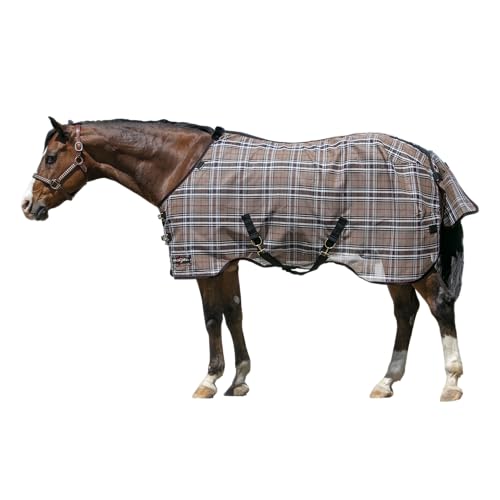
Kensington Protective Fly Sheet
This Kensington sheet swaps insulation for UV-blocking mesh that keeps flies and sun off a horse in summer pasture. No fill means it dries within an hour of machine washing. A removable neck cover extends coverage for horses with sensitive skin.
Pros
- Lightweight mesh dries quickly after washing
- 70% UV-blocking fabric reduces sun bleaching and skin irritation
- Removable neck cover adds coverage without a separate hood
Cons
- Offers no warmth, so unsuitable for cold-weather turnout
- Mesh tears more easily than ballistic nylon turnout shells
Compared at a glance
| # | Model | Shell Fabric | Best for | Score | Price |
|---|---|---|---|---|---|
| 1 | WeatherBeeta Comfitec Classic Standard Neck Turnout Blanket | 1200D ripstop polyester | Best overall | 9.4 | Check price |
| 2 | Harrison Howard Cross Trainer Turnout Blanket | 600D ballistic nylon | Best value | 9.1 | Check price |
| 3 | Tough1 600D Poly Turnout Blanket | 600D polyester | Best budget | 8.8 | Check price |
| 4 | Derby Originals Nordic Horse Wug Blanket | 1680D ballistic nylon | Best for turnout | 8.6 | Check price |
| 5 | Weaver Leather Poly Cooler | 300D brushed polyester | Best for stable use | 8.4 | Check price |
| 6 | Kensington All Season Wug Turnout Blanket | 1200D ripstop nylon | Best for winter | 8.2 | Check price |
| 7 | Kensington Protective Fly Sheet | Knitted mesh, no fill | Best for summer | 8.0 | Check price |
Common questions
Can you wash a horse blanket in a regular washing machine?
Most home washers struggle with bulky turnout blankets due to drum capacity, so owners often use a laundromat’s large-capacity machine or a farm-supply wash service. Lighter pieces like mesh fly sheets and fleece coolers, such as the Weaver Leather Poly Cooler, usually fit standard home machines.
How often should a turnout blanket be washed?
Most owners wash a turnout blanket at least once per season, plus spot-hose muddy areas between full washes. Daily winter use often calls for more frequent washing to keep the waterproof coating from clogging with dirt.
What denier is best for a washable turnout blanket?
Denier ratings of 1200D to 1680D, like those on the Derby Originals Nordic Horse Wug Blanket, hold up best to daily turnout and repeated washing. Lighter 600D fabric costs less but tears more easily on fencing and rough play.
Is a heavier fill always warmer and better?
Heavier fill traps more heat but can cause sweating if used in mild weather. A 220g to 250g fill suits most three-season climates, while 300g-plus fill fits horses wintering outdoors in sub-freezing temperatures.
What is the difference between a turnout blanket and a stable blanket?
Turnout blankets carry a waterproof outer coating for outdoor pasture wear, while stable blankets and coolers skip that coating and focus on breathability indoors. A cooler like Weaver Leather’s Poly Cooler is not built for rain.
How do you get mud off a blanket before washing?
Letting mud dry, then brushing or hosing it off before machine washing keeps a washer’s pump from clogging. Spot-treating stubborn stains beforehand also improves how well the wash cycle cleans the fabric.
What size horse blanket do I need?
Measure from the center of the chest to the point of the buttock in inches; that number matches the blanket size. Sizes across this roundup typically range from around 51 to 87 inches depending on the brand.
Are mesh fly sheets machine washable?
Yes, lighter mesh sheets like the Kensington Protective Fly Sheet fit standard home washers since they carry no fill. Air drying instead of machine drying helps preserve the UV-blocking coating on the mesh.
Turnout blanket or fly sheet: which does a horse need in summer?
A fly sheet like the Kensington Protective Fly Sheet blocks UV rays and insects without trapping heat, while a turnout blanket adds warmth a horse does not need in warm months. Summer pasture time generally calls for the sheet, not the blanket.
Can a washable blanket handle daily outdoor turnout?
Yes, shells rated 1200D and above, such as those on the WeatherBeeta Comfitec Classic and Kensington All Season Wug, are built for daily fence contact and repeated washing. Lighter 600D shells hold up to washing but wear faster under daily outdoor use.
Our take
The WeatherBeeta Comfitec Classic Standard Neck Turnout Blanket earns the top spot, since its 1200D ripstop shell and 220g fill suit most three-season turnout routines without overheating a horse. Owners on a tighter budget should look at the Tough1 600D Poly Turnout Blanket instead. Horses wintering outdoors in sub-freezing cold are better served by the heavier 300g fill on the Derby Originals Nordic Horse Wug Blanket or Kensington All Season Wug Turnout Blanket.