Weed Killers for Drives, Beds and Lawns Compared
Roundup Weed and Grass Killer III is our top pick for driveways, patios and cleared ground where nothing needs to survive. BioAdvanced All-in-One Lawn Weed and Crabgrass Killer is the choice for lawns, and Green Gobbler 20 Percent Vinegar Weed Killer suits gardeners avoiding synthetic herbicides.
Choosing a weed killer starts with where you are spraying, not with the brand. Roundup Weed and Grass Killer III clears paving, gravel and beds you intend to replant later, BioAdvanced All-in-One Lawn Weed and Crabgrass Killer kills broadleaf weeds while leaving turf standing, and Green Gobbler 20 Percent Vinegar Weed Killer gives a fast contact knockdown without synthetic herbicides.
The common mistake is buying a non selective product for a lawn, which leaves brown patches that take a season to recover, or expecting a contact killer to deal with deep rooted perennials that regrow within a fortnight. Selectivity, residual soil activity and whether the product moves into the root all change the outcome. We compared active ingredients, label uses, coverage and rainfast times, then ranked seven products by the situation each is designed for. Always read and follow the product label, since it is the legally binding instruction for safe use.
What we recommend

Roundup Weed and Grass Killer III Ready-To-Use
A non selective systemic spray that moves down into the root system, which is why treated weeds do not simply regrow from the crown. The ready to use format removes mixing errors, and the wand keeps spray away from your hands. It kills anything green it touches, so it belongs on paving, gravel and cleared ground rather than lawns.
Pros
- Reaches the root rather than burning off tops
- No mixing or measuring required
- Effective on deep rooted perennials
Cons
- Kills grass and ornamentals it contacts
- Ready to use costs more per area than concentrate

Spectracide Weed and Grass Killer Concentrate
A concentrate that mixes into a sprayer, which brings the cost per treated area down substantially for anyone clearing a large drive or a neglected plot. Fast visible results make it easy to see what has been covered. Mixing accuracy matters, so measure rather than estimate.
Pros
- Much cheaper per treated area
- Fast visible knockdown
- One bottle covers a large plot
Cons
- Requires a sprayer and careful mixing
- Non selective, so drift damages plants

BioAdvanced All-in-One Lawn Weed and Crabgrass Killer
A selective formula that targets broadleaf weeds and crabgrass while leaving established turf grasses unharmed when used as directed. That selectivity is the whole reason to choose it over a general weed killer. Check the label against your grass type, since some formulations are not suitable for every species.
Pros
- Leaves established turf standing
- Handles both broadleaf weeds and crabgrass
- Hose end options make coverage even
Cons
- Not suitable for every grass species
- Slower to show results than contact killers

Ortho GroundClear Weed and Grass Killer
Formulated to keep an area clear for an extended period rather than simply killing what is growing today, which suits gravel drives and fence lines. That persistence is exactly why it must be kept away from anywhere you intend to plant. Read the residual period on the label before treating any bed.
Pros
- Keeps treated areas clear far longer
- Reduces repeat spraying on gravel
- Good on hard surface joints and edges
Cons
- Soil residual prevents future planting
- Runoff can affect nearby plants

Compare-N-Save Concentrate Grass and Weed Killer
A high concentration glyphosate product aimed at acreage rather than a back garden, where the cost per treated area of ready to use sprays becomes impractical. It demands careful measuring, protective equipment and calm conditions. For clearing a large neglected plot before landscaping, it is the economical route.
Pros
- Lowest cost per treated area here
- Systemic action reaches roots
- One bottle covers extensive ground
Cons
- Mixing errors are easy to make
- Overkill for a small garden

Green Gobbler 20 Percent Vinegar Weed Killer
A high strength acetic acid spray that burns off top growth quickly, often within hours in sunshine. It is a contact killer, so perennials with established roots regrow and need repeat treatment. Despite being vinegar based it is corrosive at this concentration and requires gloves and eye protection.
Pros
- Very fast visible results
- No synthetic herbicide residue
- Useful on paving joints and young weeds
Cons
- Perennial roots survive and regrow
- Corrosive strength needs protective gear
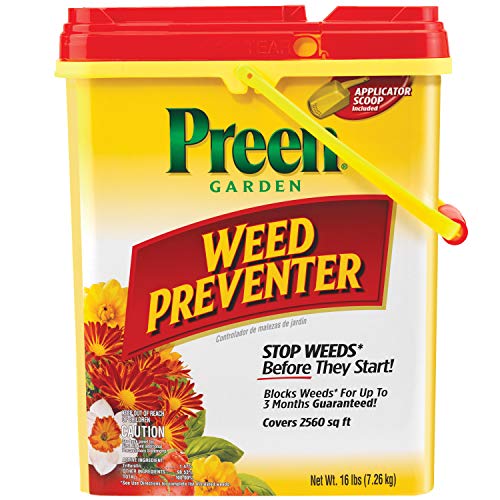
Preen Garden Weed Preventer
A pre emergent granule that stops weed seeds germinating rather than killing what is already there, which makes it the right product for a bed you have just cleared and mulched. It must be applied to weed free soil and watered in. It also prevents desirable seeds germinating, so keep it away from areas you intend to sow.
Pros
- Cuts weeding through the season
- Safe around many established ornamentals per label
- Granules are easy to spread evenly
Cons
- Does nothing to existing weeds
- Cannot be used where you plan to sow seed
How they compare
| # | Model | Action | Best for | Score | Price |
|---|---|---|---|---|---|
| 1 | Roundup Weed and Grass Killer III Ready-To-Use | Non selective systemic | Best overall | 9.4 | Check price |
| 2 | Spectracide Weed and Grass Killer Concentrate | Non selective | Best value | 9.2 | Check price |
| 3 | BioAdvanced All-in-One Lawn Weed and Crabgrass Killer | Selective for lawns | Best for lawns | 9.0 | Check price |
| 4 | Ortho GroundClear Weed and Grass Killer | Non selective with residual activity | Best for long term control | 8.8 | Check price |
| 5 | Compare-N-Save Concentrate Grass and Weed Killer | Non selective systemic | Best for large areas | 8.6 | Check price |
| 6 | Green Gobbler 20 Percent Vinegar Weed Killer | 20 percent acetic acid | Best non synthetic option | 8.3 | Check price |
| 7 | Preen Garden Weed Preventer | Pre emergent seed blocker | Best for garden beds | 8.0 | Check price |
What to look for
Selective and non selective are the first decision Non selective products kill anything green they touch, which is what you want on a driveway, a gravel path or ground being cleared for landscaping. Selective lawn products are formulated to kill broadleaf weeds while leaving turf grasses alive, and they are the only sensible choice for a lawn. Using a non selective product on grass leaves dead patches that take a full season to fill in, and it is the most common and most regretted mistake in this category.
Contact, systemic and pre emergent action Contact killers burn off foliage quickly and look impressive, but anything with a deep root regrows within weeks. Systemic products are absorbed and carried into the root, which takes longer to show results and gives lasting control of perennials such as bindweed and dandelion. Pre emergent products stop seeds germinating and do nothing to established plants. Matching the action to the weed type saves repeated spraying.
Timing, weather and application Most weed killers work best on actively growing weeds in mild, dry, calm conditions. Check the rainfast time on the label, since rain shortly after application can wash the product off before it is absorbed. Spraying in wind causes drift onto plants you value, and spraying in very hot sun can scorch foliage before a systemic product has moved into the plant. Early morning on a still day is generally the best window.
Safety, storage and following the label The label is the legally binding instruction for how a product may be used, and it specifies protective equipment, mixing rates and any waiting period before children and pets return to the area. Wear gloves and eye protection, keep concentrates in original containers well out of reach, and never mix products together. If a treated area borders a pond or a watercourse, check the label for aquatic restrictions before spraying anything.
Good to know
What is the difference between selective and non selective weed killer?
Selective products target certain plant types, typically broadleaf weeds, while leaving turf grasses unharmed. Non selective products kill any plant they contact. Lawns need selective products, hard surfaces and cleared ground can take non selective ones.
How long before it rains can I spray?
Every product states a rainfast period on the label, commonly anywhere from thirty minutes to several hours. Spraying before rain within that window wastes the application. Check the forecast and the label together rather than assuming.
Will weed killer stop me planting in that area?
It depends entirely on whether the product has residual soil activity. Many systemic sprays break down and allow planting after a short interval stated on the label, while extended control products deliberately keep soil clear for months. Read the replanting interval before treating any bed.
Is vinegar based weed killer safer?
It leaves no synthetic herbicide residue, which appeals to many gardeners, but horticultural strength acetic acid is corrosive and requires gloves and eye protection. It also only burns off top growth, so perennial weeds return and need repeat treatment.
When are children and pets safe to return?
The label specifies this, and for most products it is once the treated area is completely dry. Granular products usually require watering in and drying before re entry. Follow the specific product instructions rather than a general rule.
Why did the weeds come back?
Usually because a contact killer removed the foliage but not the root, or because new seeds germinated in the cleared space. Systemic products handle established roots, and a pre emergent applied afterwards reduces the flush of new seedlings.
Can I use weed killer on a gravel drive?
Yes, and a non selective product with residual activity is the usual choice, since gravel has no plants worth saving. Take care where the gravel drains toward beds or a lawn, because runoff carries the product with it.
Do I need a sprayer or is ready to use enough?
Ready to use bottles are convenient and accurate for spot treatment and small areas. Concentrates plus a tank sprayer cost far less per treated area and make sense for large drives, fence lines or plot clearance, provided you measure carefully.
Final word
For paving, gravel and ground you are clearing, Roundup Weed and Grass Killer III handles deep rooted weeds without regrowth, and Spectracide Weed and Grass Killer Concentrate does the same work more cheaply if you own a sprayer. Lawns need the selective BioAdvanced All-in-One Lawn Weed and Crabgrass Killer instead. Whichever you choose, follow the product label exactly, since it governs both safety and effectiveness.