Which Wireless Charging Pad Really Hits Its Rated Watts
Anker’s 313 pad suits daily use best, holding a steady charge without fussy placement. Android owners get the full rated speed from the Belkin BoostCharge 15W pad, adapter included. iPhone owners should pick the Apple MagSafe Charger, since its magnets center the coil for peak wireless output every time.
Seven pads make this list, but three answer most searches quickly. Anker’s 313 wins on everyday consistency, Belkin’s 15W pad wins on Android charging speed, and Apple’s MagSafe wins on iPhone speed. Each solves a distinct charging problem rather than competing on the same spec.
Rated wattage printed on a box rarely survives contact with a real phone and a real adapter. We compared each pad’s stated output against what iPhones and Android phones can actually accept, checked coil alignment tolerance, and noted whether a compatible adapter ships in the box. Owners report placement and adapter choice cause more slow charging complaints than the pad itself.
The shortlist, ranked

Anker 313 Wireless Charger
Anker’s 313 holds a steady charge once the phone lands on the coil, even when placement drifts off center. A rubberized surface keeps the phone from sliding during notifications. Based on the listing, output tops out at 10 watts, which trails 15 watt rivals but rarely causes complaints in daily use.
Pros
- Starts and holds a charge reliably
- Tolerates off center phone placement
- Rubberized surface resists sliding
Cons
- Power adapter not always included in the box
- Peak output trails 15 watt pads
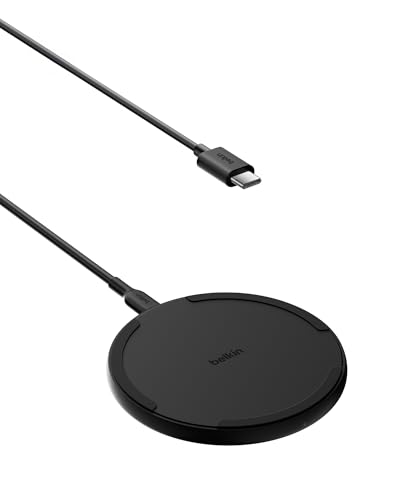
Belkin BoostCharge Wireless Charging Pad 15W
Belkin includes an adapter rated to actually deliver 15 watts, closing a gap many rival pads leave open. Android phones that support higher wireless rates reach full speed here instead of throttling. Foreign object detection shuts the coil off if keys or coins land on the pad.
Pros
- Ships with an adapter that hits the rated 15 watts
- Solid build quality for a flat pad
- Foreign object detection adds a safety layer
Cons
- Higher outlay than basic flat pads
- iPhones still cap below the rated speed
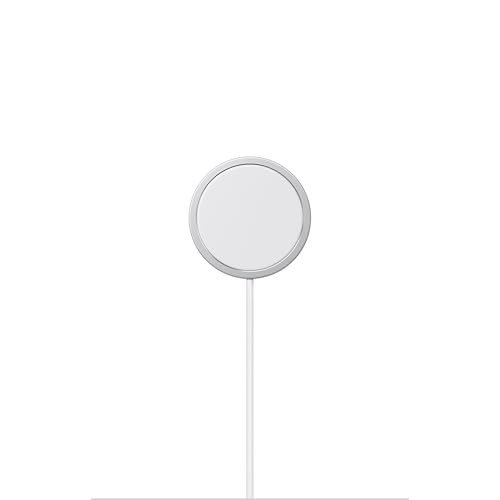
Apple MagSafe Charger
Magnets snap the coil into the same spot every time, so supported iPhones reach their full 15 watt wireless rate here. Generic flat pads cannot match that alignment and typically cap iPhones lower. A fixed, non removable cable limits how far the charger can sit from an outlet, and Apple sells the adapter separately.
Pros
- Magnets align the coil precisely every time
- Reaches full 15 watt speed on supported iPhones
- Compact puck design travels easily
Cons
- Power adapter sold separately
- Fixed cable restricts placement options
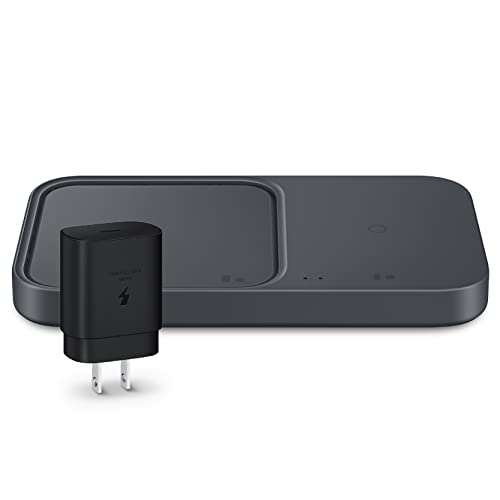
Samsung Wireless Charger Duo
Two coils share one base, so a phone and a watch or earbuds charge side by side. Samsung phones reach the fastest rate the pad supports, up to 15 watts on the main coil. Other brands still charge here since the pad follows the standard wireless protocol, just not at Samsung’s top speed.
Pros
- Charges a phone and an accessory together
- Cuts one adapter from a crowded nightstand
- Power adapter included in the box
Cons
- Fastest rate reserved for Samsung phones
- Larger footprint than single coil pads

Nomad Base One Wireless Charger
Machined metal and glass give this pad enough weight to stay put during a one handed phone removal. Magnetic alignment centers supported phones on the coil automatically. Desk presence matters here, since the finish reads more like furniture than a typical charging accessory.
Pros
- Machined metal and glass construction
- Weight keeps the base from sliding or lifting
- Magnetic alignment centers the phone automatically
Cons
- Highest outlay among the pads compared here
- Power adapter sold separately
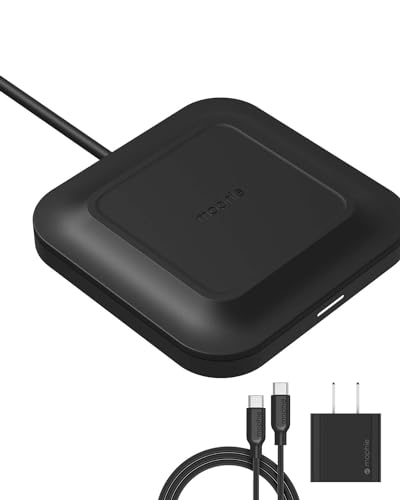
Mophie Wireless Charging Pad
Mophie tunes its coil to reach through thicker cases than most flat pads manage, so rugged case owners see fewer dropped charging sessions. A soft touch top resists scratching a glass phone back overnight. Output stays at 10 watts, below faster 15 watt pads but steady within that limit.
Pros
- Reaches through thicker cases than typical pads
- Soft touch surface protects glass phone backs
- Built in temperature and object safety cutoffs
Cons
- Peak speed trails 15 watt pads
- Plain design compared to premium options
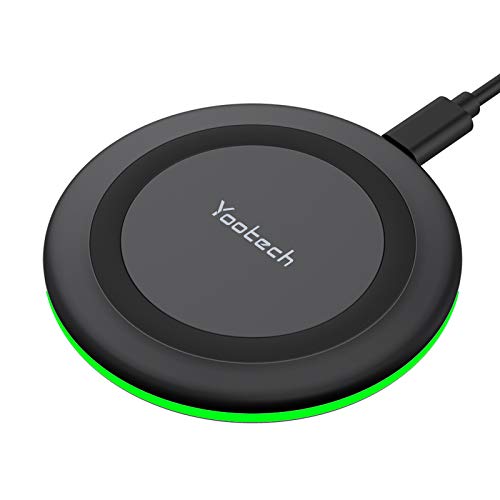
Yootech Wireless Charger Pad
Yootech keeps the design simple: a flat coil, a dim sleep friendly indicator light, and dependable charging without extras. Peak output sits at 10 watts, and the adapter is sold separately. For a spare pad at a second desk or a guest room, it covers the basics without complication.
Pros
- Low outlay for a pad that works reliably
- Indicator light dims for bedside use
- Overcharge and temperature protection included
Cons
- Plain plastic construction
- Slower charging through thicker cases
How they stack up
| # | Model | Output | Best for | Score | Price |
|---|---|---|---|---|---|
| 1 | Anker 313 Wireless Charger | Up to 10 watts depending on device | Best overall | 9.4 | Check price |
| 2 | Belkin BoostCharge Wireless Charging Pad 15W | Up to 15 watts | Best for Android phones | 9.2 | Check price |
| 3 | Apple MagSafe Charger | Up to 15 watts for supported iPhones | Best for iPhone | 9.0 | Check price |
| 4 | Samsung Wireless Charger Duo | Up to 15 watts on the main pad | Best for charging two devices | 8.7 | Check price |
| 5 | Nomad Base One Wireless Charger | Up to 15 watts with magnetic alignment | Best build quality | 8.5 | Check price |
| 6 | Mophie Wireless Charging Pad | Up to 10 watts | Best for case tolerance | 8.3 | Check price |
| 7 | Yootech Wireless Charger Pad | Up to 10 watts depending on device | Best budget option | 8.0 | Check price |
How to pick the right one
What actually determines wireless charging speed Rated wattage is a ceiling, not a guarantee. A pad printed with 15 watts only reaches that number if the phone supports it and the adapter can supply enough current. iPhones typically cap near 7.5 watts on non MagSafe pads no matter what the box claims. Before blaming a pad for slow charging, check the adapter, since a leftover 5 watt plug from an older phone is the most common bottleneck.
How much does coil alignment change charging speed Wireless charging needs the coil inside the phone lined up closely with the coil inside the pad. Set the phone down slightly off center and charging can slow or stop, which explains many overnight low battery surprises. Magnetic pads such as MagSafe solve this by snapping into position automatically. Flat pads vary widely, so a textured ring or a wider coil area is worth checking before buying.
Best wireless charger for a nightstand with two devices A single coil pad works fine at a desk but leaves a watch or earbuds without a spot to charge. Dual coil pads like the Samsung Duo put a phone and an accessory on one base, cutting a cable from the nightstand. Compatibility still matters, since accessory charging speed and phone charging speed are set separately by each coil. Anyone juggling a phone, watch, and earbuds benefits most from this layout.
Does a phone case block charging, and does heat matter overnight Most plastic and silicone cases up to a few millimeters charge without issue. Metal cases, pop socket mounts, and thick rugged shells often block the field entirely. Wireless charging also runs less efficiently than a cable, and the lost energy becomes heat that can slow or pause a session. Keep pads off soft bedding and out of direct sunlight, since trapped heat is the most common cause of repeated overnight interruptions.
Frequently asked questions
Why is my wireless charging pad charging so slowly?
The adapter is usually the limit, not the pad. A 5 watt plug from an old phone cannot feed a 15 watt pad. Case thickness and off center placement slow charging too.
Do wireless charging pads work through phone cases?
Most plastic and silicone cases under a few millimeters are fine. Metal cases, magnetic mounts, and thick rugged shells often block charging completely.
Is MagSafe faster than a regular wireless charging pad?
For iPhones, yes. MagSafe’s magnets center the coil for the full 15 watt rate, while most flat pads cap iPhones near 7.5 watts.
Can a wireless charger damage phone battery health over time?
Heat is the real concern, not the charging method itself. Pads that run cool and phones with optimized charging settings keep long term wear minimal.
Which wireless charging pad works best for Android phones?
Pads that ship with a genuinely 15 watt capable adapter, like the Belkin BoostCharge, let supported Android phones reach their full wireless rate.
Wireless charging pad vs stand, which is better for a nightstand?
Stands keep the screen visible for face unlock and video calls. Pads suit a desk where the phone lies flat and out of the way.
Do wireless charging pads use electricity when no phone is on them?
They draw a small standby amount while waiting for a device. It is minor, though unplugging spare pads around the house is a reasonable habit.
Can wireless charging pads charge earbuds and smartwatches too?
Yes, if the accessory case itself supports wireless charging. Small coils need careful centering since their charging area is much smaller than a phone’s.
Is it safe to leave a phone on a wireless charging pad overnight?
Generally yes, since phones stop drawing power once full. Avoid soft bedding that traps heat, and enable any optimized charging setting the phone offers.
How thick can a phone case be and still charge wirelessly?
Most pads tolerate cases up to around 5 millimeters. Mophie and similar pads push that tolerance higher for owners of rugged, thicker cases.
Our take
Anker’s 313 remains the pad most people should buy, since it charges reliably, stays cool, and forgives sloppy placement. Android owners gain real speed from the Belkin BoostCharge 15W pad, while iPhone owners reach full wireless output only with the Apple MagSafe Charger. Everyone else should match the pad to the specific problem, whether that means two device charging, case tolerance, or desk aesthetics.
You might also need

Charging Stations Compared: Multi-Device vs Single-Port

How to Choose a 50mm Lens for Sharper Portraits
Why Your Wireless Earbuds Need Regular Cleaning
