Best 4K Smart TVs You Can Buy Without Overspending
For most rooms the Hisense U8N leads on brightness and contrast, the TCL QM8 pushes even higher peak brightness for bright living rooms, and the Samsung Q60D QLED is the easiest value pick when you want a trusted name without spending big.
If you want a 4K smart TV that looks great without draining your wallet, the Hisense U8N is the strongest all-rounder, with the TCL QM8 close behind for very bright rooms and the Samsung Q60D QLED as the safe mainstream value pick.
Buying an affordable 4K TV is tricky because spec sheets rarely tell you how a panel actually behaves in a sunny room or during fast sports. We compared these seven based on published specifications, panel type, brightness figures and what long-term owners report, so the shortlist reflects real strengths and honest trade-offs.
Before you buy
Panel type shapes everything The biggest driver of picture quality is how the screen makes light. Mini-LED sets stack many small dimming zones behind the panel for high brightness and strong contrast, which helps in sunny rooms. OLED lights each pixel individually for perfect blacks and the best contrast, but usually at lower peak brightness. Standard edge-lit LED and QLED cost less and look good in controlled lighting.
Match brightness to your room A bright room with big windows rewards a high-brightness mini-LED TV, while a darker media room lets an OLED or a well-tuned LED shine. If you watch daytime sports and news, prioritize peak brightness and glare handling. If you mostly watch movies at night, contrast and black levels matter more than raw brightness.
Gaming features worth checking Gamers should look for a 120Hz or 144Hz native panel, low input lag and variable refresh rate support. These features keep fast action sharp and reduce tearing. If you only stream and watch broadcast content, a 60Hz set is perfectly fine and often costs less, so you can put those savings toward a larger screen size.
Smart platform and longevity The built-in operating system decides how you find and launch apps. Google TV, Tizen, webOS, Fire TV and SmartCast each have different layouts, app libraries and ad behavior. Consider which streaming services you use and whether you prefer voice control. A capable platform keeps the TV pleasant to use for years, so weigh it alongside picture quality.
Our top picks
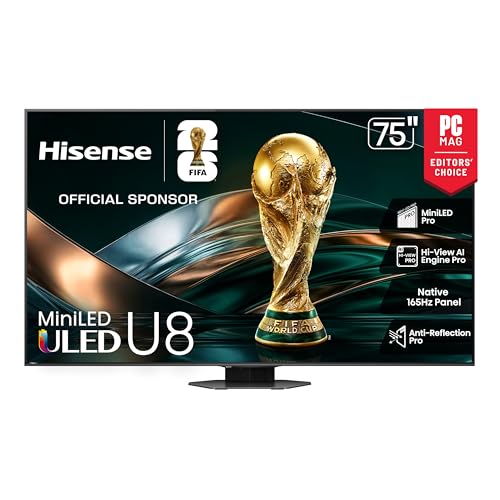
Hisense U8N
The U8N pairs a bright mini-LED backlight with strong local dimming, so highlights pop and dark scenes hold their depth. Owners report it handles both bright daytime viewing and dim movie nights well, making it a versatile choice for a shared living room.
Pros
- Very high peak brightness for the money
- Effective local dimming and deep contrast
- 144Hz panel suits fast gaming
Cons
- Occasional blooming around bright objects
- Google TV interface can feel busy
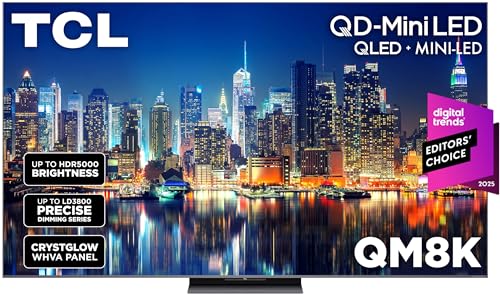
TCL QM8
With one of the highest peak brightness figures in this class, the QM8 shrugs off glare in sun-filled rooms. Its dense mini-LED array delivers punchy HDR, and the large-screen sizes make it a strong home-theater centerpiece without a premium outlay.
Pros
- Exceptional brightness cuts through glare
- Dense dimming zones for strong HDR
- Available in very large sizes
Cons
- Narrower viewing angles off-center
- Bulkier and heavier than rivals

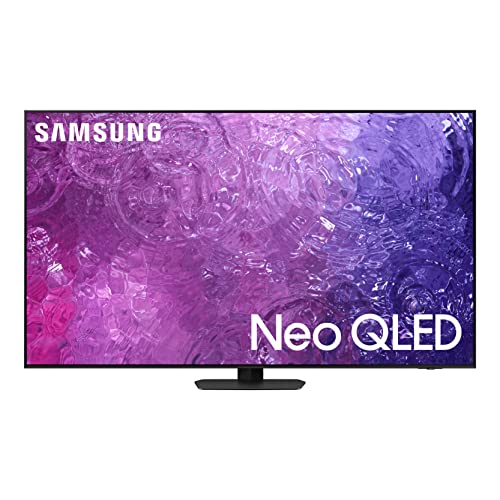
Samsung Q60D QLED
The Q60D delivers vivid QLED color and a slim, tidy design from a brand most buyers already trust. It skips mini-LED backlighting to keep the cost approachable, so it shines in moderate lighting rather than very bright rooms.
Pros
- Rich, saturated QLED color
- Slim design and mature Tizen apps
- Trusted mainstream brand support
Cons
- 60Hz panel limits fast-motion gaming
- Contrast trails mini-LED sets

LG C3 OLED
As an OLED, the C3 renders perfect blacks and infinite contrast because each pixel lights itself. It is a favorite for movie fans and gamers alike, though its peak brightness sits below the brightest mini-LED sets in this group.
Pros
- Perfect blacks and infinite contrast
- Excellent wide viewing angles
- Full gaming feature set with low input lag
Cons
- Dimmer than the brightest mini-LED rivals
- Smaller sizes are the budget-friendly options

Sony Bravia 3
Sony’s Bravia 3 leans on the company’s processing to deliver natural color and smooth motion that flatter films and streaming content. It is a direct-lit LED set, so it prioritizes accurate, balanced images over headline brightness numbers.
Pros
- Natural, accurate color out of the box
- Smooth, film-friendly motion handling
- Clean Google TV experience
Cons
- Not as bright as mini-LED competitors
- 60Hz limits high-frame-rate gaming

Vizio Quantum Pro
The Quantum Pro brings quantum-dot color and a fast panel at one of the most affordable entry points here. It is a smart choice for a secondary room or a first 4K upgrade where every dollar saved counts.
Pros
- Very affordable for a 120Hz set
- Bright quantum-dot color
- Solid gaming latency for the class
Cons
- SmartCast app library is thinner
- Contrast is modest without mini-LED

Amazon Fire TV Omni QLED
The Omni QLED bakes hands-free Alexa control and a QLED panel into one package, so voice search and smart-home commands work without a remote. It suits households already invested in Alexa devices and routines.
Pros
- Hands-free Alexa built in
- Quantum-dot color on a budget
- Tight smart-home integration
Cons
- Fire TV shows heavy promoted content
- 60Hz panel limits fast gaming
How they compare
| # | Model | Display | Best for | Score | Price |
|---|---|---|---|---|---|
| 1 | Hisense U8N | Mini-LED QLED | Best overall | 9.4 | Check price |
| 2 | TCL QM8 | Mini-LED QLED | Best for bright rooms | 9.2 | Check price |
| 3 | Samsung Q60D QLED | QLED (edge-lit) | Best value | 8.9 | Check price |
| 4 | LG C3 OLED | OLED | Best picture quality | 9.3 | Check price |
| 5 | Sony Bravia 3 | Direct-lit LED | Best for movie fans | 8.7 | Check price |
| 6 | Vizio Quantum Pro | Quantum-dot LED | Best budget | 8.4 | Check price |
| 7 | Amazon Fire TV Omni QLED | QLED | Best for smart features | 8.5 | Check price |
Frequently asked questions
Can I get a genuinely good 4K TV without overspending?
Yes. Several mini-LED and QLED models deliver excellent brightness, color and gaming features at approachable prices. Focus on panel type and brightness for your room rather than chasing the newest flagship, and you can land a large, capable set that looks great for years.
Is mini-LED or OLED better for a bright living room?
For a bright room, mini-LED usually wins because it reaches much higher peak brightness and fights glare more effectively. OLED offers superior contrast and viewing angles, which makes it ideal for darker rooms and movie nights, but it can look less impactful under strong sunlight.
What screen size should I choose?
Pick a size based on how far you sit from the screen. For typical living-room distances, larger models around the bigger end of this class feel immersive without pixels showing. Measure your space, leave room for a stand or mount, and generally err toward a bigger screen since most owners rarely wish they had gone smaller.
Do I need a 120Hz or 144Hz panel?
Only if you play fast-paced games on a modern console or PC. A high refresh rate keeps motion crisp and enables variable refresh rate. For streaming, sports and everyday viewing, a 60Hz panel looks smooth and lets you redirect the savings toward a larger or brighter display.
How important is HDR performance?
HDR expands contrast and color so highlights look brighter and shadows keep detail. It matters most on a TV that can actually get bright, which is why mini-LED sets tend to show the biggest HDR benefit. Most models here support the common HDR formats, so prioritize brightness to see the real difference.
Will these TVs work with my streaming services?
All of these run a mainstream smart platform that supports the major streaming apps. The layouts, search and ad behavior differ between systems, so choose one that feels comfortable. If your favorite platform is missing an app, an inexpensive external streaming stick easily fills the gap.
Do I need a separate soundbar?
Most slim TVs have modest built-in speakers because there is little room for large drivers. Built-in sound is fine for casual viewing, but a soundbar noticeably improves dialogue clarity and bass for movies and sports. Budget for one if audio quality matters to you, especially in a large room.
How long should a 4K smart TV last?
With normal use, a quality 4K TV commonly serves well for many years. Panel longevity and continued app updates vary by brand, so pick a manufacturer with a solid support track record. Keeping the software updated and avoiding static, full-brightness images for long stretches helps preserve picture quality over time.
Our pick
The Hisense U8N is the best pick for most buyers thanks to its blend of high brightness, strong contrast and fast gaming support. Choose the TCL QM8 if your room is very bright, or the Samsung Q60D QLED if you want vivid color from a trusted name without stretching your budget.