Best 75 Inch TVs for a True Big-Screen Upgrade
The Samsung QN90C leads our 75 inch picks with its bright Neo QLED panel and strong glare handling. The Hisense U8K delivers nearly the same punch for far less money, while the Sony Bravia XR X90L is the pick for natural, movie-accurate color.
If you want the short version, the Samsung QN90C is the strongest all-around 75 inch TV we compared, the Hisense U8K is the smart-money choice, and the Sony X90L wins on realistic picture quality. Each suits a slightly different room and use case.
Buying at this size is tricky because a bright showroom hides how a panel handles glare, dim scenes, and fast motion at home. We chose these seven based on published specifications, panel type, gaming features, and consistent owner feedback rather than marketing claims.
What we recommend
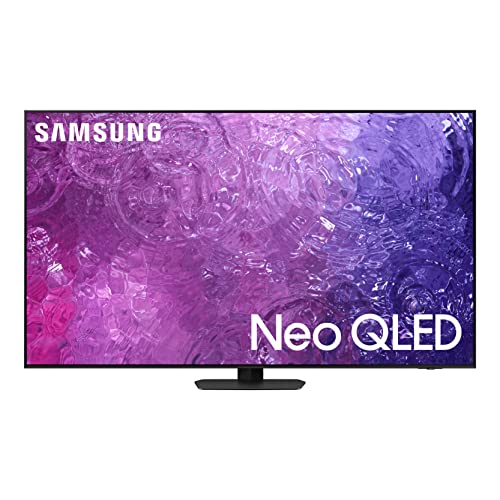
Samsung QN90C 75-Inch Neo QLED
The QN90C pairs a mini-LED backlight with an anti-glare coating that keeps a bright living room watchable. Owners report deep contrast and clean motion for sports, and its four HDMI 2.1 ports cover serious gaming setups.
Pros
- Very bright with strong glare rejection
- Full HDMI 2.1 gaming support
- Clean, judder-free motion
Cons
- Premium price at this size
- Off-angle color shifts slightly
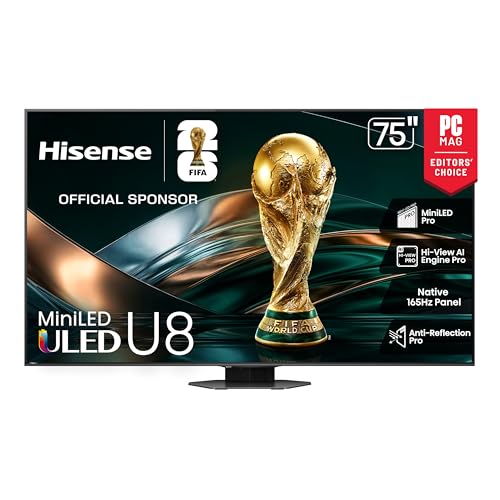
Hisense U8K 75-Inch Mini-LED
The U8K brings mini-LED brightness and local dimming to a much friendlier price. Based on specifications it competes with panels costing far more, and owners praise its HDR punch, though its interface can feel busy.
Pros
- Excellent brightness for the money
- Effective local dimming
- Strong HDR highlights
Cons
- Smart platform can lag
- Menus are cluttered

Sony Bravia XR X90L 75-Inch
Sony’s processing gives the X90L natural skin tones and accurate color that film fans tend to prefer. Owners report excellent upscaling of older content, making it a fine pick if you watch a lot of cable and streaming.
Pros
- Natural, accurate color
- Class-leading upscaling
- Great for movies and streaming
Cons
- Not as bright as top mini-LEDs
- Only two HDMI 2.1 ports

TCL QM8 75-Inch Mini-LED
The QM8 stacks a huge number of dimming zones behind a bright QLED panel, and owners highlight its low input lag and 120Hz support. It is a strong choice for a console setup that also doubles as a bright-room TV.
Pros
- Very high peak brightness
- Responsive for gaming
- Lots of dimming zones
Cons
- Motion handling trails Sony
- Bulkier stand

LG QNED80 75-Inch
The QNED80 uses quantum-dot and NanoCell color for punchy, saturated images in daylight. It skips the priciest backlight tech, but owners find it a dependable everyday screen with LG’s easy webOS interface.
Pros
- Vivid daytime color
- Simple, quick smart platform
- Good value big screen
Cons
- Contrast weaker in dark scenes
- No mini-LED backlight
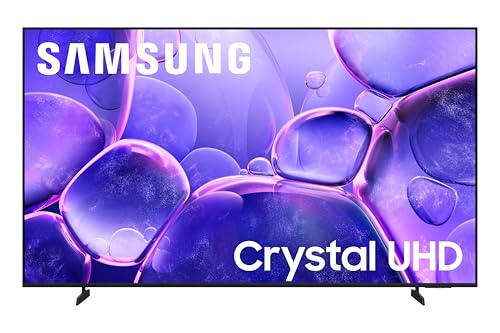
Samsung CU8000 75-Inch Crystal UHD
The CU8000 is a straightforward Crystal UHD panel for shoppers who want a big screen without splurging. Owners describe it as bright and clean for everyday TV, though it lacks the contrast of the mini-LED sets above.
Pros
- Affordable at 75 inches
- Clean everyday picture
- Familiar Samsung interface
Cons
- Only 60Hz refresh
- Limited dark-scene detail

Vizio V-Series 75-Inch (V755M)
The V-Series covers the basics with built-in streaming and free channels at a low cost. Owners report it works well for casual watching, though motion and brightness lag the premium sets when the action gets fast.
Pros
- Low price for the size
- Built-in free streaming channels
- Simple setup
Cons
- Basic contrast and brightness
- Weaker motion handling
What to look for
How much brightness do you really need A 75 inch screen fills your view, so glare and daylight matter more than they do on a smaller set. Mini-LED panels like the QN90C, U8K, and QM8 push far higher peak brightness, which keeps HDR highlights and daytime sports looking crisp. If your room has big windows, prioritize brightness over almost anything else.
Refresh rate and gaming features For consoles or a gaming PC, look for a 120Hz panel with HDMI 2.1, VRR, and a low-lag game mode. The QN90C offers four HDMI 2.1 ports, while the QM8 pairs 120Hz with quick response. If you only stream and watch cable, a 60Hz set such as the CU8000 is perfectly fine and saves money.
Panel type and viewing angle Mini-LED delivers the best mix of brightness and contrast in this list, while standard LED sets trade dark-scene depth for a lower price. Viewing angle also varies: if people sit off to the sides, color can wash out on some VA panels. Consider your seating layout before you commit to a specific model.
Room size and mounting A 75 inch TV wants roughly eight to ten feet of viewing distance for comfortable 4K viewing. Confirm your wall studs or stand can handle the weight, and measure doorways before delivery. Leaving a little breathing room around the panel also helps with heat and cable management.
How they stack up
| # | Model | Panel | Best for | Score | Price |
|---|---|---|---|---|---|
| 1 | Samsung QN90C 75-Inch Neo QLED | Neo QLED (Mini-LED) | Best overall | 9.4 | Check price |
| 2 | Hisense U8K 75-Inch Mini-LED | ULED Mini-LED | Best value | 9.2 | Check price |
| 3 | Sony Bravia XR X90L 75-Inch | Full-array LED | Best for movies | 9.1 | Check price |
| 4 | TCL QM8 75-Inch Mini-LED | QLED Mini-LED | Best for gaming | 9.0 | Check price |
| 5 | LG QNED80 75-Inch | QNED (Quantum NanoCell) | Best for bright rooms | 8.6 | Check price |
| 6 | Samsung CU8000 75-Inch Crystal UHD | Crystal UHD LED | Best budget | 8.2 | Check price |
| 7 | Vizio V-Series 75-Inch (V755M) | LED (no local dimming) | Best for casual viewing | 8.0 | Check price |
Good to know
Is a 75 inch TV too big for my living room?
For most living rooms with eight feet or more of viewing distance, 75 inches feels immersive rather than overwhelming. Measure from your seating to the wall and confirm you have room to sit back comfortably.
Do I need HDMI 2.1 for a 75 inch TV?
Only if you game on a current console or PC at 120 frames per second. For streaming and cable, HDMI 2.0 is enough, though HDMI 2.1 futureproofs the set for years to come.
Is mini-LED worth paying more for?
If you watch in a bright room or love HDR movies, mini-LED sets like the QN90C and U8K deliver noticeably better brightness and contrast. In a dark room on a tight budget, a standard LED can still satisfy.
Which of these is best for sports?
The Samsung QN90C and TCL QM8 handle fast motion and glare best, so both are strong sports choices. The Sony X90L is smooth too and adds more natural color for broadcast feeds.
How far should I sit from a 75 inch TV?
Roughly eight to ten feet is comfortable for 4K content at this size. Sitting closer can reveal more detail but may make on-screen movement feel more intense.
Can these TVs be wall mounted?
Yes, all seven support standard VESA wall mounts. Confirm the exact VESA pattern and weight in the manual, and use a mount rated above the panel’s weight for safety.
Do I still need a soundbar?
Most flat panels have thin speakers, so a soundbar noticeably improves dialogue and bass. It is optional, but many owners of 75 inch sets add one for a fuller experience.
Which pick is the best value?
The Hisense U8K offers the most performance per dollar, delivering mini-LED brightness at a price well below the Samsung and Sony flagships.
Our pick
For most buyers the Samsung QN90C is the safest big-screen upgrade, combining brightness, motion, and full gaming support. Shoppers watching the budget should look hard at the Hisense U8K, while film fans will appreciate the Sony X90L’s natural color.