Which Bluetooth Tracker Actually Finds Your Keys?
Apple AirTag ranks first for iPhone owners, combining the largest crowd finding network with an ultra wideband direction arrow. Samsung Galaxy SmartTag2 does the same job on SmartThings Find for Galaxy handsets. Households mixing iOS and Android should buy Tile Pro, which runs fully on both.
Which Bluetooth tracker wins depends on the phone in your pocket. Apple AirTag leads for iPhone households, Samsung Galaxy SmartTag2 for Galaxy owners, and Tile Pro for anyone needing one tag that works on both. Network reach, not hardware, is what recovers a lost bag.
Specification sheets say almost nothing about the part that matters, which is how many nearby phones can anonymously report a tag’s position. We compared network platform and its practical reach, alarm loudness for losses inside the house, battery type and whether it can be swapped, water resistance ratings, attachment format and how each app behaves on the platform it was not built for.
The best picks, ranked
Apple AirTag
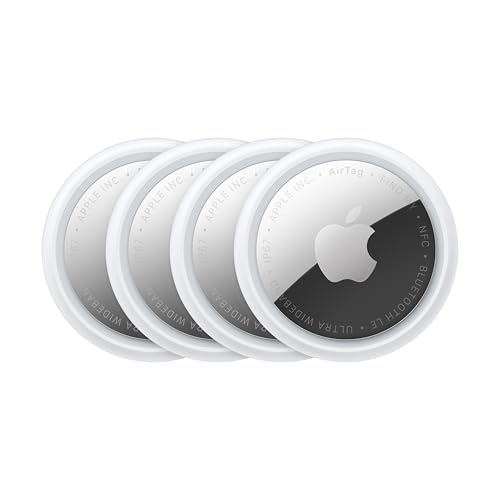
Find My is the reason to buy one, since an enormous installed base of iPhones can anonymously report a tag’s position back to you. Ultra wideband on recent handsets turns that into a direction arrow with a distance readout instead of a hot and cold hunt. A CR2032 coin cell runs about a year and twists out in seconds, with no subscription attached.
Pros
- Widest crowd finding reach of any tag here
- Direction arrow and distance on newer iPhones
- Coin cell swaps out without tools
Cons
- Android phones cannot set one up or track it
- No moulded keyring hole, so a holder is needed

Samsung Galaxy SmartTag2
SmartThings Find carries this one, and ultra wideband adds a direction arrow on compatible Galaxy handsets. Samsung quotes well over a year of use in power saving mode, the longest claim among these seven. A moulded loop takes a keyring straight from the packet. SmartThings routines can also fire when the tag arrives home or leaves.
Pros
- Longest quoted battery life in this roundup
- Attaches to keys with no separate holder
- Triggers SmartThings automations on arrival
Cons
- Useful only alongside Samsung Galaxy phones
- Finding network is smaller than Apple’s
Tile Pro
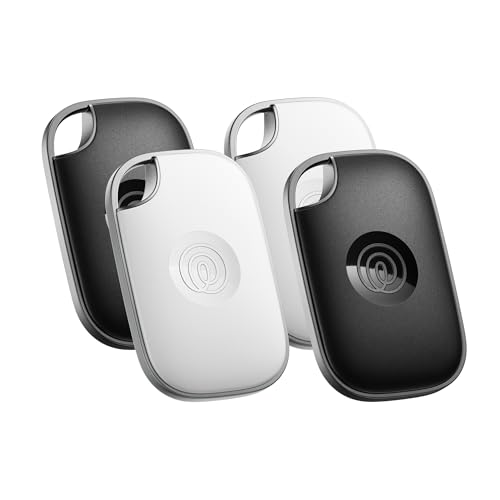
Both iOS and Android get the complete feature set, which nothing built on Find My can match. Volume is the second draw: this is the loudest ringer of the seven, and volume is what finds a remote under a sofa cushion. Direct Bluetooth range runs further than the rest of the Tile line before the network takes over, and the battery is user replaceable.
Pros
- Full functionality on iPhone and Android alike
- Loudest alarm of the trackers compared
- Longest direct range before network handoff
Cons
- Some alerts sit behind a paid tier
- Thicker than the card style trackers

Chipolo ONE Spot
Apple’s network is available here without buying Apple hardware, and a keyring hole is moulded into the shell. Loudness is the selling point: it carries through a closed door more clearly than an AirTag does. Ultra wideband is absent, so expect a map pin and a ringer rather than an arrow pointing across the room.
Pros
- Reaches the Find My network at lower cost
- Keyring hole built into the body
- Audible from another room through a door
Cons
- No ultra wideband, so no direction arrow
- Setup requires an iPhone or iPad

Tile Slim
Credit card dimensions let it lie flat in a wallet slot or passport holder where a fob simply will not go. Tile’s app covers iPhone and Android equally, so it suits a household that has not standardised on one platform. Its battery is sealed for roughly three years, which is the cost of that thickness.
Pros
- Slides into a standard wallet card slot
- Works fully on both phone platforms
- Sealed cell rated for around three years
Cons
- Battery cannot be changed when it dies
- Quieter ringer than the Tile Pro
Chipolo CARD Spot
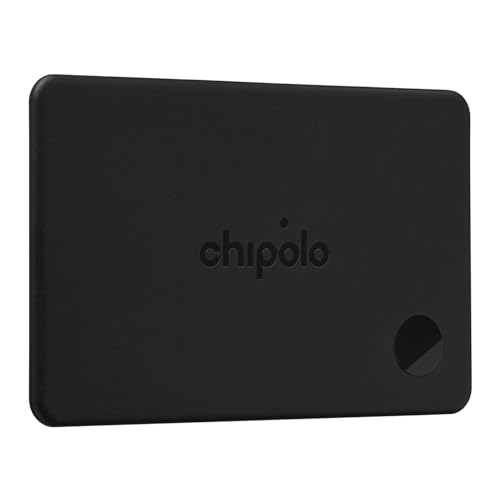
Wallet shaped and running on Find My, this covers iPhone owners who want a card rather than a fob on their keys. Output is strong for something this thin, which helps when the wallet is buried in a coat. Sealed construction makes it a multi year device that gets replaced rather than serviced, and nothing is charged for core finding.
Pros
- Find My coverage in a wallet friendly shape
- Loud despite the thin body
- No subscription for core finding features
Cons
- Sealed battery ends the device’s usable life
- Cannot be set up from an Android phone

Eufy SmartTrack Link
Find My does the heavy lifting while Eufy’s own app layers extra features on top at no ongoing cost. Practical basics are covered: a moulded keyring hole and a CR2032 you can change yourself. Volume trails the Chipolo tags, so it fits a bag or a suitcase better than a cushion hunt.
Pros
- Least costly route onto the Find My network
- Replaceable coin cell and moulded keyring hole
- Core finding carries no ongoing fee
Cons
- Alarm is quieter than Tile or Chipolo tags
- Shell feels less solid than premium tags
What matters most
How do Bluetooth trackers find things far from home? Bluetooth reaches perhaps 60 metres in the open and much less through walls. Past that, recovery depends entirely on strangers’ phones detecting your tag and reporting its position anonymously. Apple’s Find My has the broadest reach by installed base. SmartThings Find covers Galaxy owners. Tile spans both platforms with a smaller user pool. Pick the network that matches the phones around you, then choose hardware that sits on it.
Which Bluetooth tracker works with your phone? Platform settles this before any feature comparison starts. iPhone households can run AirTag, Chipolo and Eufy tags on Find My. Galaxy owners get SmartTag2 plus its automations. Android users outside Samsung are effectively limited to Tile. A house that mixes both should standardise on Tile so every family member sees the same map in the same app.
Best tracker shape for keys, wallets and luggage Match the format to the item, because a fob will not sit in a wallet and a card will not survive a dog collar. Keys want a tag with a moulded loop, such as the SmartTag2 or Chipolo ONE Spot. Wallets need card thickness, which almost always means a sealed battery. Suitcases do best with a tag zipped inside rather than clipped to the handle where it can be removed. Bikes and tool bags want the loudest ringer available.
What to know about batteries, alarms and tracking alerts Replaceable CR2032 cells run roughly a year and cost very little to swap. Sealed card tags last around three years, then the whole unit gets replaced. Frequent ringing shortens both figures. On safety, iOS and Android now warn people when an unknown tag travels with them, and the tag itself chirps after time away from its owner. Never place a tracker on another person or their belongings without consent.
Compared at a glance
| # | Model | Network | Best for | Score | Price |
|---|---|---|---|---|---|
| 1 | Apple AirTag | Apple Find My | Best overall | 9.4 | Check price |
| 2 | Samsung Galaxy SmartTag2 | Samsung SmartThings Find | Best for Galaxy phones | 9.2 | Check price |
| 3 | Tile Pro | Tile network, iOS and Android | Best for cross platform use | 9.0 | Check price |
| 4 | Chipolo ONE Spot | Apple Find My | Best value for iPhone | 8.7 | Check price |
| 5 | Tile Slim | Credit card sized | Best for wallets | 8.5 | Check price |
| 6 | Chipolo CARD Spot | Card sized for wallets | Best card for iPhone | 8.2 | Check price |
| 7 | Eufy SmartTrack Link | Apple Find My | Best budget | 8.0 | Check price |
Questions worth asking
Do Bluetooth trackers work without the internet?
The tag speaks only Bluetooth to nearby phones, so ringing it in the next room works offline. Seeing a location on a map needs your phone to have data, because that position was relayed from somebody else’s device through the network.
How far can a Bluetooth tracker be found?
Direct range runs roughly 30 to 90 metres depending on walls, metal and bodies in the way. Beyond that the tag depends wholly on crowd finding, which has no distance limit as long as a compatible phone eventually walks past it.
Do you need a subscription for a Bluetooth tracker?
Core finding works without paying on every tag here. Tile sells premium tiers adding features such as extended warranty and smart alerts, and rivals promote their own plans, but locating an item is never behind the paywall.
Can Android phones use an AirTag?
Only partially. An Android handset can read an AirTag’s lost mode message over NFC, but it cannot pair, configure or track one. Android owners should buy Tile, or a SmartTag2 if the phone is a Galaxy.
How long do Bluetooth tracker batteries last?
Tags with replaceable coin cells typically manage about a year, and the SmartTag2 claims longer in power saving mode. Sealed card trackers such as the Tile Slim are rated near three years before the unit is replaced. Ringing often shortens both.
Are Bluetooth trackers waterproof?
Most carry IP67, meaning they survive rain, spills and brief immersion. That covers a keyring or a bag left in a downpour. IP67 does not cover prolonged submersion, so keep them off swimming and diving gear.
Can someone use a tracker to follow me?
Both iOS and Android now alert you when an unknown tag appears to be moving with you, and the tag itself chirps after a period away from its owner. Follow the on screen steps to locate and disable it, and contact local authorities if you feel unsafe.
Are Bluetooth trackers useful for luggage?
Yes, and airline baggage is one of the most common uses. Zip the tag inside the case rather than attaching it to the outside. Remember it reports where the bag was last seen by a passing phone, not a live position.
AirTag vs Tile: which should you buy?
AirTag wins on network reach and precision finding, but only for iPhone owners. Tile wins on cross platform support and alarm volume, which matters for items lost inside the house. A mixed platform household should take the Tile Pro.
Final word
Buy for the phone first: Apple AirTag is the strongest pick in an iPhone household thanks to network reach and the ultra wideband direction arrow, while Samsung Galaxy SmartTag2 covers Galaxy owners with the longest battery claim here. Households running both platforms, or anyone chasing items lost inside the house, should take Tile Pro for its cross platform app and its volume.