Pick the Right Boat Fender for Your Hull and Dock
Most boaters get the best mix of size range and grip from the Taylor Made Super Gard Vinyl Fender. The Extreme Max BoatTector Fender offers similar protection at a lower cost per unit. Budget shoppers still get ribbed marine vinyl from the Seachoice Ribbed Vinyl Fender.
Boat length and dock setup decide which fender actually works, not the brand name on the box. Ribbed cylindrical vinyl like the Taylor Made Super Gard covers the widest range of runabouts and cruisers under 35 feet. Pontoon owners need a flat profile instead, since round fenders roll off a tube or rub rail.
Fender shopping stalls on shape, size, and mounting style, and each depends on hull length and how the boat docks. We compared listed dimensions, material grade, and owner feedback across seven current Amazon listings to separate real differences from marketing language.
The best picks, ranked
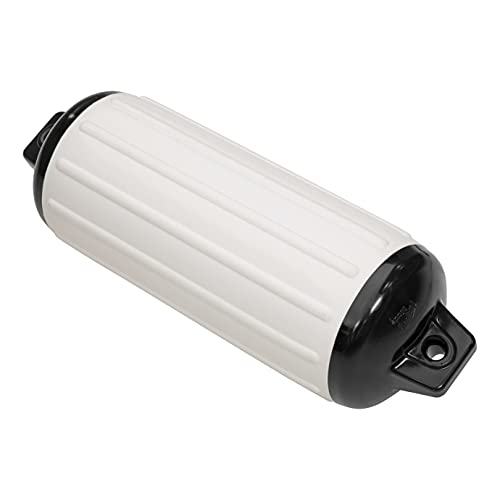
Taylor Made Super Gard Vinyl Fender
Ribbed marine-grade vinyl on this fender resists scuffing against pilings and neighboring hulls. Multiple diameter and length combinations let owners match fender size to boat length. Molded rope holes at each end simplify both vertical and horizontal hanging.
Pros
- Covers boats from 18 to 35 feet across its size range
- Ribbed sides grip pilings instead of slipping
- Rope holes at both ends support flexible hanging positions
Cons
- Larger sizes need more onboard storage space
- White vinyl finish shows scuff marks over time

Extreme Max BoatTector Fender
PVC construction on this fender mirrors pricier ribbed brands at a lower per-unit cost. Two-packs cover both sides of the boat without buying separate listings. Eyelets at the top and bottom support vertical or horizontal rigging.
Pros
- Two-packs cost less per fender than single units
- Ribbed sides resist rolling against the dock edge
- Size range fits boats from 14 to 28 feet
Cons
- Some owners report fragile valve stems
- Vinyl runs thinner than premium cylindrical fenders
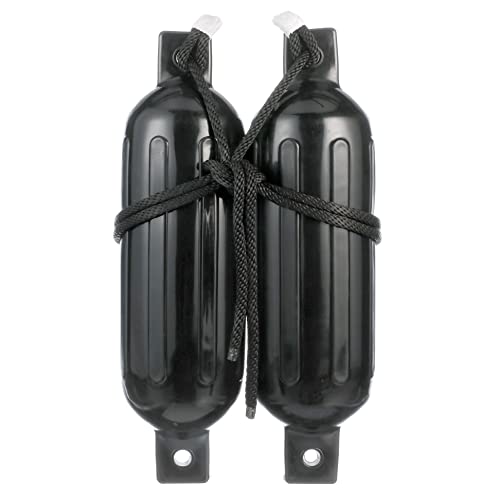
Seachoice Ribbed Vinyl Fender
Small boats and dinghies get basic hull protection from this fender without a large outlay. Ribbed vinyl sides cut down on rolling along a dock edge. A single center-mounted eyelet keeps rigging simple for first-time boaters.
Pros
- Lowest cost per fender in this roundup
- Compact size suits small boats and dinghies
- Single-eyelet design rigs quickly
Cons
- Limited to boats under about 18 feet
- Fewer size options than larger fender lines
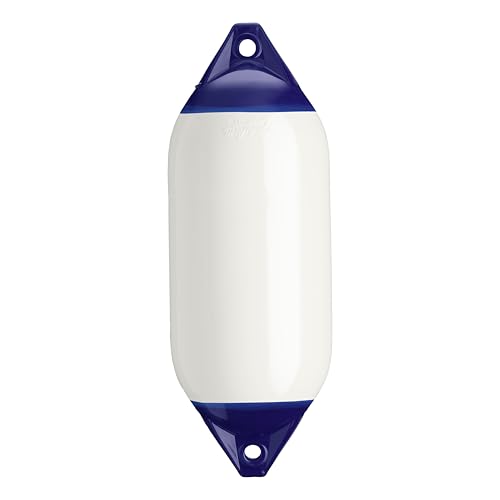
Polyform F-Series Flat Fender
A flat face on this fender sits flush against pontoon logs and rub rails instead of a round profile. That shape stops the fender from rolling out from under a dock or another boat. Made in Norway, it shares the same PVC formulation as Polyform’s round fenders.
Pros
- Flat face resists rolling away from rub rails
- Fits pontoon tubes and dock edges well
- Matches the PVC quality of Polyform’s round lineup
Cons
- Offers less cushioning depth than round fenders
- Less useful for boat-to-boat rafting

Taylor Made Big B Fender
Larger cruisers and small yachts get a scaled-up version of Taylor Made’s cylindrical design here. Its wider diameter spreads contact force across more surface area than standard fenders. Reinforced rope holes handle the added weight of a larger fender under load.
Pros
- Wide diameter suits boats over 30 feet
- Reinforced rope holes support extra fender weight
- Uses the same ribbed vinyl as smaller Taylor Made lines
Cons
- Oversized for boats under about 26 feet
- Heavier to lift and stow than smaller fenders

Dock Edge Premium Contour Fender
This fender mounts to the dock itself instead of the boat, guarding the hull on approach. Its contoured face wraps slightly around pilings for a steadier fit than a flat panel. According to the listing, the low-profile design also buffers between adjacent boats in a slip.
Pros
- Mounts to dock pilings for permanent protection
- Contoured shape stays put better than flat panels
- Works as a slip-side buffer between boats
Cons
- Not built to move from boat to boat
- Installation needs dock-side hardware, not just rope

Polyform G-Series Fender
UV-stabilized marine vinyl forms this long-running cylindrical fender line. Owners report the PVC keeps its color and flexibility after repeated saltwater exposure. Ribbed sides and a self-centering air valve round out the build.
Pros
- UV-stabilized vinyl resists saltwater and sun degradation
- Long track record among saltwater boat owners
- Self-centering valve simplifies inflation and topping off
Cons
- Costs more than PVC alternatives
- Few flat-mount options within the G-Series itself
How they stack up
| # | Model | Shape | Best for | Score | Price |
|---|---|---|---|---|---|
| 1 | Taylor Made Super Gard Vinyl Fender | Cylindrical (round) | Best overall | 9.4 | Check price |
| 2 | Extreme Max BoatTector Fender | Cylindrical (round) | Best value | 9.1 | Check price |
| 3 | Seachoice Ribbed Vinyl Fender | Cylindrical (round) | Best budget | 8.8 | Check price |
| 4 | Polyform F-Series Flat Fender | Flat-sided | Best for pontoons | 8.6 | Check price |
| 5 | Taylor Made Big B Fender | Cylindrical (round) | Best for large boats | 8.3 | Check price |
| 6 | Dock Edge Premium Contour Fender | Contoured flat | Best flat/dock fender | 8.1 | Check price |
| 7 | Polyform G-Series Fender | Cylindrical (round) | Best for saltwater use | 8.0 | Check price |
How to choose
What Are Boat Fenders and How Do They Work? Inflatable vinyl or PVC bumpers absorb impact between a hull and a dock, piling, or another boat. Most fenders are cylindrical, built around an internal air chamber with a valve for adjusting firmness. Flat-sided versions use the same vinyl but skip the round profile to sit flush against rails or logs. Boat length, not boat type, mainly decides fender size.
Round vs Flat Boat Fenders: Which Shape Fits Your Boat? Round cylindrical fenders such as the Taylor Made Super Gard suit general docking and boat-to-boat rafting, since they roll slightly to absorb motion. Flat fenders like the Polyform F-Series resist that rolling, which matters against a rub rail or pontoon tube. Contoured dock-mounted styles, including the Dock Edge Premium Contour Fender, split the difference by wrapping around a piling. What the fender contacts most often should drive the shape choice.
How Many Fenders and What Size Does Your Boat Need? Two to three fenders sized around 4.5 to 6.5 inches in diameter typically cover boats under 25 feet. Boats between 25 and 35 feet usually move up to 6.5 to 8.5 inch diameters, similar to the Extreme Max BoatTector range. Wider fenders like the Taylor Made Big B spread contact force over more surface area on larger cruisers. Manufacturer size charts, listed alongside each product, beat guessing from boat length alone.
Do Boat Fenders Hold Up in Saltwater and Sun? Saltwater and UV exposure break down lower-grade vinyl faster than material specs suggest on paper. Marine-grade PVC, like the formulation in the Polyform G-Series, resists cracking and fading after repeated sun exposure. Rinsing fenders with fresh water after saltwater trips keeps the vinyl flexible longer. Storing fenders out of direct sunlight during the off-season also slows UV degradation.
Common questions
How many fenders does a boat need?
Two to four fenders typically cover a boat depending on length, with larger hulls needing more coverage along the side. Two fenders per side is a common minimum for boats under 30 feet.
What size boat fender do I need for a 24 foot boat?
A 24 foot boat usually pairs with fenders around 6.5 to 8 inches in diameter based on manufacturer size charts. Checking a listing’s specific size range confirms the right fit for that hull length.
Round vs flat boat fenders, which is better?
Round fenders suit general docking and rafting since they roll to absorb motion between hulls. Flat fenders work better against pontoon tubes and rub rails, where rolling away becomes a problem.
Can boat fenders be used for rafting up to other boats?
Cylindrical fenders like the Taylor Made Super Gard or Polyform G-Series cushion two hulls pressed together thanks to their round shape. Flat fenders suit this use less well, since they can slide out of position.
What is the best fender for a pontoon boat?
Flat-sided fenders such as the Polyform F-Series fit pontoon logs and rails more securely than round designs. Their flat face cuts the chance of rolling out from under the tube.
How do you attach a boat fender to a dock line?
A rope hole at one or both ends accepts a fender line or adjuster clip on most models. That line then loops around a rail or cleat so the fender hangs at hull height.
Are vinyl boat fenders safe in saltwater?
Marine-grade vinyl and PVC are built to withstand saltwater exposure without rapid cracking. Rinsing fenders with fresh water after use and storing them out of direct sun extends that lifespan.
What is the difference between boat fenders and dock bumpers?
Boat fenders typically hang from the boat and travel with it, while dock bumpers like the Dock Edge Premium Contour Fender mount permanently to a piling or dock edge. A fixed slip location gets protected by the bumper rather than the boat itself.
Our take
A cylindrical vinyl fender sized to length covers most boats well, and the Taylor Made Super Gard Vinyl Fender fits that need across the widest range of hulls. Pontoon owners and saltwater cruisers should lean toward the flat Polyform F-Series or the UV-stabilized Polyform G-Series instead. Budget shoppers still get solid protection from the Seachoice Ribbed Vinyl Fender without overspending.