Soft Rubber vs Hard Rubber Brayers Compared
Most block printers reach for the Speedball Soft Rubber Brayer 4 Inch, since its flex spreads ink into carved linoleum without pooling. Budget projects suit the Inovart Super Brayer. Deep relief woodcut calls for the firmer roll on the Speedball Deluxe Hard Rubber Brayer instead.
Ink pools unevenly when a brayer’s rubber is too soft or too hard for the block being printed. The Speedball Soft Rubber Brayer 4 Inch strikes the balance most linocut and woodblock printers look for first. Budget projects do well with the Inovart Super Brayer. Deep relief presses call for the firmer roll on the Speedball Deluxe Hard Rubber Brayer.
Durometer, the rubber’s hardness rating, affects print quality more than price does, yet most listings skip that number entirely. We compared roller hardness against ink pickup, checked width against common block sizes, and read owner reports on streaking and roller wear over time.
Before you buy
What does a brayer’s durometer control? Durometer measures rubber hardness, and that number shapes how ink sits on a carved block. Soft rubber flexes into shallow grooves, which can over ink recessed areas. Hard rubber stays rigid and touches only raised surfaces, giving cleaner lines on deep carvings. Match durometer to carving depth before comparing brand or price.
Soft rubber vs hard rubber vs foam brayers Soft rubber suits most linocut and general block printing, since it forgives uneven carving depth. Hard rubber wins on deep relief woodcut, where crisp separation between ink and blank areas matters most. Foam brayers trade precision for texture, useful for stamped backgrounds rather than fine lines. Pick the material based on carving style, not the price tag alone.
Which brayer works best for classroom and beginner printmaking? Classrooms need rollers that survive repeated use by different hands with little care. Both the Inovart Super Brayer and Mudder Rubber Brayer Set keep per unit cost low enough for group buying. Soft rubber remains the right pick here, since beginners rarely carve deep enough to need a hard roller. Durability under careless handling matters more than precision at this stage.
How do you choose roller width for your block size? A roller narrower than the block forces overlapping passes, which risks uneven ink density. One wider than the block wastes ink on the surrounding surface. The U.S. Art Supply set solves this with three widths in one box, while a single 4 inch brayer covers most standard blocks on its own. Measure your most common project size before choosing width.
The best picks, ranked
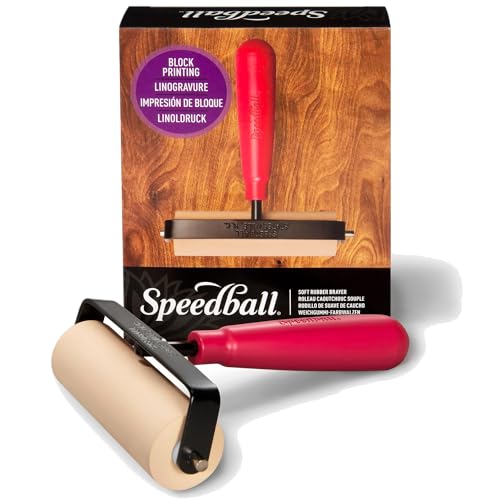
Speedball Soft Rubber Brayer 4 Inch
Soft rubber flexes into shallow linoleum grooves, so ink reaches carved detail without pooling on raised edges. A wood handle spins on a ball bearing axle, which keeps pressure consistent across a full pass. Most linocut and small woodblock printers reach for this width first.
Pros
- Soft roller reaches carved detail other brayers miss
- Ball bearing axle keeps pressure even across a pass
- Four inch width suits most classroom and studio blocks
Cons
- Soft rubber picks up marks more easily than hard rollers
- Deep relief carving needs a firmer roller instead

Speedball Deluxe Hard Rubber Brayer
Hard rubber stays rigid over carved recesses, so ink lands only on raised block surfaces. A reinforced handle absorbs the extra pressure that deep relief printing demands. Woodcut and high press linocut artists pick this over softer brayers for that separation.
Pros
- Firm roller keeps ink off carved recesses
- Reinforced handle handles heavier pressure without flexing
- Lays an even ink film on flat block surfaces
Cons
- Too rigid for delicate detail work
- Feels heavier during long printing sessions
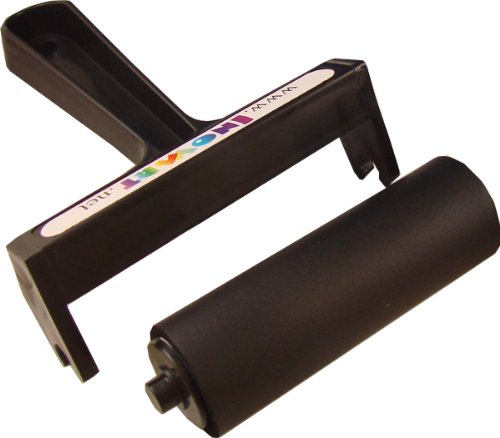
Inovart Super Brayer
A soft rubber roller at student pricing still spreads ink evenly across linocut projects. Its handle weighs less than premium brayers but survives regular classroom handling. Art teachers often order several at once for group printmaking sessions.
Pros
- Lower price supports buying several at once
- Soft roller suits beginner linocut carving
- Light weight makes it easy for young hands to control
Cons
- Handle feels less sturdy than premium brands
- Roller surface wears faster under heavy use

AMACO Foam Brayer
Foam absorbs and releases ink differently than rubber, producing a mottled texture suited to backgrounds and stamped patterns. It weighs less than a rubber brayer, so long stamping sessions tire the hand less. Mixed media artists reach for foam when texture matters more than a flat, even coat.
Pros
- Produces textured coverage rubber cannot match
- Lightweight for extended stamping sessions
- Releases ink without heavy hand pressure
Cons
- Wears out faster than rubber rollers
- Not suited to fine detail linocut work

U.S. Art Supply Soft Rubber Brayer Set
Three roller widths in one set cover small stamps through full page blocks without buying separate brayers. Every roller shares the same soft rubber durometer, so technique stays consistent across sizes. Printmakers switching between postcard and full sheet projects keep this set within reach.
Pros
- Three widths cover small to large blocks
- Consistent durometer across every roller
- Costs less than buying each size separately
Cons
- Takes more storage space than a single brayer
- Smallest roller feels flimsy under firm pressure

Ranger Brayer
A narrow roller suits ink blending on cardstock rather than full block printing. Card makers use it to lay smooth gradients before stamping over them. Its compact size makes detail work easy to control in ways a full size brayer cannot match.
Pros
- Compact size suits detail and small panels
- One hand control makes ink blending easy
- Fits card making and scrapbook projects well
Cons
- Too small for full page block printing
- Limited to light duty ink work

Mudder Rubber Brayer Roller Set
A multi roller pack keeps a spare ready when ink dries onto a roller mid project. Rollers run narrower and lighter than name brand brayers, fitting occasional or student use. Owners mainly buy this set for backups rather than as a primary studio tool.
Pros
- Lowest cost per roller in this lineup
- Multiple rollers mean built in backups
- Light enough for young or new printmakers
Cons
- Rubber quality trails name brand options
- Rollers show wear sooner under regular use
How they stack up
| # | Model | Roller width | Best for | Score | Price |
|---|---|---|---|---|---|
| 1 | Speedball Soft Rubber Brayer 4 Inch | 4 inches | Best overall | 9.3 | Check price |
| 2 | Speedball Deluxe Hard Rubber Brayer | 4 inches | Best for deep relief printing | 9.0 | Check price |
| 3 | Inovart Super Brayer | 4 inches | Best value | 8.7 | Check price |
| 4 | AMACO Foam Brayer | 4 inches | Best for foam stamping and texture | 8.5 | Check price |
| 5 | U.S. Art Supply Soft Rubber Brayer Set | 2 inch, 4 inch, 6 inch | Best for varied project sizes | 8.3 | Check price |
| 6 | Ranger Brayer | Approximately 2 inches | Best for small detail and mixed media | 8.1 | Check price |
| 7 | Mudder Rubber Brayer Roller Set | Around 2.5 inches per roller | Best budget | 8.0 | Check price |
Questions worth asking
What is the best brayer for linocut printing?
A soft rubber brayer near 4 inches wide covers most linocut work, since its flex reaches carved lines without over inking. Printmakers treat the Speedball Soft Rubber Brayer as the standard pick for that reason. Deeper carving shifts the recommendation toward a harder roller.
Can you use a brayer on fabric?
Yes, a soft rubber brayer spreads fabric ink evenly across a stamped or block printed design. Consistent pressure matters more on fabric than paper, since fabric absorbs ink less predictably. Rinse the roller right after fabric ink use to stop buildup from hardening.
How do you clean a rubber brayer?
Wipe excess ink off with a rag immediately after printing. Water based ink rinses away with soap and water. Oil based ink needs a printmaking solvent, applied before the ink cures onto the roller surface.
What size brayer do I need for a 9×12 linocut block?
A 4 inch roller works with a few overlapping passes across a 9×12 surface. A 6 inch roller covers the same block in fewer passes for frequent large scale printing. Match width to your most common project size, not your largest one.
Is a hard or soft brayer better for beginners?
Soft rubber forgives inconsistent carving depth, making it the safer pick while carving skills are still developing. Hard rubber rewards precise, deep, even carving that beginners rarely achieve early on. Start with soft rubber, then add a hard roller once carving control improves.
Do foam brayers work for stamping?
Yes, foam spreads ink with a slightly mottled finish that suits backgrounds and stamped patterns. Rubber gives a flatter, more even coat better suited to fine line printing. Choose foam specifically when texture is part of the design goal.
How long does a rubber brayer roller last?
A brayer wiped clean after each session and stored away from direct sunlight can print for years. Cheaper rollers in multi packs tend to harden or crack sooner under identical care. Replace a roller once flat spots or cracks start leaving streaks.
What handle style suits long printmaking sessions?
A wood handle with a ball bearing axle turns more smoothly under pressure, cutting hand fatigue during a long print run. Plastic handles on budget sets work fine for occasional use but feel stiffer over time. Daily studio printmakers usually prefer the smoother bearing action.
Final word
Matching durometer to carving depth matters more than any single spec, and the Speedball Soft Rubber Brayer handles that job for most linocut and woodblock projects. Deep relief carvers get cleaner separation from the Speedball Deluxe Hard Rubber Brayer. Classrooms and budget conscious printmakers do well starting with the Inovart Super Brayer.


