How to Choose a Camera Gimbal for Smooth Video
DJI RS 4 suits most mirrorless shooters with a 3 kilogram payload and native vertical shooting. DJI Osmo Mobile 6 fits phone creators best thanks to its built-in extension rod. Zhiyun Crane 4 carries heavier rigs up to 4.5 kilograms, with a fill light built into the handle.
DJI RS 4 handles the widest range of mirrorless setups, carrying 3 kilograms with a second-generation vertical mode. Osmo Mobile 6 serves phone shooters better with its pocket-friendly build. Heavy cine rigs belong on a Zhiyun Crane 4, rated to 4.5 kilograms.
Payload numbers assume a perfectly balanced rig, not an actual lens, cage and microphone combination. We compared published payload limits, axis locks, battery runtime and follow-focus compatibility. Owner reports on balancing time and arm fatigue during long shoots shaped the final order.
The shortlist, ranked

DJI RS 4 3-Axis Gimbal Stabilizer
A 3 kilogram payload rating covers a full frame body paired with a 24-70mm zoom and a small microphone. Vertical switching moves the camera to portrait instantly, no rebalancing required. Automated axis locks and Teflon-coated arms cut setup to roughly a minute once plate positions are memorized.
Pros
- Switches vertical to horizontal in seconds
- Automated locks speed up bag-to-shot time
- Wide accessory range including focus motors
Cons
- Heavier rigs with cine primes exceed the payload
- Battery grip charger sold separately
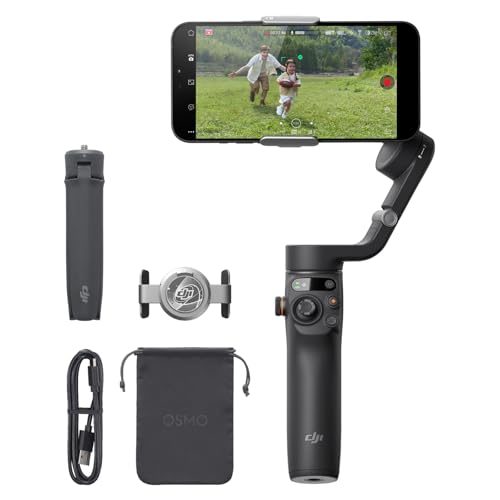
DJI Osmo Mobile 6 Smartphone Gimbal
A magnetic clamp lets a phone drop on and start shooting with no threading involved. Its built-in extension rod adds 215 millimeters of reach for low angles and group shots. ActiveTrack keeps a walking subject centered while the side wheel doubles as a zoom or focus dial.
Pros
- Folds small enough for a jacket pocket
- Magnetic clamp survives repeated phone swaps
- Status panel shows battery and mode instantly
Cons
- Thick phone cases must come off first
- Tracking loses subjects in low light

Zhiyun Crane 4 Handheld Gimbal Stabilizer
A 4.5 kilogram rating means a cine body with matte box and follow focus still balances properly. Its handle houses a bi-colour fill light, removing one accessory from the bag. Battery runtime reaches 12.5 hours, enough for a full documentary day on a single charge.
Pros
- Carries setups smaller gimbals refuse to balance
- Built-in fill light frees up bag space
- Sling mode shifts weight off the wrist
Cons
- Bulkier in a backpack than DJI bodies
- Menu system takes longer to learn
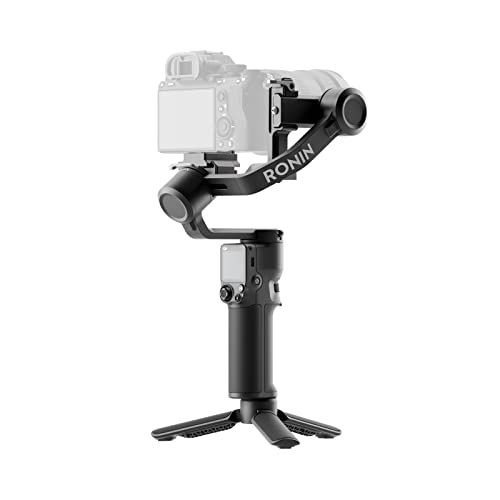
DJI RS 3 Mini 3-Axis Gimbal
Weighing 795 grams, this body holds roughly half the weight of full-size RS units while still rating for 2 kilograms. A supplied bracket enables vertical shooting without a separate rig. Compact APS-C pairings, like a Sony a6700 with a 16-55mm, balance without extra counterweights.
Pros
- Light enough for a full day handheld
- Folds small enough for carry-on bags
- Charges quickly over USB-C
Cons
- 2 kilogram ceiling rules out big telephotos
- Shorter runtime than the larger RS models

DJI RS 4 Pro 3-Axis Gimbal Stabilizer
Carbon fibre axis arms raise payload capacity to 4.5 kilograms for rigged cine setups. A LiDAR focusing module pulls focus on manual lenses, useful for vintage glass without electronic contacts. Extra ports and a second-generation vertical mount suit crews sharing one rig.
Pros
- Handles rigged cine bodies without tilt sag
- LiDAR focus works on unpowered manual lenses
- Deep accessory ecosystem built for crews
Cons
- Overkill weight for solo mirrorless work
- LiDAR module sold as a separate purchase

Hohem iSteady MT2 Kit Gimbal Stabilizer
One gimbal head accepts a phone clamp, action camera or mirrorless body up to 1.2 kilograms. A detachable AI tracker adds gesture control and subject tracking when no phone drives the shot. Its magnetic fill light clips onto the head for talking-head style clips.
Pros
- One purchase covers phone and camera shooting
- AI tracker works without opening an app
- Long runtime relative to its size
Cons
- 1.2 kilogram ceiling limits it to small primes
- Balancing takes longer than DJI quick-release plates

Zhiyun Smooth 5S Smartphone Gimbal
Physical buttons and a zoom wheel keep fingers off the touchscreen while filming. Three magnetic fill lights ship inside the combo version for evening shoots. Balancing stays manual rather than magnetic, adding a few seconds but gripping heavier phones firmly.
Pros
- Tactile controls still work with gloves on
- Fill lights included in the combo box
- Clamp secures larger phones without slipping
Cons
- No built-in extension rod
- Bulkier than folding phone gimbals
How they compare
| # | Model | Tested payload | Best for | Score | Price |
|---|---|---|---|---|---|
| 1 | DJI RS 4 3-Axis Gimbal Stabilizer | 3 kg / 6.6 lb | Best overall | 9.4 | Check price |
| 2 | DJI Osmo Mobile 6 Smartphone Gimbal | 309 g | Best for smartphone creators | 9.2 | Check price |
| 3 | Zhiyun Crane 4 Handheld Gimbal Stabilizer | 4.5 kg / 9.9 lb | Best for heavy camera rigs | 9.0 | Check price |
| 4 | DJI RS 3 Mini 3-Axis Gimbal | 2 kg / 4.4 lb | Best for travel and run-and-gun | 8.7 | Check price |
| 5 | DJI RS 4 Pro 3-Axis Gimbal Stabilizer | 4.5 kg / 10 lb | Best for cinema and focus pulling | 8.5 | Check price |
| 6 | Hohem iSteady MT2 Kit Gimbal Stabilizer | 1.2 kg / 2.6 lb | Best hybrid for phone and compact camera | 8.3 | Check price |
| 7 | Zhiyun Smooth 5S Smartphone Gimbal | Up to 280 g | Best budget | 8.0 | Check price |
Before you buy
What to check before buying a camera gimbal Payload comes first, since every other decision follows from it. Add body, lens, cage, microphone and monitor weight, then leave 20 percent of headroom. A gimbal running near its limit drifts on tilt and drains its battery faster. Quick-release plate standards also differ, so Arca-Swiss and Manfrotto plates will not interchange.
Phone gimbal or camera gimbal Phone gimbals clamp devices under 300 grams and lean on the phone’s own app for tracking. Camera gimbals carry 2 kilograms or more and need a manual balance routine across three axes. Hybrids like the Hohem iSteady MT2 sit in between, capping out near 1.2 kilograms. Buy for the heaviest rig actually owned, not one planned for later.
Vertical video and switching to portrait Portrait framing once meant bolting on an L-bracket and rebalancing from scratch. DJI RS 4 and RS 4 Pro flip orientation on a native mount within seconds. Phone gimbals rotate the clamp directly, which is faster still. Creators posting mostly to Reels or Shorts save more time here than any tracking feature offers.
Comfort on long shoots Weight in the hand matters more than weight on a spec sheet after two hours of shooting. A 795 gram RS 3 Mini feels nothing like a loaded Crane 4 by the end of a wedding. Sling mode drops the gimbal below the grip, shifting load onto the forearm. A shoulder strap or briefcase handle extends comfortable shooting time more than any battery upgrade.
Common questions
What is the best camera gimbal for beginners?
DJI RS 3 Mini offers the gentlest start for a mirrorless owner. It weighs 795 grams, balances quickly and skips counterweights for small primes. Phone shooters should start with the Osmo Mobile 6 instead.
How much payload do I actually need?
Weigh the camera body with its heaviest lens, then add cage, microphone and battery weight. Pick a gimbal rated at least 20 percent above that total. A 3 kilogram rating covers most full frame bodies with a standard zoom.
Can a gimbal handle a heavy telephoto lens?
Long lenses shift the center of gravity far forward and often exceed a gimbal’s tilt range. A 4.5 kilogram unit like the Crane 4 or RS 4 Pro manages them best. Even then, a lens support foot usually helps.
Is a phone gimbal worth it if my phone already stabilizes video?
Built-in stabilization smooths small vibrations but cannot fix walking bounce or panning judder. A gimbal adds mechanical correction plus tracking and an extension rod. For static shots, the phone alone is usually fine.
DJI RS 4 vs RS 4 Pro: which one should I buy?
RS 4 carries 3 kilograms and suits solo mirrorless shooters well. RS 4 Pro adds carbon fibre arms, a 4.5 kilogram payload and LiDAR focus support for cine bodies. Choose the Pro only if the rig genuinely passes 3 kilograms.
How long does it take to balance a gimbal?
Expect 5 to 10 minutes for the first few attempts, then under two minutes once plate positions get marked. Leaving lens and plate settings untouched between shoots removes most of that repeat work.
Do gimbals support autofocus and follow focus motors?
Most modern gimbals control autofocus through a USB-C camera control cable. Manual lenses need a separate focus motor mounted to the axis arm. LiDAR systems replace that motor on some setups.
Which gimbal handles vertical video the best?
DJI RS 4 and RS 4 Pro switch to portrait on a native mount with no rebalancing. Phone gimbals simply rotate the clamp. Older camera gimbals need an L-bracket and a full rebalance each time.
What is the best gimbal for run-and-gun travel shooting?
DJI RS 3 Mini weighs 795 grams and folds small enough for carry-on bags. It still rates for 2 kilograms, enough for compact APS-C setups. Heavier full-size rigs trade that portability for higher payload.
Final word
DJI RS 4 covers the widest range of mirrorless setups, balancing fast and switching to vertical without a bracket. Phone-first creators save money and bag space with the Osmo Mobile 6. Reach for the Crane 4 or RS 4 Pro only once a rig genuinely climbs past 3 kilograms.


