How to Choose a Carrier Your Kitten Won’t Fight
Sherpa Original Deluxe Pet Carrier suits most kittens because its soft sides and low entry calm first-time nerves. Sleepypod Air In-Cabin Pet Carrier adds the strongest seatbelt restraint for regular car trips. Petmate Two Door Top Load Kennel handles fast vet visits at a lower cost.
A carrier that fits a kitten today rarely fits it in six months, and one sized too large feels as unsettling as one too small. Top-loading access, a washable base, and secure seatbelt routing matter more than color or handle style.
Kitten carrier shopping turns confusing once size, entry style, and travel safety all vary by brand. We compared published dimensions, airline sizing, and owner reports on seven models to narrow the field.
Before you buy
Why Top Loading Access Matters Most A kitten that decides against going inside will brace all four legs against a front door. Lowering it through a top opening skips that fight entirely. Lifting it back out at the vet works the same way. One feature to prioritize above all others is a top door.
Sizing a Carrier for Security, Not Growth Buying a carrier a kitten will grow into sounds practical, but a large empty space makes a small cat feel exposed. Room to slide around in a moving car adds stress rather than removing it. A carrier where the kitten can stand, turn, and lie down with a little room to spare works best. Plan on a second, larger carrier later instead of one oversized purchase now.
What to Look for in a Car Safety Restraint Most carrier use happens inside a vehicle, and an unsecured carrier turns into a projectile during a sudden stop. A seatbelt sleeve or a dedicated restraint system prevents that. Placing the carrier on the floor behind a front seat, or belting it onto a rear seat, adds another layer of safety. Sleepypod Air handles this specific job better than any soft carrier here.
Handling Accidents, Cleanup, and Flying with a Kitten Kittens have accidents in carriers, and lingering smell from a stressful trip makes the next one harder. Removable washable liners and a rinseable shell solve most of that. Leaving the carrier out at home with a blanket inside, so it becomes furniture instead of an event, helps a nervous kitten more than any single feature. Flying adds its own rules, since airline dimension limits differ by carrier.
The best picks, ranked

Sherpa Original Deluxe Pet Carrier
A spring wire frame lets the roof flex down at an airline gate, then pop back into a proper den shape the rest of the time. Mesh panels on three sides give a kitten sightlines without full exposure. Owners report anxious kittens settle faster here than in a hard-sided kennel.
Pros
- Flexible frame fits under an airline seat
- Soft mesh sides calm anxious kittens
- Washable liner handles accidents fast
Cons
- Less crash protection than a hard shell
- Unsupervised kittens can chew the mesh
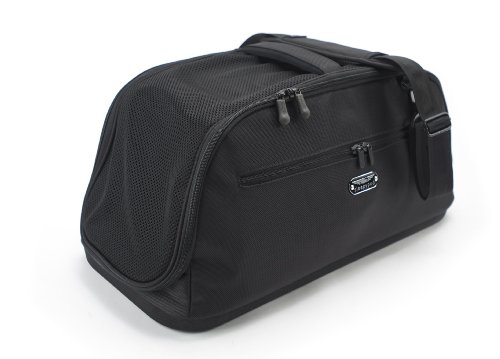
Sleepypod Air In-Cabin Pet Carrier
A rigid internal structure and integrated seatbelt restraint put this ahead of soft carriers for car use. Ends compress to meet tighter cabin rules without squeezing the kitten inside. Plush bedding is removable, and the whole unit straps down rather than balancing loose on a seat.
Pros
- Strongest restraint system in this lineup
- Compresses for tighter cabin allowances
- Materials hold up over repeated trips
Cons
- Heaviest soft carrier in this group
- Interior turns snug once a kitten grows

Petmate Two Door Top Load Kennel
Lowering a kitten through a top door skips the front-door standoff that braced legs create. A steel front door and molded handle add durability, and the shell splits apart so a vet can examine a kitten in the base half. Cleanup is a quick rinse rather than a wash cycle.
Pros
- Top door removes the vet-visit struggle
- Shell splits apart for exams
- Wipes clean in seconds
Cons
- Bulkier to store than soft carriers
- Plastic clips need checking before each trip

Mr. Peanut’s Gold Series Airline Approved Pet Carrier
Under-seat sizing targets travelers flying with a small cat. A light frame and mesh on three panels keep airflow open, and a fleece mat plus seatbelt pass-through round out the design. Confirm dimensions with a specific airline before travel day, since limits vary.
Pros
- Light enough to carry through a terminal
- Mesh ventilation on three panels
- Washable mat included
Cons
- Airline size rules vary by carrier
- Structure is softer than the Sleepypod Air

PetAmi Deluxe Pet Carrier Backpack
Wearing a kitten on your back keeps both hands free for doors and paperwork. Mesh covers three sides, a padded back panel adds comfort, and an internal safety tether keeps the kitten from bolting when unzipped. Short walks and public transit suit it better than long trips.
Pros
- Frees both hands on public transit
- Body contact settles many kittens
- Ventilated well on three sides
Cons
- Not a substitute for a car restraint
- Grows uncomfortable on long walks as a kitten grows

Necoichi Portable Stress Free Cat Cage
This collapsible mesh enclosure works for a kitten that panics inside a conventional box. It pops open into a roomy space, a cover drops down to darken it, and it folds nearly flat for storage. Treat it as a recovery space rather than a car safety device.
Pros
- Roomy interior cuts down on panic
- Folds nearly flat between uses
- Privacy cover eases over-stimulation
Cons
- No crash protection whatsoever
- Mesh gives way to determined claws
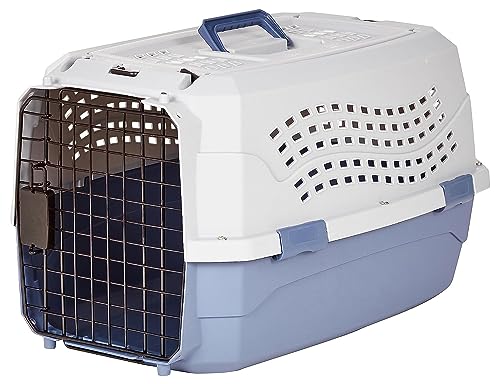
Amazon Basics Two-Door Top-Load Pet Kennel
A kitten will outgrow this within a year, which makes a low-cost option sensible. Top loading access matches pricier hard kennels, the shell splits for cleaning, and vents run on all four sides. Latches and the handle feel less substantial than the Petmate, though the core format still works.
Pros
- Top loading access at low cost
- Splits apart for vet exams
- Cleans up with a rinse and wipe
Cons
- Latches feel flimsier than premium kennels
- Basic handle strains on long carries
Compared at a glance
| # | Model | Type | Best for | Score | Price |
|---|---|---|---|---|---|
| 1 | Sherpa Original Deluxe Pet Carrier | Soft sided | Best overall | 9.4 | Check price |
| 2 | Sleepypod Air In-Cabin Pet Carrier | Soft sided with rigid structure | Best for car travel | 9.2 | Check price |
| 3 | Petmate Two Door Top Load Kennel | Hard sided plastic | Best for vet visits | 9.0 | Check price |
| 4 | Mr. Peanut’s Gold Series Airline Approved Pet Carrier | Soft sided | Best for flying | 8.8 | Check price |
| 5 | PetAmi Deluxe Pet Carrier Backpack | Backpack carrier | Best hands-free option | 8.6 | Check price |
| 6 | Necoichi Portable Stress Free Cat Cage | Collapsible mesh cage | Best for anxious kittens | 8.3 | Check price |
| 7 | Amazon Basics Two-Door Top-Load Pet Kennel | Hard sided plastic | Best budget | 8.0 | Check price |
Common questions
What size carrier does a kitten need?
Enough room to stand, turn around, and lie flat, with a little extra space. Anything much larger lets a kitten slide during travel and can feel less secure, not more.
Should I get a soft or hard carrier for a kitten?
Soft carriers like the Sherpa Original Deluxe feel more den-like and pack smaller. Hard kennels such as the Petmate Two Door clean up faster and suit vet trips where the base needs to come off.
Is a backpack carrier safe for a kitten?
For short walks and public transit, yes, provided it stays well ventilated and includes an internal tether. Backpacks are not car restraints, so use a belted carrier for driving.
How do I get a kitten used to a carrier?
Leave it open at home with a familiar blanket and treats inside for a week or two before a trip. Owners consistently report this habit reduces travel stress more than any carrier feature.
Which carriers work best for flying with a kitten?
Soft-sided models built for under-seat use, like the Mr. Peanut’s Gold Series or the Sleepypod Air, are the usual picks. Airline limits differ, so confirm dimensions before booking.
How should I secure a cat carrier in a car?
Route the seatbelt through the carrier’s strap or sleeve, or set the carrier on the floor behind a front seat. An unrestrained carrier on a seat can move violently in a stop.
Do kittens need bedding inside the carrier?
A thin washable mat, or a blanket that already smells like home, helps a lot. Keep it thin enough that the kitten still has headroom and the base stays stable.
When should I upgrade to a larger cat carrier?
Once the cat can no longer stand and turn comfortably, usually somewhere between six and twelve months depending on breed. A carrier sized for a large adult cat becomes a separate purchase.
What is a top-load carrier and why do vets prefer it?
It opens from the top instead of only the front, letting a kitten be lowered in or lifted out without a struggle. Vets favor this because it avoids dragging a braced cat through a front door.
Are hard or soft carriers better for anxious kittens?
Soft carriers with mesh sides, or collapsible options like the Necoichi, tend to feel less confining to an anxious kitten than a rigid plastic kennel.
The bottom line
Sherpa Original Deluxe Pet Carrier strikes the right balance for most new kittens: a den-like interior, top-loading access, and a liner that actually washes clean. Sleepypod Air earns the upgrade if the carrier lives mostly in a car. Amazon Basics Two-Door Top-Load Pet Kennel covers vet trips without fuss while a kitten keeps growing.


