Beginner Drones Compared for Ease and Crash Resistance
DJI Mini 4K suits most new pilots, staying under 249 grams while GPS hold keeps it steady and return to home brings it back automatically. DJI Neo is built for indoor palm-launch flying. Potensic ATOM SE matches the range and camera resolution for less outlay outside the DJI ecosystem.
DJI Mini 4K is the safer first purchase because its sub-249 gram weight skips the heavier registration class and GPS hold stops it drifting. Indoor flying favors the DJI Neo, which ships with built-in propeller guards. Potensic ATOM SE covers similar ground for buyers who want to avoid the DJI app entirely.
New pilots get tripped up because weight class decides the paperwork, and a cheap drone without GPS drifts into the nearest tree the moment you let go of the sticks. We compared takeoff weights, positioning systems, camera sensors and published flight times, then checked what owners say about first-flight crashes and how each model handles wind.
The best picks, ranked

DJI Mini 4K Camera Drone
Takeoff weight stays under 249 grams, the lightest regulatory class in most countries. A 3-axis gimbal stabilizes 4K video so footage stays smooth despite shaky stick inputs. GPS hold parks the drone in place on release, and return to home triggers automatically on a low battery.
Pros
- Weight class avoids the heavier registration rules
- Mechanical gimbal beats software stabilization
- Holds position the moment you release the sticks
Cons
- No obstacle sensors on the sides
- Light frame gets pushed around in gusty wind

DJI Neo Mini Drone
Full propeller guards are molded into the frame, so a wall bump does not end the flight. Launching happens straight from a palm, and preset shots run without any controller at all. Weight sits near 135 grams, the lightest drone in this lineup.
Pros
- Integrated guards survive indoor knocks
- Flies preset shots with zero controller input
- Lightest option here for a jacket pocket
Cons
- Short flight time next to the Mini series
- Struggles outdoors above light wind

Potensic ATOM SE GPS Drone
Also under 249 grams, with GPS positioning and a claimed transmission range measured in kilometers. Stabilization runs electronically rather than through a mechanical gimbal, so footage stays smooth but crops slightly at the edges. Two batteries usually ship in the box, doubling flight time on a first outing.
Pros
- Two batteries included in most bundles
- GPS return to home at this price point
- Folds to roughly the same size as the DJI Mini
Cons
- Electronic stabilization crops the frame
- App polish trails the DJI equivalent
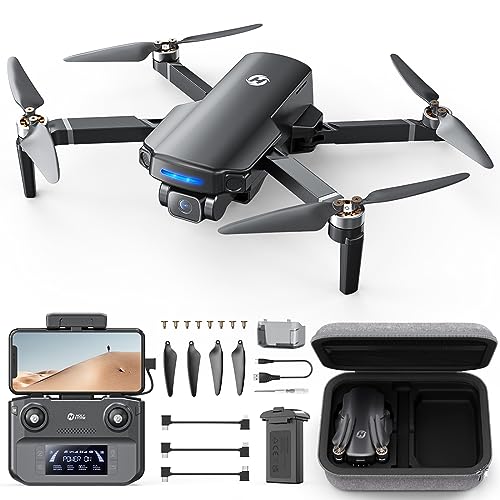
Holy Stone HS720E GPS Drone
A 4K camera with electronic image stabilization sits on a manually adjustable tilt mount. Brushless motors run cooler and last longer than the brushed motors found in toy drones. Total weight exceeds 249 grams, so registration applies in most regions before takeoff.
Pros
- Brushless motors handle repeated flights
- GPS follow and waypoint modes included
- Carry case and spare battery in most bundles
Cons
- Requires registration due to weight
- Tilt adjusts manually, not mid-flight

Ryze Tello Mini Drone
Programmable through Scratch and Python, doubling as a teaching tool rather than just a camera drone. Vision positioning keeps it steady indoors without any GPS signal. Range and camera quality stay modest, so treat it as a training platform, not a filming drone.
Pros
- Programmable for classroom and hobby projects
- Vision positioning holds a steady indoor hover
- Cheap propellers and guards to replace
Cons
- 720p video trails the 4K models here
- No GPS, so outdoor drift is significant

Holy Stone HS175D Foldable GPS Drone
Extra mass over a 249 gram drone helps this one hold a line in breeze that pushes lighter models off course. GPS return to home covers signal loss and a low battery. Camera output runs 4K with tilt controlled from the transmitter, unlike the manual mount on the HS720E.
Pros
- Steadier than sub-249 gram drones in wind
- Camera tilt adjusts during flight
- Folds small enough for a backpack
Cons
- Registration needed because of the weight
- Electronic stabilization only, no gimbal

Potensic A20 Mini Drone
A small toy-class drone with altitude hold, headless mode and three speed settings for building skill gradually. Propeller guards come fitted from the box, and spare props cost little. No camera worth using is included, so buy it purely to learn the sticks before spending more.
Pros
- Cheap enough that crashes do not matter
- Three speed modes build skill gradually
- Small enough to fly in a living room
Cons
- Camera is not usable for real footage
- Six minute flights need several spare batteries
The lineup, side by side
| # | Model | Takeoff weight | Best for | Score | Price |
|---|---|---|---|---|---|
| 1 | DJI Mini 4K Camera Drone | Under 249 g | Best overall | 9.4 | Check price |
| 2 | DJI Neo Mini Drone | About 135 g | Best for indoor flying | 9.2 | Check price |
| 3 | Potensic ATOM SE GPS Drone | Under 249 g | Best value | 9.0 | Check price |
| 4 | Holy Stone HS720E GPS Drone | 4K with electronic stabilization | Best for photo hobbyists | 8.7 | Check price |
| 5 | Ryze Tello Mini Drone | About 80 g | Best for learning to code | 8.5 | Check price |
| 6 | Holy Stone HS175D Foldable GPS Drone | 4K, transmitter-controlled tilt | Best for windy days | 8.3 | Check price |
| 7 | Potensic A20 Mini Drone | About 22 g | Best budget for children | 8.0 | Check price |
How to pick the right one
What to look for in a first drone GPS positioning is the single feature that saves new pilots the most grief. Without it, a drone drifts the moment you release the sticks. Return to home covers a lost signal or a flat battery automatically. Weight comes next: staying under 249 grams keeps a drone in the lightest regulatory class across the United States and many other countries. Propeller guards matter more indoors than outdoors.
Registration rules and the 249 gram line In the United States, drones at or above 250 grams must be registered with the FAA for recreational flight, and every pilot must pass the TRUST test regardless of weight. DJI Mini 4K, DJI Neo and Potensic ATOM SE all sit under that line. Holy Stone models in this list sit above it. Rules vary by country, so check the national aviation authority before a first flight.
Flying indoors versus outdoors Indoors, GPS stops working and walls create turbulence, so vision positioning and full propeller guards matter most. DJI Neo and the Ryze Tello are built for exactly that. Outdoors, wind resistance and battery life take over. Heavier drones such as the Holy Stone HS175D hold a line better in breeze than a 249 gram model does.
Camera quality and what stabilization actually does A mechanical 3-axis gimbal, found on the DJI Mini 4K, physically cancels movement and preserves the full sensor width. Electronic stabilization crops into the frame and struggles in low light. Toy drones with 720p cameras suit practice, not sharing. Prioritize the gimbal over flight time if video quality is the whole point of buying.
Good to know
What is the easiest drone for a complete beginner?
DJI Mini 4K, because GPS hold parks it in place and return to home recovers it automatically. Its weight also avoids the heavier registration class. Indoors, the DJI Neo is easier still.
Do I need to register a beginner drone?
In the United States, registration applies to drones weighing 250 grams or more flown recreationally, and every recreational pilot needs the TRUST certificate. Sub-249 gram models skip registration entirely. Check the aviation authority for your own country.
How long do beginner drones fly on one battery?
The better sub-249 gram models manage close to 30 minutes. Toy drones fly six to ten minutes at most. A second battery roughly doubles a usable flying session.
Can a beginner drone handle wind?
Light drones struggle above a gentle breeze. Heavier models such as the Holy Stone HS175D hold position better in gusts. Check the wind rating in the manual and land early if drift starts.
DJI Mini 4K vs Potensic ATOM SE: which is better?
Mini 4K carries a mechanical 3-axis gimbal for cleaner video. ATOM SE relies on electronic stabilization but often ships with two batteries. Pick the DJI if footage quality matters most.
Are propeller guards necessary for a first drone?
Indoors, yes, since a wall strike otherwise snaps a prop. Outdoors they add weight and reduce wind resistance. DJI Neo builds guards permanently into the frame.
What happens if a beginner drone loses signal?
GPS models climb to a set altitude and fly straight back to the launch point. Drones without GPS simply drift or land wherever they are. That gap is why GPS matters most for new pilots.
Which drone works best for a child?
A cheap toy-class model such as the Potensic A20, since crashes are inevitable and replacement parts cost little. Its camera is not usable for real footage. Move up to a GPS drone once basic control feels comfortable.
Is a camera drone better than a toy drone for learning?
A toy drone teaches stick control cheaply before real money is on the line. A camera drone adds GPS and stabilization but costs more to crash. Many beginners start on a toy model first.
Do beginner drones need a controller?
Most fly from a dedicated controller for range and precision. Some, like the DJI Neo, also fly from a phone or launch straight from a palm without any controller at all.
Our pick
DJI Mini 4K is the drone most beginners should buy first, pairing a real gimbal with GPS recovery and a weight that skips extra paperwork. Indoor and hand-launch flying suits the DJI Neo better. Potensic ATOM SE covers the same ground for less if electronic stabilization is acceptable.


