Which Portable Scanner Keeps Up With Your Paperwork?
The Brother DS-640 leads for pure portability and USB powered simplicity. The Fujitsu ScanSnap iX100 is the pick for wireless scanning straight to a phone, and the Epson WorkForce ES-50 offers the most affordable route into reliable single sheet capture for receipts and letters.
The Brother DS-640 is the best portable scanner for most people, with the Fujitsu ScanSnap iX100 leading on wireless freedom and the Epson WorkForce ES-50 covering simple budget scanning.
Portable scanners look interchangeable on a listing page, yet they split sharply on duplex support, power source and how good the bundled OCR really is. We compared published specifications, page throughput figures and what owners report about jamming and software setup to rank these seven.
The best picks, ranked

Brother DS-640 Compact Mobile Document Scanner
Brother’s DS-640 runs entirely from a single USB-C cable, which removes the battery and power brick problem that makes other mobile scanners awkward. Owners report consistently clean text capture on letters, receipts and thicker card stock. The bundled software handles OCR to searchable PDF without a subscription.
Pros
- No separate power supply needed
- Handles card stock and receipts well
- Included OCR creates searchable PDFs
Cons
- Single sided scanning only
- No wireless option

Fujitsu ScanSnap iX100 Wireless Mobile Scanner
The iX100 is built around a rechargeable battery and its own Wi-Fi connection, so it can scan directly to a phone or laptop with no computer attached. Based on specifications it manages roughly 260 scans per charge. The ScanSnap software is unusually good at auto cropping and orientation.
Pros
- True cordless scanning
- Excellent automatic image cleanup
- Scans straight to mobile devices
Cons
- Simplex only
- Wi-Fi setup can take patience
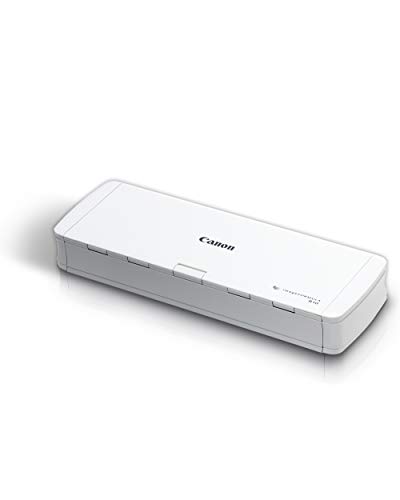
Canon imageFORMULA R10 Portable Document Scanner
The R10 is one of the few genuinely portable units with a 20 sheet automatic feeder and duplex scanning, which changes how quickly a stack of paperwork disappears. Its software lives on the device itself, so there is no installer to chase. Owners report it is the easiest of this group to hand to a colleague.
Pros
- Automatic feeder saves real time
- Onboard software needs no install
- Two sided scanning in one pass
Cons
- Bulkier than sheetfed rivals
- Feeder can misgrab mixed paper sizes

Brother DSmobile DS-940DW Wireless Duplex Scanner
This model combines duplex scanning, a battery and Wi-Fi in a body that still fits a laptop bag. A microSD slot lets it scan without any device paired at all, which suits site visits and client meetings. Based on specifications it is the most flexible mobile scanner Brother sells.
Pros
- Scans to card with no computer
- Two sided capture
- Battery powered for field work
Cons
- Slower than USB only models
- Card and app workflow takes learning

Epson WorkForce ES-50 Portable Sheetfed Document Scanner
The ES-50 strips things back to one job, feeding a single page at a time over USB with no battery to maintain. It is the lightest unit here and owners report it holds up well to daily receipt scanning. Epson’s ScanSmart software handles filing and OCR competently.
Pros
- Very light and slim
- Straightforward software
- Reliable with receipts
Cons
- No duplex or wireless
- One page at a time only
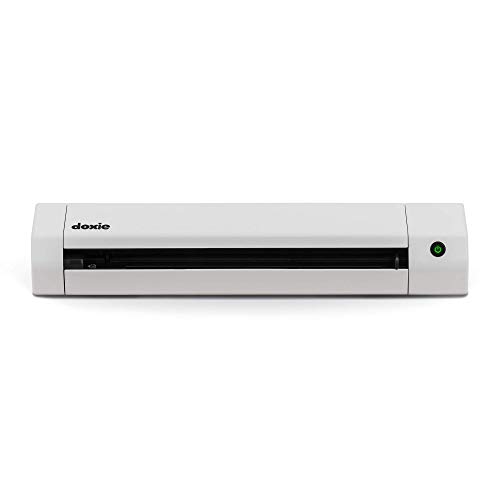
Doxie Go SE Wireless Scanner
The Doxie Go SE stores scans in onboard memory and syncs later, so it works in a car, a storage unit or anywhere without power. Its companion app pushes files to cloud services once you reconnect. The tradeoff is a slower per page time than mains powered rivals.
Pros
- Works with no computer nearby
- Good cloud syncing options
- Long battery life per charge
Cons
- Slower scanning speed
- Simplex only

Plustek MobileOffice S410 Plus Document Scanner
The S410 Plus is aimed at ID cards, business cards and insurance documents, with a feed path that tolerates embossed plastic. Bundled business card software pulls contact details into a database. It is basic on connectivity but priced to sit on a second desk.
Pros
- Handles plastic cards reliably
- Useful card capture software
- Compact desk footprint
Cons
- No wireless or battery
- Interface feels dated
How to choose
Decide whether you need duplex Duplex scanning captures both sides in a single pass, and it matters far more than raw speed if you handle contracts, forms or double sided invoices. Simplex models are lighter and cheaper, but flipping every page manually gets old fast. If more than a quarter of your paperwork is two sided, pay for duplex.
Match the power source to where you scan USB bus powered scanners are the simplest option when you always work near a laptop. Battery models cost more and need charge management, but they are the only realistic choice for site visits, client offices or scanning in a vehicle. Wireless adds convenience and setup friction in equal measure.
Look at the software, not just the hardware The scanner captures the image, but the bundled software decides whether you get a searchable PDF, a clean crop and a sensible filename. ScanSnap and Epson ScanSmart are both strong here. Check whether OCR is included outright or gated behind a subscription before you commit.
Think about paper condition and size Crumpled receipts, thermal paper and thick card all behave differently in a narrow feed path. Sheetfed scanners with a straight through path handle stiff media better than tight U shaped paths. If you scan a lot of small or damaged originals, a carrier sheet is a cheap accessory worth having.
Side by side
| # | Model | Scan speed | Best for | Score | Price |
|---|---|---|---|---|---|
| 1 | Brother DS-640 Compact Mobile Document Scanner | Up to 16 pages per minute | Best overall | 9.4 | Check price |
| 2 | Fujitsu ScanSnap iX100 Wireless Mobile Scanner | Wi-Fi and USB | Best for wireless use | 9.2 | Check price |
| 3 | Canon imageFORMULA R10 Portable Document Scanner | 20 sheet automatic document feeder | Best for batch scanning | 9.0 | Check price |
| 4 | Brother DSmobile DS-940DW Wireless Duplex Scanner | Yes | Best for two sided documents | 8.8 | Check price |
| 5 | Epson WorkForce ES-50 Portable Sheetfed Document Scanner | About 5.5 seconds per page | Best value | 8.6 | Check price |
| 6 | Doxie Go SE Wireless Scanner | Onboard memory plus SD support | Best for scanning away from a desk | 8.3 | Check price |
| 7 | Plustek MobileOffice S410 Plus Document Scanner | Documents, ID and business cards | Best budget pick | 8.0 | Check price |
Frequently asked questions
Do portable scanners work without a computer?
Some do. Models with onboard storage or a microSD slot, such as the Doxie Go SE and Brother DS-940DW, can capture and store scans standalone, then sync later. USB bus powered units always need a host device.
Is 600 dpi enough for documents?
Yes. For text documents 300 dpi is generally sufficient for accurate OCR, and 600 dpi gives headroom for small print or photos. Higher resolutions mostly increase file size without improving readability.
Can these scanners handle receipts?
All seven accept receipt sized paper, though thermal receipts fade over time and scan best while fresh. Owners report that straight path sheetfed models handle curled receipts more reliably than models with a tight paper turn.
What is the difference between simplex and duplex?
Simplex scans one side of a page. Duplex captures both sides in a single pass using two sensors. Duplex saves a large amount of time on forms and contracts but adds cost and weight.
Do portable scanners include OCR software?
Most do. Brother, Epson, Canon and Fujitsu all bundle software that converts scans into searchable PDFs. Check whether the licence is perpetual or trial based, since some bundles expire after a period.
Can I scan directly to cloud storage?
Wireless models can. ScanSnap, Doxie and Brother’s mobile apps all support sending scans to services like Google Drive and Dropbox. USB only scanners rely on your computer’s own sync folder instead.
Will a portable scanner replace a flatbed?
Not entirely. Sheetfed portables cannot scan books, bound documents or fragile originals. If you need those, keep a flatbed and use the portable for loose paper.
How many pages can these realistically handle per day?
Portable scanners are rated for light duty, typically a few hundred pages per day at most. For continuous high volume work, a desktop scanner with a larger feeder and higher duty cycle is the better investment.
Final word
For most people the Brother DS-640 is the sensible choice, since bus power removes the biggest annoyance of mobile scanning and the image quality holds up on everything from receipts to card stock. Choose the Fujitsu ScanSnap iX100 if you want to scan without a computer nearby, or the Canon imageFORMULA R10 when stacks of paper rather than single sheets are the real problem.