Picking the Right PSI for Patio Pavers and Decking
Sun Joe’s SPX3000 leads for overall patio cleaning at 2030 PSI, while the Simpson MegaShot MSH3125 suits larger gas-powered jobs at 3200 PSI. The Karcher K5 Premium adds adjustable pressure for mixed stone and wood surfaces. Together, these three cover most patio sizes and surface types.
Sun Joe’s SPX3000 handles most patio jobs, from algae on concrete pavers to grime on siding, thanks to 2030 PSI and 1.76 GPM paired with five nozzle tips. It suits homeowners with an accessible outdoor outlet who want one machine for pavers, furniture, and cars. Its main limitation is a corded design that needs an extension cord on patios far from the house.
Patio surfaces range from soft wood decking to dense concrete pavers, so pressure needs shift by yard. We compared PSI, GPM, power source, and nozzle versatility across seven listings, then checked owner feedback on hose length, weight, and adjustability for everyday patio use.
The best picks, ranked

Sun Joe SPX3000
A 14.5-amp motor pushes this Sun Joe to 2030 PSI and 1.76 GPM, enough force for algae and grime on concrete pavers. Five quick-connect nozzle tips cover angles from a tight jet to a wide fan, including a dedicated soap tip for the onboard detergent tank. Owners report the paired 20-foot cord and 20-foot hose reach most mid-size patios without moving the outlet.
Pros
- Onboard detergent tank skips the need for a separate sprayer
- Five nozzle tips adjust from pavers to siding to cars
- Replacement hoses and parts stay easy to find
Cons
- An outdoor-rated extension cord is needed on larger patios
- Oil stains on driveway concrete need more pressure than this delivers
Greenworks GPW1950
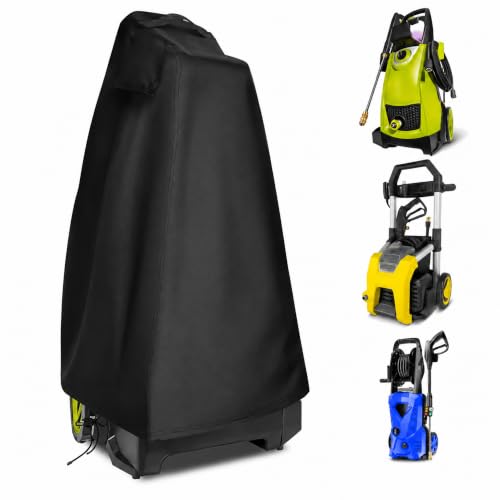
Greenworks rates the GPW1950 at 1950 PSI and 1.2 GPM, aimed at routine patio and deck upkeep rather than heavy stripping. A 35-foot power cord paired with a 20-foot hose gives reach around most townhome patios. Nozzle storage built into the housing keeps all four spray tips attached between uses.
Pros
- Costs less than most electric models above 2000 PSI
- Compact housing fits in a garage corner
- Built-in tip storage prevents lost nozzles
Cons
- 1.2 GPM flow rinses wide surfaces more slowly
- Plastic motor housing skips the metal reinforcement pricier models use

Sun Joe SPX1000
At 1600 PSI and 1.2 GPM, the SPX1000 works as an entry point rather than a workhorse. Its housing weighs under 12 pounds, light enough to carry up porch steps in one trip. Sun Joe fits a fixed spray wand here instead of interchangeable tips, trading nozzle-angle adjustment for simplicity.
Pros
- Lowest price in this comparison
- Light enough for one-handed carrying
- Single-wand design leaves no tips to misplace
Cons
- Fixed wand angle limits use across different surfaces
- 1600 PSI struggles against deep-set grime on stone pavers

Simpson MegaShot MSH3125
Simpson pairs a Honda GC190 engine with a 3200 PSI, 2.5 GPM pump built for large patios, driveways, and adjoining concrete. A 25-foot steel-braided hose resists kinks better than the rubber hoses on most electric units. Regular oil changes come with the territory, similar to maintaining any small gas engine.
Pros
- Honda engine covers patios, driveways, and siding in one pass
- Steel-braided hose withstands dragging across rough concrete
- Higher GPM rinses soap and debris faster than electric models
Cons
- Fuel, oil changes, and outdoor storage come with the gas engine
- Painted furniture and wood decking need a wide-angle tip to avoid damage

Karcher K5 Premium
An induction motor in the K5 Premium runs longer duty cycles than the universal motors found in cheaper units. Its Vario Power wand adjusts pressure right at the nozzle, letting one pass move from stone pavers to a wood-railed deck without swapping tips. A separate detergent nozzle keeps soap out of the main spray stream.
Pros
- Vario wand adjusts for both stone and wood surfaces
- Induction motor extends run time versus universal motors
- Dedicated detergent nozzle avoids diluting the main stream
Cons
- Heavier build makes storage bulkier than compact electric models
- Karcher-specific replacement nozzles cost more than universal tips

Ryobi ONE+ 18V Cordless RY120350VNM
An 18V ONE+ battery powers this Ryobi instead of a cord or gas tank, so it reaches balconies and patios far from an outlet. Output tops out at 320 PSI and 0.5 GPM, better suited to furniture, screens, and grills than concrete or pavers. Water draws from a five-gallon bucket, useful where no hose bib sits nearby.
Pros
- Cordless design reaches balconies without an outlet
- Battery compatibility extends across other Ryobi ONE+ tools
- Bucket-fed intake works without a connected hose
Cons
- 320 PSI cannot strip algae off concrete or pavers
- Battery runtime caps continuous cleaning to shorter sessions

AR Blue Clean AR390SS
AR Blue Clean built the AR390SS for storage on a balcony or small patio closet, reaching 1900 PSI at 1.51 GPM. Integrated wheels and a compact frame make it easier to reposition than bulkier gas units. A turbo nozzle adds cleaning power for tougher spots alongside the standard adjustable tip.
Pros
- Compact frame fits apartment balconies and small closets
- Turbo nozzle adds power for stubborn grime spots
- Integrated wheels ease repositioning versus boxier units
Cons
- 1.51 GPM rinses slower than higher-GPM electric models
- Universal motor runs a shorter duty cycle than induction motors
The lineup, side by side
| # | Model | Pressure | Best for | Score | Price |
|---|---|---|---|---|---|
| 1 | Sun Joe SPX3000 | 2030 PSI | Best overall | 9.4 | Check price |
| 2 | Greenworks GPW1950 | 1950 PSI | Best value | 9.1 | Check price |
| 3 | Sun Joe SPX1000 | 1600 PSI | Best budget | 8.8 | Check price |
| 4 | Simpson MegaShot MSH3125 | 3200 PSI | Best for large patios and driveways | 8.5 | Check price |
| 5 | Karcher K5 Premium | 2000 PSI | Best for delicate surfaces | 8.3 | Check price |
| 6 | Ryobi ONE+ 18V Cordless RY120350VNM | 320 PSI | Best for cordless, portable use | 8.1 | Check price |
| 7 | AR Blue Clean AR390SS | 1900 PSI | Best for apartment or balcony use | 8.0 | Check price |
How to pick the right one
What to look for in a patio pressure washer PSI measures spray force, and GPM measures how much water moves through the nozzle each minute. Together, both numbers decide how fast a machine strips grime. Concrete pavers and stamped concrete tolerate 2000 to 3200 PSI without damage. Wood decking and painted furniture need less force, or a wide-angle nozzle to prevent gouging. Nozzle tips ranging from 0 to 40 degrees let one machine shift between a tight jet and a wide fan for rinsing soap.
Matching nozzle angle to patio surface Stone pavers with polymeric sand joints call for a 25-to-40-degree tip, since a narrower angle can blast sand out of the seams. Poured concrete tolerates a tighter 15-degree tip for stripping algae and mildew stains. Under 1500 PSI works best on wood decking, paired with a fan tip held at least a foot from the boards. Composite decking handles similar pressure to wood but resists gouging better than softwood planks.
Electric, gas, or cordless: matching power source to patio size Electric models such as the Sun Joe SPX3000 and Karcher K5 Premium suit patios within reach of an outdoor outlet and an extension cord. Cordless options like the Ryobi ONE+ trade pressure for portability, which benefits apartment dwellers and balcony owners without outdoor power. Larger properties where a patio connects to a driveway or long walkway call for a gas unit like the Simpson MegaShot. Fuel and oil maintenance come with that extra power, a tradeoff electric motors skip entirely.
Cleaning furniture and delicate surfaces without damage Wicker, painted wood, and window screens can crack or splinter under a narrow, high-pressure jet. Pairing a wide 40-degree fan tip with a lower-PSI machine, such as the AR Blue Clean AR390SS, reduces that risk. Holding the nozzle at least 18 inches from the surface adds another layer of protection on soft materials. Testing an inconspicuous spot before a full pass helps on stained wood or sealed pavers, according to owner feedback.
Frequently asked questions
What PSI pressure washer do I need for a patio?
Most concrete or stone patios clean well between 1900 and 2500 PSI, paired with a 25-to-40-degree nozzle tip. Wood decking needs less force, generally under 1500 PSI, to avoid splintering the boards.
Can a pressure washer damage patio pavers?
A narrow zero-degree tip at high PSI can etch concrete or dislodge polymeric sand between pavers. Switching to a wider fan tip and keeping the wand moving lowers that risk.
Is electric or gas better for cleaning a patio?
Electric models like the Sun Joe SPX3000 suit smaller patios near an outlet and need less upkeep. Gas units such as the Simpson MegaShot cover larger areas but require fuel and periodic oil changes.
How do you clean patio furniture without damaging it?
A wide-angle nozzle around 40 degrees, combined with a lower-PSI machine such as the AR Blue Clean AR390SS, protects wicker and painted wood. Keeping the wand at least 18 inches away limits splintering and chipped paint.
Which nozzle tip works best on a concrete patio?
A 15-to-25-degree tip strips algae and mildew from poured concrete without gouging the surface. Save the 0-degree tip for isolated stains rather than full-surface passes.
Sun Joe SPX3000 vs Simpson MegaShot, which suits a patio better?
The Sun Joe SPX3000 runs on standard household power at 2030 PSI, enough for a patio on its own. The Simpson MegaShot’s 3200 PSI and gas engine make more sense when the same driveway and patio need cleaning together.
Do you need a gas pressure washer for a large patio?
Large patios connected to driveways or long walkways benefit from a gas unit’s higher GPM, which rinses more square footage faster. A single, contained patio usually cleans fine with a 2000-plus PSI electric model.
Can a cordless pressure washer clean a small patio or balcony?
The Ryobi ONE+ 18V reaches 320 PSI, enough for furniture, screens, and light dirt on a balcony. It lacks the force for concrete or paver stains, where a corded electric model performs better.
How much does GPM matter for rinsing a patio quickly?
Higher GPM moves more water past the nozzle each minute, which clears soap and loosened dirt faster. Gas models like the Simpson MegaShot reach 2.5 GPM, well above most electric competitors near 1.2 to 1.8 GPM.
Our take
The Sun Joe SPX3000 remains the strongest all-around pick, pairing 2030 PSI, 1.76 GPM, and five nozzle tips for pavers, furniture, and siding without gas maintenance. Homeowners whose patio connects to a driveway should choose the Simpson MegaShot MSH3125 instead, since its Honda engine and 3200 PSI clear larger concrete areas in fewer passes. Apartment dwellers without an accessible outlet get more practical use from the cordless Ryobi ONE+, even at a lower maximum pressure.