Resin Pressure Pots Built for Bubble Free Castings
The California Air Tools 365 is our top resin pressure pot for its solid build and straightforward conversion from paint use. The TCP Global 2.5 gallon tank is the best value, while the Astro Pneumatic 4550 suits makers who want a heavier duty lid clamp system.
For casting clear resin the California Air Tools 365 is the most practical pressure pot to start with, backed by the TCP Global 2.5 gallon tank for value and the Astro Pneumatic 4550 for a sturdier clamp arrangement. Larger pieces need a five gallon tank rather than the common 2.5 gallon size.
This category is confusing because almost every pressure pot sold is technically a paint pressure tank that resin casters repurpose, so listings talk about paint feeds rather than curing. We compared tank capacity, rated working pressure, clamp count and design, gauge quality, usable internal height and how much conversion work each needs, then ranked seven pots below on their suitability for resin.
What we recommend

California Air Tools 365 2.5 Gallon Paint Pressure Pot
This is the tank most resin casters end up recommending, because the build quality is a clear step above generic imports and the conversion is straightforward. The 2.5 gallon body swallows most small to medium moulds while still fitting on a bench. Owners report the clamps seat evenly, which is what stops slow pressure loss overnight.
Pros
- Solid build that holds pressure reliably
- Simple conversion from paint tank to casting pot
- Bench friendly footprint
Cons
- Paint hardware must be removed first
- Too small for large moulds
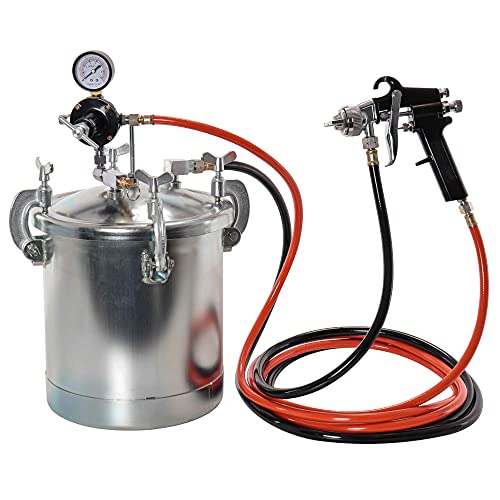
TCP Global 2-1/2 Gallon Pressure Paint Pot Tank
TCP Global’s tank is the entry point many makers choose for their first pressure casting setup, and it does the core job of holding steady pressure while resin cures. It includes a regulator and gauge, though most casters eventually upgrade the gauge. The lid clamps down evenly once the paint fittings are removed and plugged.
Pros
- Low cost route into pressure casting
- Regulator and gauge included
- Widely documented conversion process
Cons
- Supplied gauge is basic
- Seal may need replacing before it holds fully
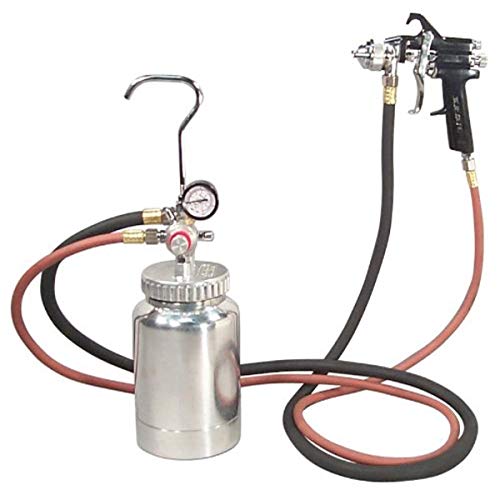
Astro Pneumatic Tool 4550 2-1/2 Gallon Pressure Pot
Astro Pneumatic builds this for professional paint shops, which shows in the clamp arrangement and the thickness of the lid casting. That matters for resin because a pot opened and closed daily wears out light clamps quickly. Based on specifications it uses the same 2.5 gallon capacity as most rivals with a more robust closure.
Pros
- Sturdier clamps for daily opening
- Thick lid casting resists warping
- Trusted trade brand
Cons
- Heavier to handle than budget tanks
- Still requires paint hardware removal

California Air Tools 5 Gallon Paint Pressure Pot Tank
The jump from 2.5 to 5 gallons is what lets you pressure cast tall moulds, multiple pieces at once or a river table offcut. It fills more slowly and uses more air per cycle, so a decent compressor becomes necessary. Owners report the extra internal height solves the most frustrating limitation of smaller pots.
Pros
- Fits tall and multiple moulds
- Same build quality as the smaller model
- Fewer curing batches per project
Cons
- Needs a larger compressor to fill quickly
- Takes significant bench or floor space

VEVOR 2.5 Gallon Pressure Paint Pot
VEVOR sells the cheapest route into pressure casting, and for occasional hobby work it holds pressure adequately once set up. The included seal and gauge are the weak points, and many owners replace both early. It is the pot to buy if you want to try pressure casting before committing to a better tank.
Pros
- Cheapest way to start pressure casting
- Complete with fittings out of the box
- Fine for occasional hobby use
Cons
- Seal and gauge quality is inconsistent
- Clamps need careful even tightening

Titan 21993 2.5 Gallon Pressure Pot
Titan supplies this with a clearer regulator and gauge arrangement than most budget tanks, which makes setting a precise pressure easier when you are dialling in a resin. The tank itself follows the standard 2.5 gallon pattern. It suits casters who want less immediate upgrading after purchase.
Pros
- Easier to set an exact pressure
- Safety relief valve fitted
- Fewer immediate upgrades needed
Cons
- Standard capacity, no size advantage
- Paint feed parts still need removing
Cal Hawk Tools 2-1/2 Gallon Paint Pressure Pot
This is one of the lighter tanks in the class, which matters if the pot has to move between a bench and a storage shelf between sessions. It follows the familiar 2.5 gallon layout with a clamped lid and regulator. Owners report the seal benefits from a light silicone grease to hold pressure reliably.
Pros
- Easier to lift and store
- Standard familiar conversion
- Low entry cost
Cons
- Lighter build than trade tanks
- Seal needs grease to hold pressure well
Compared at a glance
| # | Model | Capacity | Best for | Score | Price |
|---|---|---|---|---|---|
| 1 | California Air Tools 365 2.5 Gallon Paint Pressure Pot | 2.5 gallons | Best overall | 9.4 | Check price |
| 2 | TCP Global 2-1/2 Gallon Pressure Paint Pot Tank | 2.5 gallons | Best value | 9.2 | Check price |
| 3 | Astro Pneumatic Tool 4550 2-1/2 Gallon Pressure Pot | 2.5 gallons | Best clamp system | 9.0 | Check price |
| 4 | California Air Tools 5 Gallon Paint Pressure Pot Tank | 5 gallons | Best for large moulds | 8.8 | Check price |
| 5 | VEVOR 2.5 Gallon Pressure Paint Pot | 2.5 gallons | Best budget | 8.6 | Check price |
| 6 | Titan 21993 2.5 Gallon Pressure Pot | 2.5 gallons | Best regulator setup | 8.3 | Check price |
| 7 | Cal Hawk Tools 2-1/2 Gallon Paint Pressure Pot | 2.5 gallons | Best lightweight option | 8.0 | Check price |
How to choose
Why pressure clears resin at all Bubbles in a casting are gas trapped in the resin as it cures. Pressure does not remove them, it compresses them. At around 40 to 60 psi the trapped air shrinks to a fraction of its original volume, small enough that light passes through the casting without visible scatter. That is why pressure casting produces clear results while a vacuum chamber, which pulls bubbles out before pouring, is the better tool for degassing silicone moulds instead.
Converting a paint pot for casting Almost every tank on the market is sold as a paint pressure pot, so conversion is a normal part of the process rather than a warning sign. The work involves removing the paint feed tube and fluid outlet, plugging the resulting ports with threaded plugs and thread tape, and confirming the tank holds pressure overnight before trusting it with a project. Keep the safety relief valve fitted, since it is the component that protects you if the regulator fails.
Capacity, internal height and compressor needs Most casters find 2.5 gallons handles small moulds, coasters, pen blanks and jewellery pieces, but internal height runs out fast with anything tall. A 5 gallon tank solves that and lets you cure several moulds per cycle, at the cost of needing a compressor that can fill it quickly. Check the usable internal height rather than the stated gallons, since the clamp ring and lid intrude on the space you can actually use.
Working safely with a pressurised tank Never exceed the tank’s rated working pressure, keep the safety relief valve in place, and release pressure fully before touching the clamps. Tighten clamps evenly in a cross pattern so the lid seats flat, which is also what prevents slow leaks. Inspect the seal for cracks before each session, keep the pot away from direct heat, and use a regulator so the tank sits at a set pressure rather than following whatever the compressor happens to be doing.
Frequently asked questions
What pressure should I use for casting resin?
Most casters work between 40 and 60 psi, staying well within the tank rating. Higher pressure gives diminishing returns and increases the risk to the equipment, and consistency matters more than the exact number.
Do I need a pressure pot or a vacuum chamber?
They do different jobs. A pressure pot compresses bubbles in curing resin to produce clear castings. A vacuum chamber pulls air out of silicone before pouring a mould. Many makers who do both work eventually own each.
Can I use a paint pressure pot for resin?
Yes, and that is what nearly everyone does. Remove the paint feed hardware, plug the ports properly and confirm the tank holds pressure before using it on a real project.
How long does resin stay in the pot?
Until it has cured enough to hold its shape, which depends entirely on the resin. Many casters leave pieces under pressure for the full cure time stated by the manufacturer to avoid bubbles reappearing.
What compressor do I need?
Any compressor that reaches the working pressure will fill the tank, but a larger tank on the compressor means fewer cycles and faster fills. A small pancake compressor works for a 2.5 gallon pot and struggles with a 5 gallon one.
Why is my pot losing pressure overnight?
Usually an uneven lid seat, a worn seal or an unsealed plug on a removed paint port. Tighten the clamps evenly in a cross pattern, check the seal for cracks, and use thread tape on every plugged port.
What size pressure pot should I buy?
2.5 gallons covers coasters, pen blanks, jewellery and small moulds. Choose 5 gallons if you cast tall pieces or want to cure several moulds in one cycle.
Is pressure casting safe at home?
It is when the tank is used within its rating with the safety relief valve fitted and pressure fully released before opening. Treat the tank as pressure equipment rather than a plastic container and follow the manufacturer limits.
The bottom line
The California Air Tools 365 is the pressure pot worth buying if you plan to cast regularly, since its build quality and even clamping are what keep pressure steady through a long cure. The TCP Global 2.5 gallon tank is the cheaper way in and works well once the seal is sorted. Anyone casting tall pieces should skip straight to a 5 gallon tank rather than outgrowing a small one within months.


