Smart Light Bulbs Compared: Hue, LIFX, Kasa and Govee
Philips Hue White and Color Ambiance is our overall pick for its rock solid Zigbee mesh and colour range. TP-Link Kasa KL125 is the value choice because it needs no hub at all. LIFX Color A19 delivers the brightest, most saturated colour of the group.
Philips Hue White and Color Ambiance leads this roundup thanks to a Zigbee mesh that stays responsive at scale, while the TP-Link Kasa KL125 skips the hub entirely for smaller setups and the LIFX Color A19 pushes brighter, more saturated colour than either.
Smart bulbs are deceptively tricky because brightness claims, colour accuracy and app reliability vary far more than the packaging suggests, and a bulb that needs a hub behaves completely differently from one that joins Wi-Fi directly. We compared published lumen output, colour temperature ranges, protocol support and platform compatibility across current bulbs, then weighed what owners report about response lag and firmware stability.
What we recommend

Philips Hue White and Color Ambiance A19
Hue bulbs connect over Zigbee through a Bridge, which keeps response times fast even with dozens of lights and avoids clogging your Wi-Fi network. Colour rendering is natural rather than garish, and the white range covers warm candlelight to crisp daylight. The ecosystem includes switches, sensors and lamps that all speak the same language.
Pros
- Fast and reliable even with many bulbs
- Best in class app with scenes and automations
- Large accessory ecosystem including dimmer switches
Cons
- Bridge adds cost for full functionality
- Priciest bulbs in this roundup

TP-Link Kasa Smart Bulb KL125
The KL125 joins your Wi-Fi directly, so a single bulb can be running within minutes of unboxing. Tunable white and colour modes cover most household needs, and the Kasa app is straightforward. Owners report dependable scheduling for away from home lighting.
Pros
- Setup takes minutes with no extra hardware
- Reliable scheduling and away mode
- Good brightness for the price
Cons
- Each bulb occupies a Wi-Fi client slot
- No native HomeKit support

LIFX Color A19
LIFX packs more LEDs into the bulb than most rivals, producing deeper saturated colours and higher peak brightness without a hub. Effects such as flicker and multi zone style animations run on the bulb itself. It suits rooms where lighting is meant to be noticed.
Pros
- Richest colour saturation in the group
- Very wide white temperature range
- No hub while still supporting HomeKit
Cons
- Bulb body is bulkier than standard shapes
- Wi-Fi setup can be fussy on mesh routers

Govee Smart Light Bulbs
Govee sells these in multipacks, which makes lighting an entire room affordable in one purchase. The app includes music reactive modes and a large library of preset scenes. Colour accuracy is good, though whites lean slightly cooler than Hue.
Pros
- Cost effective for lighting a whole room
- Extensive scene and music sync library
- Bluetooth fallback when Wi-Fi is down
Cons
- Whites are less natural than premium bulbs
- App pushes promotional content

Nanoleaf Essentials Matter Smart Bulb
This bulb speaks Matter over Thread, which means low latency local control and no dependence on a manufacturer cloud. It also strengthens your Thread mesh as you add more bulbs. It suits people building a future proof, standards based smart home.
Pros
- Local Matter control with very low latency
- Extends the Thread mesh in your home
- Works across Apple, Google and Amazon platforms
Cons
- Needs a Thread border router to shine
- Nanoleaf app is basic compared with Hue
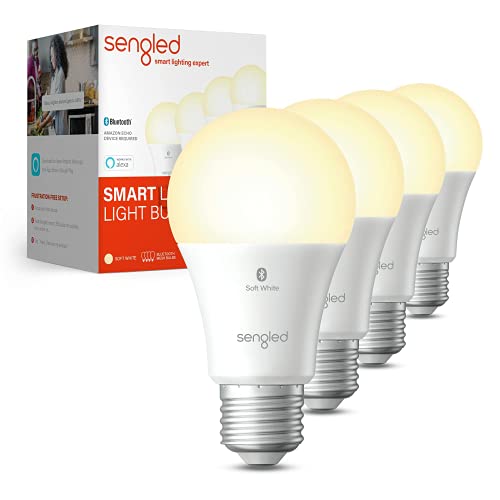
Sengled Smart LED Bulb
Sengled bulbs are the practical choice when you need many fixtures covered without a large outlay. Zigbee versions pair with common hubs, and Wi-Fi versions work standalone. Feature depth is modest, but reliability for basic on, off, dim and colour tasks is solid.
Pros
- Very affordable across many fixtures
- Zigbee versions work with third party hubs
- Dependable for everyday scheduling
Cons
- Colour accuracy trails premium bulbs
- Model naming is confusing across versions
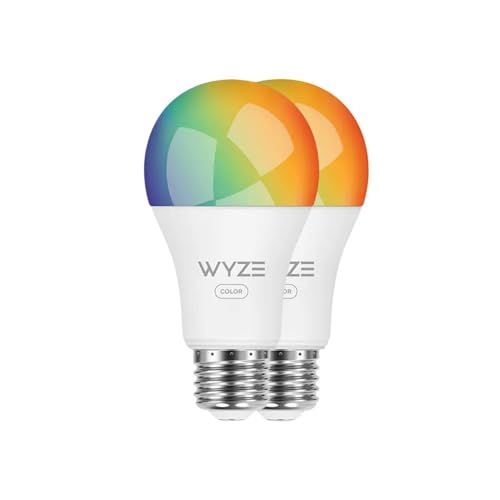
Wyze Bulb Color
Wyze delivers full colour and tunable white at the lowest cost here, connecting over Wi-Fi with no hub. Sun match and scheduling features cover the essentials. It suits accent lamps and secondary rooms where premium colour accuracy is not the point.
Pros
- Lowest cost route to colour lighting
- Bright output for the price
- Simple app with useful sun match mode
Cons
- Cloud dependent for most functions
- Occasional lag compared with Zigbee bulbs
Before you buy
Hub or no hub is the first decision Wi-Fi bulbs are simplest to start with because each one connects to your router directly, but every bulb consumes a client slot and routers get congested past a couple of dozen devices. Hub based systems such as Hue use Zigbee, which forms its own mesh and stays responsive at scale. If you plan to light more than a room or two, the hub route usually ends up more reliable.
Look at lumens and colour temperature, not just colours The colour party trick gets the attention, but most of the time you will use white light. Check the lumen figure against the bulb you are replacing, and look for a wide colour temperature range so you can run warm light in the evening and cool light for work. Bulbs that only offer a fixed white alongside colour feel limiting quickly.
Remember the wall switch problem A smart bulb needs power to be smart, so anyone flipping the wall switch off takes it offline. Solutions include smart switches that keep the circuit live, switch covers, or battery powered remote dimmers that sit over the original switch. Owners report this is the most common source of household frustration with smart lighting.
Consider local control and long term support Bulbs that process commands locally, such as Zigbee models through a hub or Matter over Thread, keep responding when your internet drops. Cloud dependent bulbs can stop working entirely if a service goes down or a company changes direction. Standards based options such as the Nanoleaf Essentials reduce the risk of being stranded on an abandoned platform.
The lineup, side by side
| # | Model | Brightness | Best for | Score | Price |
|---|---|---|---|---|---|
| 1 | Philips Hue White and Color Ambiance A19 | About 1100 lumens | Best overall | 9.4 | Check price |
| 2 | TP-Link Kasa Smart Bulb KL125 | About 1000 lumens | Best value | 9.2 | Check price |
| 3 | LIFX Color A19 | About 1100 lumens | Best colour output | 9.0 | Check price |
| 4 | Govee Smart Light Bulbs | About 800 lumens | Best for multi bulb rooms | 8.8 | Check price |
| 5 | Nanoleaf Essentials Matter Smart Bulb | About 1100 lumens | Best for Matter setups | 8.6 | Check price |
| 6 | Sengled Smart LED Bulb | About 800 lumens | Best for large installs | 8.3 | Check price |
| 7 | Wyze Bulb Color | About 1100 lumens | Best budget colour | 8.0 | Check price |
Questions worth asking
Do smart bulbs work without Wi-Fi?
Zigbee and Thread bulbs keep working through their hub or border router for local commands, though remote control and voice assistants need internet. Wi-Fi bulbs generally lose most functionality until the network returns.
Can I use smart bulbs with existing dimmer switches?
No. Traditional dimmers chop the power supply and cause smart bulbs to flicker or fail. Replace the dimmer with a standard switch, or use a smart dimmer designed to keep constant power to the bulb.
How many smart bulbs can I run on Wi-Fi?
It depends on your router, but congestion often appears somewhere past twenty to thirty connected devices on the 2.4 GHz band. Zigbee or Thread based bulbs avoid that ceiling because they do not join your Wi-Fi at all.
Are smart bulbs energy efficient?
They are LED based, so they use a fraction of the power of incandescent bulbs. The radio consumes a small amount of standby power continuously, which is minor but not zero across many bulbs.
Do they work with Alexa, Google and Apple Home?
Most support Alexa and Google Assistant. Apple Home support is less universal, so check for HomeKit or Matter compatibility if you use iPhones as your primary controller.
What is Matter and do I need it?
Matter is a cross platform standard that lets devices work with any compatible controller. It matters most if you want to switch ecosystems later or avoid depending on one company’s cloud.
How long do smart bulbs last?
Rated lifespans typically run to fifteen thousand hours or more. In practice, firmware support and app longevity often determine replacement timing more than the LEDs themselves.
Can smart bulbs go in enclosed fixtures?
Check the packaging, because many are not rated for fully enclosed fixtures. Trapped heat shortens LED and driver life considerably, so look for a bulb specifically rated for enclosed use.
Our pick
Philips Hue White and Color Ambiance remains the choice for anyone building a lighting system rather than adding a single bulb, because the Zigbee mesh and app hold up as the count grows. TP-Link Kasa KL125 is the sensible starting point for a room or two, and LIFX Color A19 is the one to pick when colour impact matters most.