Canon vs Nikon: Which Camera Brand Fits You Best?
For most photographers, the Canon EOS R6 Mark II is the top pick due to its excellent autofocus and video features, but Nikon’s Z6 III offers superior dynamic range for landscape work. The main limitation of the Canon is its shorter battery life, while the Nikon has fewer native lenses.
Choosing between Canon and Nikon is a classic dilemma. Both brands have loyal followings and offer excellent cameras. The right choice often comes down to your specific needs and preferences.
We compared seven popular models from both brands, analyzing their specifications, user reviews, and overall value. Our goal is to provide a clear picture of what each camera offers, without bias.
The top picks, ranked

Canon EOS R6 Mark II
The Canon EOS R6 Mark II is a versatile mirrorless camera that excels in both photography and video. It features a 24.2MP sensor and advanced autofocus with subject tracking. Users report fast and accurate performance, making it ideal for action and events.
Pros
- Excellent autofocus with deep learning subject detection
- Great video features with 4K 60p and 10-bit internal recording
- Compact and lightweight for a full-frame camera
Cons
- Battery life is below average for its class
- Only one card slot is UHS-II capable

Nikon Z6 III
The Nikon Z6 III is a powerful full-frame mirrorless camera with a partially stacked CMOS sensor. It offers excellent dynamic range and low-light performance. Owners appreciate its robust build and the new sensor’s fast readout, which reduces rolling shutter.
Pros
- Outstanding dynamic range for landscape photography
- High-resolution electronic viewfinder with 5760k dots
- Strong weather sealing and durable build
Cons
- Heavier than some competitors
- Battery life is moderate
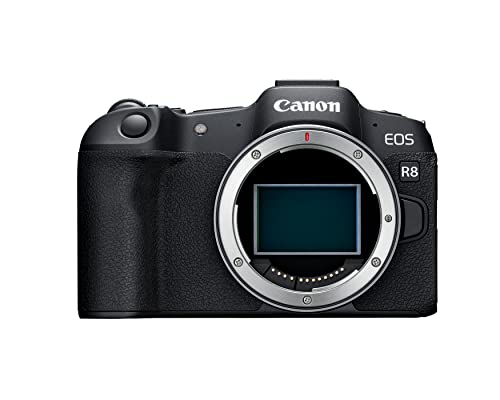
Canon EOS R8
The Canon EOS R8 is a compact full-frame camera that packs many features from higher-end models. It is lightweight and user-friendly, making it a great travel companion. Its autofocus and image quality are impressive for the price point.
Pros
- Very light and compact for a full-frame camera
- Excellent image quality and autofocus performance
- Good value for the features offered
Cons
- No in-body image stabilization
- Single card slot

Nikon Z5
The Nikon Z5 is an affordable full-frame mirrorless camera that offers solid performance and build quality. It includes dual card slots and weather sealing, which are rare at this price. Users find it a great starter full-frame camera.
Pros
- Affordable entry into full-frame photography
- Dual UHS-II SD card slots
- Weather-sealed body
Cons
- Video features are limited, with a crop in 4K
- Autofocus is less advanced than newer models

Canon EOS R10
The Canon EOS R10 is a compact APS-C mirrorless camera that inherits many features from its full-frame siblings. It offers fast burst shooting and good autofocus, making it a popular choice for content creators and wildlife enthusiasts.
Pros
- Fast continuous shooting for action photography
- Excellent autofocus with subject tracking
- Compact and lightweight design
Cons
- No in-body image stabilization
- Limited native RF-S lens selection

Nikon Z50
The Nikon Z50 is a well-rounded APS-C mirrorless camera that offers solid image quality and a comfortable grip. It is a reliable choice for everyday shooting. Its tilting touchscreen and built-in flash add convenience.
Pros
- Compact and comfortable to hold
- Good image quality for its class
- Built-in flash and tilting screen
Cons
- Limited lens selection for DX format
- Single card slot

Canon EOS 5D Mark IV
The Canon EOS 5D Mark IV remains a top choice for professionals who prefer DSLRs. It offers a proven autofocus system and excellent image quality. Many photographers use it for weddings and commercial work.
Pros
- Reliable and durable build for professional use
- Excellent image quality and color depth
- Great battery life
Cons
- Heavy and bulky compared to mirrorless
- 4K video has a crop factor
How to choose
Compared at a glance
| # | Model | Sensor | Best for | Score | Price |
|---|---|---|---|---|---|
| 1 | Canon EOS R6 Mark II | 24.2MP full-frame CMOS | Hybrid shooters and sports photography | 9.4 | Check price |
| 2 | Nikon Z6 III | 24.5MP partially stacked CMOS | Landscape and low-light photography | 9.3 | Check price |
| 3 | Canon EOS R8 | 24.2MP full-frame CMOS | Travel and vlogging | 8.8 | Check price |
| 4 | Nikon Z5 | 24.3MP full-frame CMOS | Entry-level full-frame and budget enthusiasts | 8.5 | Check price |
| 5 | Canon EOS R10 | 24.2MP APS-C CMOS | Content creators and hobbyists on APS-C | 8.7 | Check price |
| 6 | Nikon Z50 | 20.9MP APS-C CMOS | Everyday photography and travel | 8.4 | Check price |
| 7 | Canon EOS 5D Mark IV | 30.4MP full-frame CMOS | Professional photography with DSLR | 8.9 | Check price |
Frequently asked questions
Is Canon better than Nikon?
Neither is categorically better. Both brands offer high-quality cameras. Your choice should be based on your specific needs, such as autofocus performance, lens selection, or budget. We recommend trying both to see which feels more intuitive.
Can I use my old Canon or Nikon lenses on new mirrorless cameras?
Yes, with the appropriate mount adapter. Canon offers the EF-EOS R adapter for EF lenses, and Nikon offers the FTZ adapter for F-mount lenses. Autofocus and image stabilization often remain functional, though performance may vary.
Which brand has better video features?
Both Canon and Nikon have models with advanced video capabilities. Canon’s R6 Mark II offers 4K 60p with 10-bit recording, while Nikon’s Z6 III provides 6K RAW. Consider your specific video needs, such as frame rates and codecs.
Are Canon or Nikon DSLRs still worth buying?
Yes, if you prefer an optical viewfinder and long battery life. DSLRs like the Canon 5D Mark IV remain capable. However, mirrorless cameras are lighter and offer advanced features like silent shooting and electronic viewfinders.
What is the best budget Canon camera?
The Canon EOS R8 is a great budget full-frame option, and the R10 is a good APS-C choice. Both offer strong performance for their price. The R8 lacks IBIS but is very compact.
What is the best budget Nikon camera?
The Nikon Z5 is an excellent budget full-frame camera with weather sealing and dual card slots. For APS-C, the Z50 is compact and reliable. The Z5 has a crop in 4K video, but stills are superb.
Which brand has better lens selection?
Canon has a slight edge in native RF lenses, including affordable prime lenses. Nikon’s Z mount is growing, but third-party support is limited. However, both can use a wide range of lenses via adapters.
How do Canon and Nikon compare in terms of battery life?
DSLRs generally have longer battery life because they don’t use an electronic viewfinder constantly. Mirrorless cameras consume more power. Among mirrorless, Canon’s R6 Mark II has a CIPA rating of about 360 shots, while Nikon’s Z6 III is around 380, but real-world usage varies.
Which brand is better for sports and wildlife photography?
Canon’s R6 Mark II and R3 are top choices for their fast autofocus and high burst rates. Nikon’s Z9 and Z8 also excel. For budget options, the Canon R10 has a fast burst rate, but the Z50 is less suited for action.
Can I use Nikon lenses on Canon cameras or vice versa?
Directly no, but you can use adapters with electronic contacts, like the Fringer EF-NZ or Metabones, to mount Canon EF lenses on Nikon Z, and Nikon F lenses on Canon RF. However, autofocus and stabilization may be compromised. Native lenses are recommended.
Final word
Choose the Canon EOS R6 Mark II if you want a versatile hybrid camera with class-leading autofocus. Choose the Nikon Z6 III if you prioritize dynamic range and a robust build for landscape photography. For beginners on a budget, the Canon R8 and Nikon Z5 are both excellent, but the R8 offers better video and autofocus, while the Z5 provides dual card slots. Ultimately, test them in your hands to see which feels right.