Which Camera Works Best for Documentary Photography?
Leica Q3 tops this list for documentary work with a sharp fixed 28mm lens, a full frame sensor and a near silent shutter. Sony a7 IV suits mixed assignments as the flexible all rounder, and Fujifilm X-Pro3 leads for discreet rangefinder style reportage close to subjects.
Leica Q3 wins for purists who want one sharp lens and total quiet. Sony a7 IV flexes across assignments with a huge lens catalog. Fujifilm X-Pro3 disappears into a scene faster than any full frame body here.
Documentary shoots rarely offer a second take, so gear has to work in changing light without drawing attention. We compared handling, sensor size, published low light specs and autofocus, then weighed what owners report about durability and battery life.
What we recommend

Leica Q3
A 60.3MP full frame sensor sits behind a fixed 28mm Summilux lens that opens to f1.7, a classic reportage pairing in one sealed body. Its leaf shutter is nearly silent, so working close to people rarely breaks the moment. Owners report the resolution allows heavy cropping without losing fine detail.
Pros
- Sharp fixed 28mm f1.7 lens
- Near silent shutter for close work
- 60MP sensor allows generous cropping
Cons
- Premium price for a fixed lens
- No zoom for tight or distant framing
Sony a7 IV
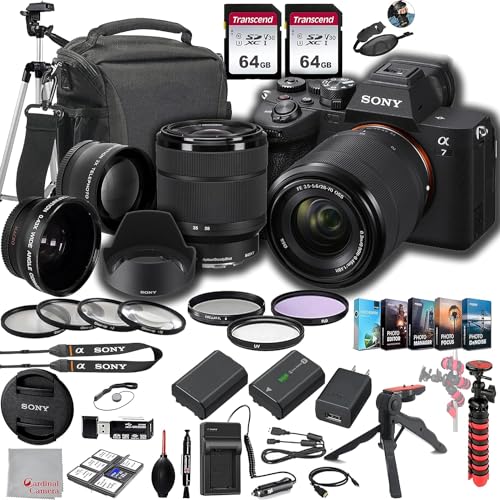
A 33MP full frame sensor and reliable eye autofocus make the a7 IV suited to fast changing scenes. Hundreds of compatible lenses let a shooter swap from a wide reportage prime to a distance tele without changing systems. Owners describe it as the dependable pick for unpredictable, varied assignments.
Pros
- Vast lens catalog for any scene
- Reliable eye autofocus in dim light
- In body stabilization for handheld work
Cons
- Rolling shutter shows during fast pans
- Menu system takes time to learn

Fujifilm X-Pro3
A hybrid optical and electronic viewfinder revives the rangefinder tradition, backed by a titanium top plate built for daily field use. The rear screen stays hidden by default, which keeps a shooter looking through the finder instead of at the back of the camera. Owners report the quiet shutter and classic styling put subjects at ease.
Pros
- Hybrid viewfinder suits reportage habits
- Titanium build survives daily field use
- Discreet, disarming design
Cons
- Hidden rear screen frustrates some users
- APS-C sensor trails full frame in low light

Nikon Z6 III
A partially stacked sensor gives the Z6 III fast readout, useful for shooters who mix stills with video on the same assignment. Internal RAW video and strong in body stabilization support hybrid work without extra rigging. Owners report the weather sealed body holds up through demanding field conditions.
Pros
- Fast sensor freezes motion cleanly
- Strong hybrid photo and video capability
- Bright viewfinder helps in dark interiors
Cons
- Heavier than rangefinder style rivals
- RAW video files consume storage fast

Fujifilm X-T5
A 40.2MP APS-C sensor packs more resolution into a lighter kit than the full frame bodies on this list. Dedicated dials speed up exposure changes while moving through a scene. Owners report weather sealing and film simulation modes make it a capable everyday field camera.
Pros
- High resolution supports tight cropping
- Tactile dials speed up shooting
- Weather sealed body stays light
Cons
- Crop sensor trails full frame at high ISO
- Dense control layout suits experienced shooters

Canon EOS R6 Mark II
Eye and subject detection locks on fast enough for chaotic, fast moving documentary scenes, even in near darkness. A 24.2MP full frame sensor keeps noise low across whatever light a location provides. Owners report Canon’s color science needs little correction across mixed lighting conditions.
Pros
- Fast, sticky subject tracking
- Focuses reliably in very low light
- Natural color needs little correction
Cons
- 24MP limits heavy cropping later
- Battery drains quickly with tracking active

Ricoh GR IIIx
An APS-C sensor sits behind a fixed 40mm equivalent lens in a body that fits a jacket pocket, making it the camera a shooter always has on hand. Snap focus captures candid frames instantly, without raising the camera to eye level. Owners report it catches in between moments a larger body would miss entirely.
Pros
- Pocketable body with APS-C image quality
- Snap focus enables instant candid shots
- Silent, unobtrusive operation
Cons
- No viewfinder and short battery life
- Fixed 40mm lens limits framing choices
How to pick the right one
What actually makes a camera reliable for documentary work One chance is often all a documentary photographer gets, so a camera has to fire in heat, cold and dust without hesitation. Weather sealing, a proven shutter mechanism and dependable autofocus matter more than any spec sheet advantage rarely used. Pick a body trusted to keep working through a long, unpredictable day, not the one with the flashiest numbers.
Should you choose a fixed lens or a system camera? A fixed lens like the Leica Q3’s 28mm forces one perspective, which sharpens instinct and keeps the kit small and quiet. A system camera such as the Sony a7 IV swaps lenses for a tight interior or a distant subject in seconds. Decide whether a project rewards that kind of constraint or genuinely needs flexibility before spending on either path.
How discretion changes the way people act around you A large, loud camera makes subjects self conscious and changes the scene being documented. Quiet shutters and understated bodies, like the Leica Q3 and Fujifilm X-Pro3, help people forget a camera is even present. Less intrusion from the gear tends to produce more honest, unguarded images.
Why low light performance decides so many documentary shots Real documentary moments happen in bars, back rooms, dusk streets and lamplit homes, not under studio lighting. A larger sensor paired with a fast lens keeps images clean without a flash that would announce a shooter’s presence. Sensor size and lens speed matter more here than almost any other spec on the sheet.
How they stack up
| # | Model | Sensor | Best for | Score | Price |
|---|---|---|---|---|---|
| 1 | Leica Q3 | Full frame CMOS, 60.3MP | Best overall | 9.4 | Check price |
| 2 | Sony a7 IV | Full frame CMOS, 33MP | Best all rounder | 9.2 | Check price |
| 3 | Fujifilm X-Pro3 | APS-C X-Trans, 26.1MP | Best for discreet reportage | 9.0 | Check price |
| 4 | Nikon Z6 III | Full frame partially stacked CMOS, 24.5MP | Best hybrid photo and video | 8.8 | Check price |
| 5 | Fujifilm X-T5 | APS-C X-Trans, 40.2MP | Best APS-C image quality | 8.5 | Check price |
| 6 | Canon EOS R6 Mark II | Full frame CMOS, 24.2MP | Best for fast autofocus | 8.2 | Check price |
| 7 | Ricoh GR IIIx | APS-C CMOS, 24.2MP | Best pocket backup | 8.0 | Check price |
Good to know
What makes a camera good for documentary photography?
Reliability, discretion, strong low light behavior and quick handling matter most. A documentary body needs to fire dependably in tough conditions, stay quiet enough to avoid disturbing a scene, and respond fast to moments that will not repeat.
Is a fixed lens camera limiting for documentary work?
It works as a creative constraint rather than a limitation. A fixed 28mm like the Leica Q3 keeps the kit small and sharpens framing instinct. Many documentary photographers shoot entire projects on one focal length by choice.
Do you need full frame for documentary photography?
No. Full frame bodies such as the Sony a7 IV give the cleanest results in low light, but APS-C cameras like the Fujifilm X-Pro3 are smaller, quieter and easier to carry unnoticed, which often matters more in reportage.
How important is weather sealing for field work?
Very important for outdoor or unpredictable conditions. Rain, dust and temperature swings are routine on assignment, so a sealed body like the Nikon Z6 III or Fujifilm X-T5 protects against a ruined shoot.
Which camera here is most discreet?
The Fujifilm X-Pro3 and Leica Q3 lead on discretion thanks to quiet shutters and understated looks. The pocketable Ricoh GR IIIx is easiest to keep hidden until a moment appears.
Should a documentary photographer carry a backup camera?
Many documentary photographers do, since one failure can cost an entire story. A pocket camera like the Ricoh GR IIIx doubles as a backup and captures candid frames a bigger body would miss.
Can these cameras all shoot RAW files?
Yes, all seven cameras capture RAW files, which matters when light cannot be controlled on location. RAW lets a photographer correct mixed color temperatures and recover shadow detail afterward.
Which camera is best for documentary video work?
The Nikon Z6 III is the strongest hybrid option, with internal RAW video and a fast readout sensor. The Sony a7 IV and Canon EOS R6 Mark II also handle documentary video clips well.
Fujifilm X-Pro3 vs Leica Q3, which suits reportage better?
The Fujifilm X-Pro3 favors classic rangefinder shooting with a hybrid viewfinder and a hidden rear screen that keeps eyes on the scene. The Leica Q3 pairs that same discretion with a sharper lens and a larger full frame sensor, at a higher price.
What is the best camera for documentary photography on a budget?
The Ricoh GR IIIx costs the least of the seven and still delivers APS-C image quality in a pocketable body. It suits a photographer who wants a capable everyday camera without a system camera’s price.
Our pick
Leica Q3 remains the documentary pick for its sharp fixed lens, quiet shutter and full frame quality in a discreet shell. Choose the Sony a7 IV for a flexible system that adapts to varied assignments, or the Fujifilm X-Pro3 for classic rangefinder discretion. A pocketable Ricoh GR IIIx makes a smart backup alongside either, ready for the moments a bigger camera would miss.