Which Window Alarm Suits Your Doors and Windows?
The GE Personal Security Window and Door Alarm is our top window alarm for straightforward standalone protection at low cost. The Doberman Security Ultra Slim Window Alarm suits sliding windows best, and the Ring Alarm Glass Break Sensor is the pick if you already run a monitored system.
For most homes the GE Personal Security Window and Door Alarm is the window alarm worth fitting, with the Doberman Security Ultra Slim for awkward sliding frames and the Ring Alarm Glass Break Sensor for households already running a monitored system.
Window alarms split into three types that solve different problems: magnetic contacts that detect an opening, vibration sensors that detect someone working on the glass, and glass break detectors that listen for the acoustic signature of a shatter. We compared stated decibel output, sensor type, battery life and mounting method, alongside what owners report about false triggers from wind and passing traffic, then ranked them by the window type they actually suit.
The top picks, ranked

GE Personal Security Window and Door Alarm
This is the alarm that has been protecting rented flats and holiday homes for years, and it earns that position by being genuinely simple: two adhesive pieces, a switch for chime or alarm mode, and a loud siren when the magnet separates. The chime mode is arguably more used than the alarm mode, giving a discreet alert when a door or window opens. There is no app, no hub and nothing to configure.
Pros
- Very loud siren for the size and cost
- Chime mode is useful daily, not just for security
- No tools, wiring or app required
Cons
- No remote notification when you are away
- Adhesive can fail on textured or dirty frames
Doberman Security Ultra Slim Window Alarm
Sliding windows and patio doors often leave too little clearance for a standard contact alarm, and Doberman’s slim body is designed around exactly that gap. The magnet tolerance is generous enough to handle frames that do not sit perfectly square. Owners report it as the alarm that finally fitted after a couple of thicker units would not close the window.
Pros
- Slim enough for tight sliding window gaps
- Generous magnet tolerance for imperfect frames
- Chime and alarm modes on one switch
Cons
- Slightly quieter than the loudest units
- Small battery compartment is fiddly

Ring Alarm Glass Break Sensor
Contact alarms only trigger when a window opens, which does nothing about someone breaking the glass and climbing straight through. This Ring sensor listens for the acoustic signature of breaking glass across a room, covering several windows from one mounting point. It only makes sense inside a Ring Alarm system, where it feeds arming modes and optional professional monitoring.
Pros
- Covers several windows from a single sensor
- Detects breakage rather than only opening
- Integrates with arming modes and monitoring
Cons
- Useless without a Ring Alarm base station
- Can be triggered by other sharp household sounds
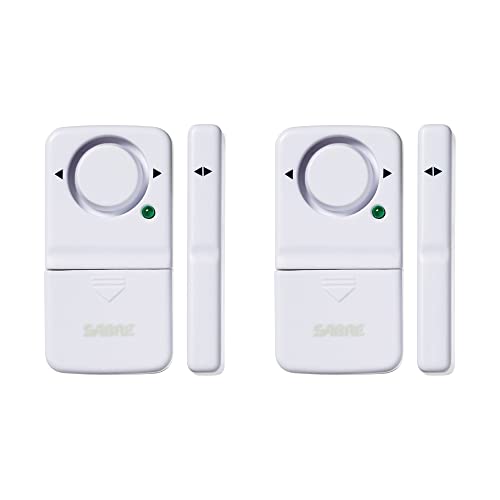
SABRE Wireless Home Security Door Window Alarm
SABRE sells personal safety equipment and it shows in the priority here, which is volume. The siren is loud enough to be genuinely unpleasant indoors, and the package includes warning decals that do part of the deterrence work before anyone tries the window. Setup is the familiar two piece adhesive arrangement with a mode switch.
Pros
- Very loud siren aimed at deterrence
- Warning decals included in the pack
- Simple adhesive installation
Cons
- Volume is uncomfortable in small rooms
- No connectivity or remote alerting
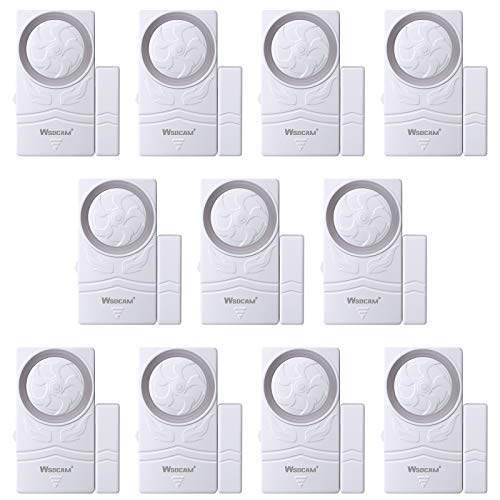
Wsdcam Window Alarm 110dB
Rather than a magnet, this Wsdcam unit sticks directly to the glass and triggers on vibration, so it responds to someone tapping, prising or cutting the pane before the window is ever opened. Sensitivity is adjustable, which matters because a window on a busy road will pick up traffic if it is set too high. It is a good complement to a contact alarm rather than a replacement.
Pros
- Detects tampering before the window opens
- Adjustable sensitivity for noisy locations
- Mounts directly on the pane, no frame needed
Cons
- Needs tuning to avoid false triggers
- Not suitable for windows that rattle in wind

SimpliSafe Entry Sensor
SimpliSafe’s entry sensor is a compact magnetic contact that reports to the base station rather than sounding locally, which means the response is whatever your system is configured to do, including a siren, an app alert or a monitoring call. It is the sensible way to cover many windows in a house where you want one coherent system rather than a dozen independent chirping units. It requires the SimpliSafe base station.
Pros
- Coherent whole house coverage rather than isolated units
- Remote alerts and optional professional monitoring
- Very long battery life owners report in years
Cons
- Requires a SimpliSafe base station
- No local siren in the sensor itself
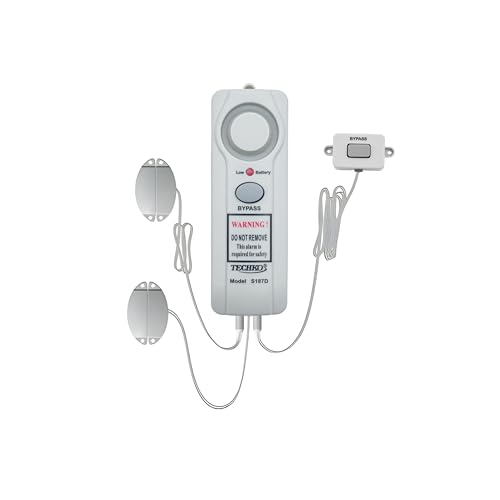
Techko S189 Window Slide Alarm
The S189 combines an alarm with a physical stop, so a sliding sash can be left open a few inches for ventilation while still blocking it from being pushed further and sounding if someone tries. That combination is genuinely useful in warm weather, where the usual choice is between an armed window and an open one. It only suits sliding sashes and similar frames.
Pros
- Lets you ventilate while still protected
- Physical stop adds real resistance, not just noise
- Simple mechanical installation
Cons
- Only fits sliding sash style windows
- Physical stop can mark the frame
What matters most
Know which of the three sensor types you need Magnetic contacts trigger when the window opens, and they are the cheapest and most reliable option for windows that are normally closed. Vibration sensors stick to the glass and respond to tapping or prising, catching an attempt before entry. Glass break detectors listen for the sound of a shattering pane and cover a whole room from one position. Most homes are best served by contacts on every accessible window plus one glass break sensor per vulnerable room.
Standalone or monitored is a real decision Standalone alarms are cheap, install in minutes and make noise where the noise matters, which is often enough to end an attempt. What they cannot do is tell you anything when you are away from home. System connected sensors send a phone alert and can trigger professional monitoring, but they require a base station and often a subscription. Consider covering every window with cheap standalone units and adding a monitored sensor at the most vulnerable point.
Volume is a deterrent, not a guarantee A 120 decibel siren inside a room is genuinely painful and gives most intruders an immediate reason to leave. That is the main mechanism by which these devices work. What they do not do is summon anyone, since neighbours largely ignore alarms. Treat the siren as a way to interrupt an attempt in progress, and add a monitored sensor or a camera if you need something that reaches you when you are out.
Installation quality decides false alarms Most complaints about window alarms come down to fitting. Adhesive on dusty or textured uPVC lets go within weeks, so clean the surface with alcohol first and press firmly for a full minute. Magnet gaps that are too wide cause phantom triggers as the window flexes in wind. Vibration sensors on a window facing a busy road need their sensitivity turned down. Fit carefully once and the alarm largely disappears into the background.
How they stack up
| # | Model | Type | Best for | Score | Price |
|---|---|---|---|---|---|
| 1 | GE Personal Security Window and Door Alarm | Magnetic contact alarm | Best overall | 9.4 | Check price |
| 2 | Doberman Security Ultra Slim Window Alarm | Magnetic contact alarm | Best for sliding windows | 9.2 | Check price |
| 3 | Ring Alarm Glass Break Sensor | Acoustic glass break detector | Best for monitored systems | 9.0 | Check price |
| 4 | SABRE Wireless Home Security Door Window Alarm | Magnetic contact alarm | Best deterrent value | 8.8 | Check price |
| 5 | Wsdcam Window Alarm 110dB | Vibration sensor | Best vibration sensing | 8.6 | Check price |
| 6 | SimpliSafe Entry Sensor | Magnetic contact sensor | Best for expandable systems | 8.3 | Check price |
| 7 | Techko S189 Window Slide Alarm | Slide alarm with physical stop | Best for sash windows | 8.0 | Check price |
Good to know
Do window alarms actually deter burglars?
The siren is the deterrent. Owners report that a sudden painfully loud alarm inside an enclosed room ends most opportunistic attempts immediately. Visible warning decals add a further layer before anyone tries the window.
What is the difference between a contact alarm and a glass break sensor?
A contact alarm triggers when the window opens. A glass break sensor listens for the sound of a pane shattering, so it responds even if the window is never opened. They cover different attack methods.
Will window alarms work if the power goes out?
Standalone units run on their own batteries and are unaffected. System connected sensors depend on the base station, most of which include a backup battery, though cellular or internet alerts may be interrupted.
How long do window alarm batteries last?
Standalone contact alarms typically run six months to a year on small cells. System sensors that only transmit on a state change often last several years. Test each unit periodically rather than waiting for a low battery chirp.
Can I use window alarms in a rented property?
Yes, and it is the main use case for adhesive mounted units. There is no drilling and no wiring, and they can be removed at the end of a tenancy, though the adhesive may need heat and a plastic scraper.
Will wind or passing traffic set them off?
Contact alarms rarely false trigger unless the magnet gap is too wide. Vibration sensors are the ones that need care, and turning sensitivity down usually resolves it. Windows that rattle loosely in wind suit contacts rather than vibration units.
Do I need one on every window?
Cover every window that can be reached from ground level, a flat roof, a fence or a drainpipe. Upper floor windows with no access route are lower priority, and one glass break sensor can cover several windows in a single room.
Can I get a phone notification from a window alarm?
Only from system connected sensors such as the SimpliSafe or Ring units, which report to a base station. Standalone chime and siren alarms make noise locally and have no way to reach you when you are out.
The verdict
The GE Personal Security Window and Door Alarm is the window alarm we would fit throughout a house, because it is loud, needs no tools and costs little enough to cover every accessible window at once. Sliding frames with tight clearance are better served by the Doberman Security Ultra Slim, and anyone already running a Ring Alarm should add the Glass Break Sensor for the attack that contact alarms miss.


